
Every time one of our community health workers interacts with a family during a door-to-door eye heath survey, she starts to collect data: the number of people in the house, their visual acuity scores, referrals given… and the list goes on. It all goes into a database so we can analyze the information and offer the community the best services possible.
As an international development organization and registered charity, we live in a world of data. The numbers we collect help us evaluate our programs, find efficiencies, show our impact and so much more. Our data builds trust with partners and donors, and it is the bedrock of one of our five programming areas: research and advocacy.
Thanks to our reputation as an organization that collects reliable data, we are increasingly being called on to participate in a variety of studies, and to add valuable input into policy decisions throughout the globe. Our growing credibility has opened doors to exciting opportunities, including leading major studies that shape national health strategies.
When Operation Eyesight began talks with Ghana’s Ministry of Health in 2006, with an eye on expanding our services into that country, what quickly became apparent was a lack of the kind of baseline data that we need when building our programs. After more discussions, it was decided that gathering that information would be one of Operation Eyesight’s first tasks in the country. Working with government ministries, along with several other organizations, we led the country’s first-ever National Blindness and Visual Impairment study.
At the helm of the study was our Technical Advisor, Dr. Boateng Wiafe, a widely respected ophthalmologist known for his decades of work advancing sustainable eye care across Africa.
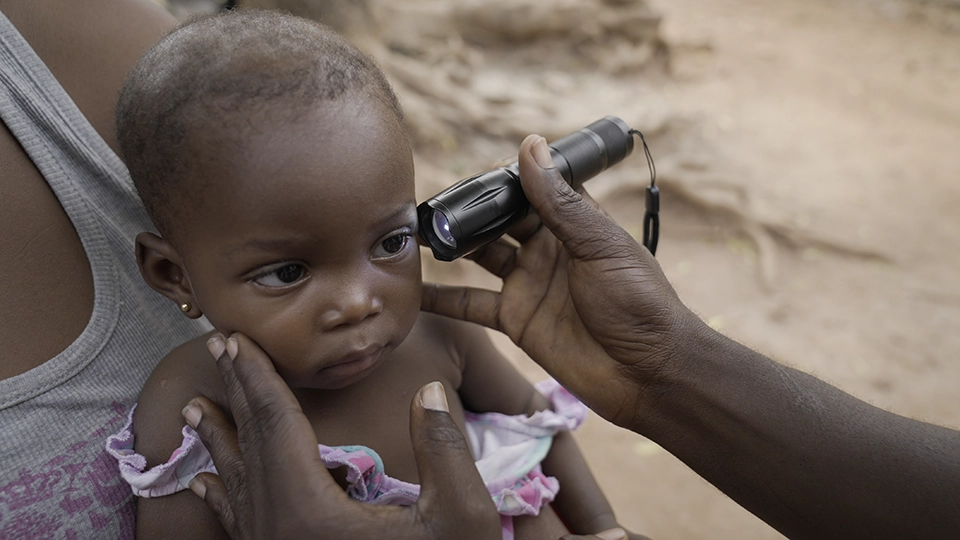
Dr. James Addy, a co-investigator on the study and the former head of eye care with Ghana Health Service, recalls the lack of data at the time.
“We realized that we had only about two or three – not many – eye indicators in the platform that actually generates data for the country,” he says. “And from that study, we realized that 0.74 per cent of the population are blind … And then we had 1.07 per cent of the population having severe visual impairment. And so, putting everything together, it was about 1.5 million people who actually have visual problems.”
Published in 2015, the study continues to be a vital resource.
“The blindness and visual impairment study has been the go-to document for the government itself and all other non-governmental organizations working as far as eye health is concerned to plan their programs,” says Ghana Country Director Emmanuel Kumah, adding that it also informed the development of Ghana’s national eye health policy.
Data from the study was instrumental in the creation of the National Cataract Outreach Program, which offers quality cataract services to people in difficult-to-reach areas. The study’s findings also helped attract social enterprise and charitable eyeglasses providers to the country by proving the need for low-cost vision wear. Today, we’re looking for partners to help us update the nationwide study, ensuring Ghana’s eye health programs continue to be built on solid, current data.
An important part of our work is bringing eye care closer to underserved communities, which means establishing vision centres and eye units in collaboration with our partner hospitals. These facilities offer comprehensive eye exams, dispense eyeglasses, offer various treatments and refer more complex cases to the partner hospital. Some of these clinics are built in remote, rural areas, while others are established in busy, densely populated urban areas.
One of our urban vision centres is in a bustling, low-income neighbourhood in Pune, Maharashtra, India. To get a stronger understanding of its benefit to the community, the vision centre was the subject of a study led by the Community for Eye Care Foundation and members of our team in India. Over the four years of the study, 44,000 people living in the area were surveyed at two intervals by community health workers to track their eye conditions and their eye care-seeking behaviours.
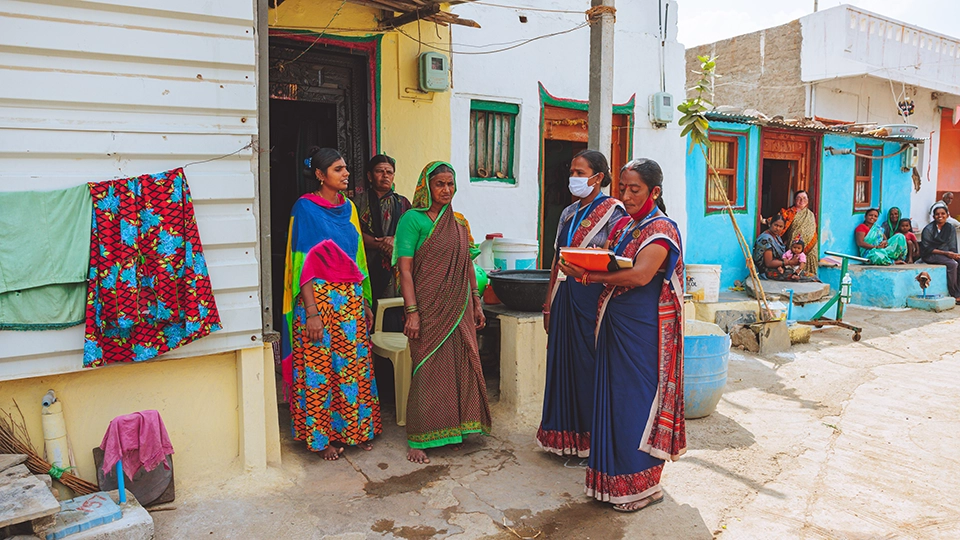
What they found is that the prevalence of blindness and visual impairment in the community was reduced by nearly 62 per cent over the four years. Women continued to have a higher prevalence of blindness, but the gender gap narrowed during that same time span. The study found that more women visited the vision centre than men, and that more people made themselves available for a repeat eye examination during the second door-to-door survey. The study’s authors attribute these changes to the gentle nudging of the community health workers through their door-to-door surveys, and the existence of a nearby vision centre served by a predominantly female staff.
Our own CEO, Kashinath Bhoosnurmath and former Program Manager Soumya Moosa (now a Teaching Assistant at the University of Southern Mississippi), were co-authors of the study, published in 2022 in the India Journal of Ophthalmology.
Our participation in health studies continues to grow, with Operation Eyesight on board to gather data in Kenya for a joint study, between the London School of Hygiene & Tropical Medicine and other partners, that’s investigating the economic benefits of correcting near-vision impairment (presbyopia) in adults.
The five-year study will look specifically at adults ages 35 to 65 with presbyopia by running two randomized controlled trials in India and Kenya. With 20,000 patients to be engaged across two countries, participants will either receive reading glasses at the outset or be placed in a control group without them, with the latter group receiving glasses at the end. The investigators will collect data at baseline, then one and two years in, to evaluate the impact that having – or not having – glasses has had on participants by looking at household spending, quality of life, employment, work productivity and income.
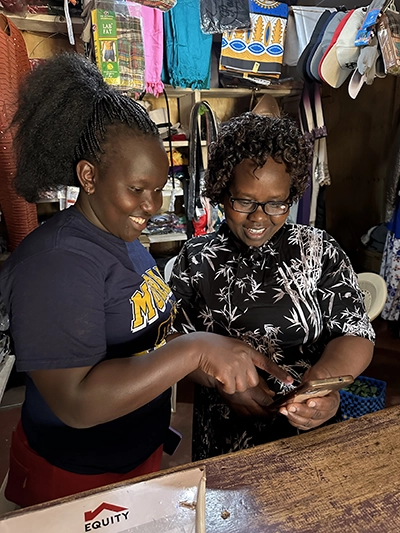
Operation Eyesight’s role is to identify patients to enrol in the study in Kenya – and to continue managing patients with other eye health problems that don’t meet the parameters of the study. Participants will be selected from Kisii County, where we’re already running community eye health programs.
Senior Program Manager Edwin Wanjala Simiyu is overseeing Operation Eyesight’s participation in the study.
“Operation Eyesight was selected to work on this study because of our historical engagement with Peek Vision, with whom we’ve successfully implemented several projects,” he explains, referring to our longtime partner who created the eye health technology that will be used to gather data for the study.
He adds that the study is helping us foster important new collaborations. “Partnerships bring on board new ideas that shape project implementation and impact. It also reduces the project unit cost due to shared responsibilities.”
Gathering evidence on the effectiveness and economic impact of eye health treatments – such as a simple, low-cost pair of reading glasses – helps us demonstrate to decision makers how they can improve lives and livelihoods through cost-effective solutions.
Using our insights to advocate for eye health care
Members of our international team are frequently invited to sit down with various government agencies to offer their knowledge – sharing lessons hard-learned through years of program delivery.
In Kenya, while focusing on the Universal Eye Health Coverage agenda, we worked with the ministry of health to review the World Health Organization’s Primary Eye Care Training manual to better standardize primary eye care delivery nationwide, while in Ghana, we participated in a joint press conference hosted by that country’s ministry of health ahead of World Sight Day.
In addition, we are increasingly being called upon to act as technical partners, where we share our expertise on creating and managing sustainable eye health programs. Over the past few years, our team in India has worked closely with the health ministries of state governments in Arunachal Pradesh, Madhya Pradesh and, more recently, Meghalaya to establish vision care facilities within already-existing government health centres, such as Health and Wellness Centres.
Now, we’re looking to spread awareness in Canada, where our head office is located, though our involvement in the National Strategy for Eye Care Act. The act, passed in November 2024, aims to provide equal access to eye health care services across Canada and to improve the prevention, treatment and rehabilitation of eye conditions for all.
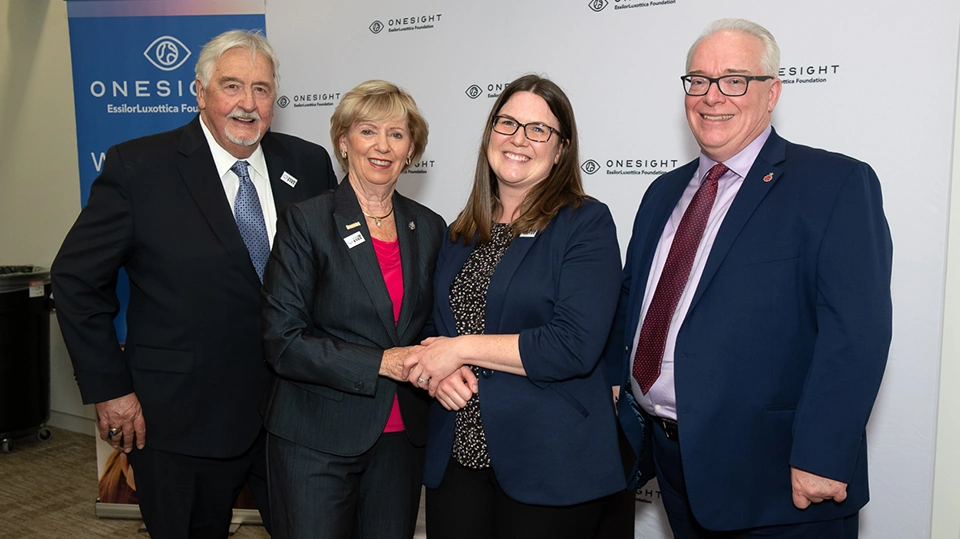
In Canada, vision care is covered by a complex framework of provincial and federal regulations, meaning that coverage varies widely between provinces and territories. For routine vision care – like eye exams and prescription eyeglasses – many Canadians need to pull from health insurance to cover the costs. Those who are uninsured may have to pay out of pocket. These inequities are what the act proposes to address.
Now, as the chair of the Canadian Eye Health Coalition, Operation Eyesight is helping shape the framework for the national strategy. That means meeting regularly with like-minded partners and policymakers to continue the important work of making eye health care more equitable and accessible across the country.
Global Director Kris Kelm says that we’re well poised to inform decisions because of our decades of experience delivering sustainable eye health programs.
“We have the opportunity to shape what the developing policy is going to look like and how it’s actually going to affect Canadians,” he says. “As a non-profit dedicated to eye health and ensuring equitable access for all – regardless of socioeconomic status – it’s critical that we’re part of the conversation.”
Operation Eyesight is also a proud member of IAPB, adding to the collective, global voice advocating for the prioritization of eye health. Next year, we will participate in the first ever Global Eye Health Summit, which will bring together governments, organizations and the private sector to foster collaboration and mobilize action.
As we continue to collect data from communities around the world, we’re not just measuring outcomes, we’re helping to shape them. Every survey completed and every study published brings us closer to a world where quality eye care is accessible to all.
Whether it’s through national studies, local program evaluations or global research collaborations, we remain committed to using data as a tool for change. As we keep pushing for fair and accessible eye health care around the world, we’re proud to build on the knowledge and trust we’ve earned from the communities we work with. After all, they’re the reason we do what we do – For All The World To See.
Eight-year-old Fassikaw lives in Bahir Dar, where he goes to a local primary school. A second-grade student, he once faced challenges that threatened his education and well-being.
When Fassikaw was in first grade, he began to have trouble seeing objects far away. Reading books and the blackboard became difficult. Sitting in the middle or back of the classroom, he often had to borrow his classmates’ exercise books to copy notes.
At home, reading took him a long time. His eyes often watered, and his grades began to drop. More than his grades, his parents worried about his worsening vision and the way it was affecting his mood and sleep. Fassikaw even spoke about leaving school.
Around this time, his family learned about our School Eye Health Program run in partnership with Partners in Education Ethiopia. The program offers free diagnosis and eyeglasses to students in need.
After hearing this, his family went to the hospital and Fassikaw’s eyes were checked. At the hospital, tests revealed that Fassikaw’s vision required strong corrective lenses: +15.00 for his left eye and +16.00 for his right. Thanks to our partners and generous donors, he received the eyeglasses at no cost.
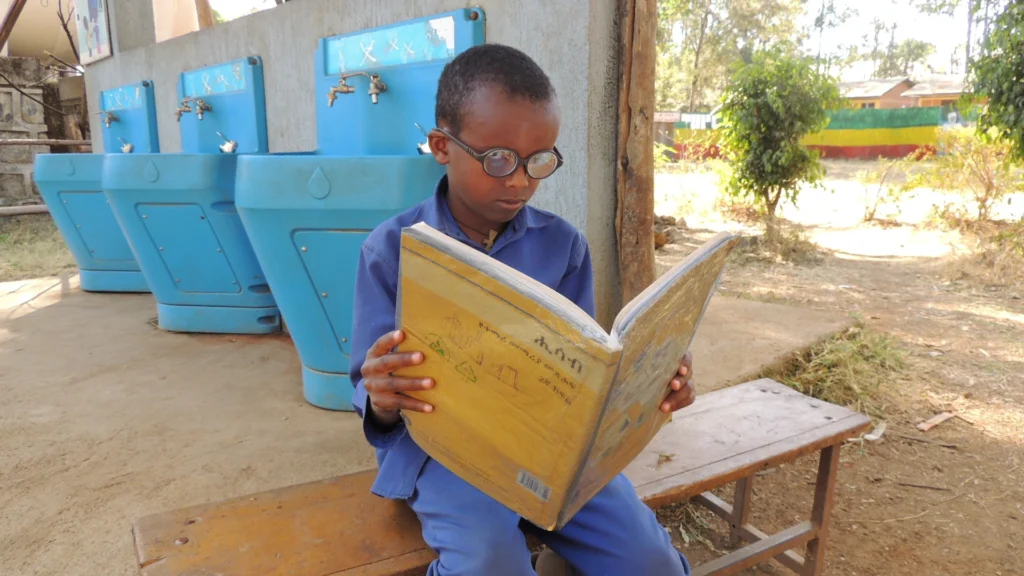
Today, Fassikaw can read easily from anywhere in the classroom. At home, he reads without headaches or watery eyes. His grades have improved, and his class ranking has risen from 27th to 21st, with steady progress.
His father says their son is now happy and confident, and the family can sleep without worry. “With God’s help, we hope you will never have to worry about anything,” he says with gratitude.
By providing eyeglasses through school-based eye health programs, we can transform the lives of children like Fassikaw, helping them see clearly, succeed in school and embrace a brighter future. Give the Gift of Sight today.
Our Work in Ethiopia
Since beginning our work in Ethiopia in 2018, we’ve made significant strides toward preventing avoidable vision loss. In 2024, our programs reached more than 33,424 people through eye health screenings, treatment, training and community outreach. From surveying over 14,000 residents in Debre Work to training frontline workers and teachers, screening students and providing eyeglasses, we are building lasting capacity for quality eye care. Read more about our work in Ethiopia in our 2024 Annual Report. Download it here.
In November 2024, Kris Kelm joined us as our new Global Director of International Programs. Based in Ottawa, Kris brings with him years of experience and connections in the eye health and development sectors, which will serve him well as he leads our program teams, builds new partnerships, and oversees our government and stakeholder relations.
Like many in the development sector, Kris didn’t set out to work in philanthropy – he just sort of fell into it. He had been working at EssilorLuxottica, a producer of ophthalmic lenses and eyeglasses, when a chance meeting with the director of the company’s new philanthropic arm got him involved in charitable efforts. After a few years of running pilot projects, he found himself accepting a new position within the OneSight EssilorLuxottica Foundation Canada.
“It just resonated with me, to have that level of impact on improving somebody’s life by being able to provide better vision,” he says.
Now, he is working to prevent blindness and restore sight across the globe.
Since joining Operation Eyesight, he’s helped lead us through our involvement in the passage of Bill C-284 in Canada, a project he’d already been engaged with in his previous role. The Bill will enact the establishment of a national strategy for eye care.
Kris points out that given our 60-year history of bringing eye care to remote, rural and underserved communities, we can speak credibly on how we might approach things here at home.
On a recent trip to see some of our projects in Ghana and Zambia, Kris reflected on the insights that Canadian policymakers can take from some of our countries of work.
“Canada’s behind, in a sense, in our recognition of vision health as a priority,” he says., “I think we can learn as a country from the other nations that have come before us in prioritizing vision care nationally.”
There are valuable lessons the global eye health sector can learn from the corporate world, and Dr. Caroline Harper is proof.
Dr. Harper joined Sightsavers as CEO in 2005, following a career in the oil and gas sector, bringing with her fresh perspectives on leadership, partnership and innovation.
Over the past two decades, she has helped grow the already-successful organization to be synonymous with eye health across the development sector. Her career is a testament to how courageous leadership transcends industries and can elevate an organization to tackle big challenges.
With a PhD in energy studies from the University of Cambridge, her approach to leadership centres on leveraging local strengths and partnerships.
Operation Eyesight is proud to partner with Sightsavers on projects in Africa, and together with others we have helped pioneer the SAFE strategy to eliminate blinding trachoma, which is a leading cause of vision loss and blindness in the region.
I caught up with Dr. Harper in Mexico City in June 2024, at the International Agency for the Prevention of Blindness’ 2030 IN SIGHT LIVE event, where she offered valuable insights on women leaders and the future of leadership in the global eye health space.
What role do women leaders play when it comes to making and leading global change, like achieving the United Nations Sustainable Development Goals, for example?

In my experience, particularly in the global eye health sector, there are quite a lot of people at the senior levels who are women, and it’s pretty good in terms of gender balance. Many leaders of some of the big International NGOs, such as Helen Keller International and the Cure Blindness Project, have been women.
What I have found more interesting are some of the challenges women face at the country level.
In meeting with women’s networks, we’ve realized that a lot of the challenges have not been in the actual workplace itself; but women trying to be leaders have faced pressures due to cultural expectations. In Asia, some women I spoke with have family who say to them, “How can you travel? How can you go on your own to a hotel? You know, that's not decent.” Or, they may be expected to look after the home rather than pursue a career.
Women have shared with me that this is a big challenge; whereas at the global level, I think the gender mix of leaders is pretty equal.
Having worked across industries, have you ever found that as a woman you had to work harder or speak louder in order to be heard?
Well, I’ve always felt very loud, so I think that’s just kind of me anyway.
When I was getting my job with Sightsavers, I was coming from the private sector of oil and gas, and I thought, “Why are they going to want me? I haven’t got eye health experience. I haven’t got development or even charity experience.” So, I needed to stand out.
And so, I was very loud – I wore a bright blue silk jacket with huge earrings, and I was, in England you call them “Marmite candidates.” Half the trustees loved me, and half the trustees thought, “My, she’s loud.”
That was more about trying to be convincing in an environment where I thought I wasn’t the natural player, more than because I was a woman.
Coming from an oil and gas background, are there skills or experiences that have served you well in your role leading Sightsavers?
I think everybody assumes it’s hugely different, but it’s stunningly similar. You're running an organization, so that means that it’s all about managing people. And people are people, you know. They have similar motivations – they want to do a really good job, they want intellectual stimulation, they want to feel they matter – and so, that was the same.
Actually, when you look at project management, there are a lot of similar skills in managing a project in oil and gas and managing an INGO program. Fundraising is basically sales and marketing, building relations and making people feel good that they’ve done something. It’s like selling anything; it’s very similar skills. Then of course, you’ve got financial management, IT and so on; it’s the same.
For me, the skills that I learned running an organization, working with people, were very translatable across industries. There are a few differences; people care more about salaries, or money, in the corporate world, while I found that in INGOs, people care more about status, or job titles. You still have all kinds of interesting challenges.
What do you think the development sector could learn from the private sector?
The biggest contrast I found between the two sectors was the speed of action. When I came to Sightsavers, I found the NGO sector was very slow and very consensus-driven, so they wouldn’t make decisions until they had consulted with everyone and had everyone in agreement. Sometimes that led to a solution that was perhaps not as bold as it could be, to avoid controversy.
Whereas the corporate sector often has a decisive, get-things-done, move-ahead approach. Sometimes, of course, that means the corporate sector does leave people behind, because that approach doesn’t depend on building consensus.
This is the difference that really struck me when I came into the sector, and this is where the two sectors can learn from each other.
What role do you think the private sector can play in achieving 2030 IN SIGHT?
The private sector has a huge role to play in 2030 IN SIGHT, particularly in the refractive error side, where the private sector’s the big player in the provision of eyeglasses. There is a lot of potential for growth in this area in middle-income countries. For me, this is the area where they probably will make the single biggest contribution.
In your 2018 TED Talk, you noted that, when it comes to the focus on trachoma, we don’t compete, we collaborate. Do you find that sometimes we do get a bit competitive in the eye health sector, and is there room for more collaboration?
Trachoma is the biggest example of collaboration. Both Sightsavers and Operation Eyesight are members of the International Coalition for Trachoma Control, which received funding from The Queen Elizabeth Diamond Jubilee Trust and the British government. This has been shared and is one of the best examples of collaboration in the international eye health sector.
But we [INGOs] also compete, and because of the way that funding mechanisms are set up, I think it's inevitable. There are not enough resources for all the people who want them. So by definition, we are competing, not just within the eye health sector but across the development sector.
Sometimes we pitch projects together. For example, we have collaborated with the Fred Hollows Foundation, CBM and Orbis, and pitched jointly for funding. Sometimes we’re successful, and sometimes we’re not.
Different organizations from different parts of the world work in different regions globally. Even though Sightsavers has often been the grant maker and the leader, we make sure to bring in all the other organizations, because they may be better placed than us in some countries. For example, we’re working with Operation Eyesight in Narok, Kenya, along with other NGOs.
What does partnership with organizations like Operation Eyesight mean to Sightavers?
At Sightsavers, partnership is absolutely at the heart of everything.
The most important partnerships are with governments in the countries because governments are the duty bearers. Whether it’s health, education or another government ministry, they’re the ones that have to lead. And for us, that’s the most important partnership. We never work in a country unless we are partnered with the government, because they have to want us there.
You also have to include players that bring different skills to the table, so we have partnerships with other NGOs that might have a different geographic footprint, skill or specialty. And then there are other partners like researchers. For example, we’re close with the London School of Hygiene & Tropical Medicine, and also with universities in countries where we work, particularly in Nigeria, where we have strong partnerships.
Sightsavers has specific skills, but we can’t possibly do everything. Partners bring different things to a coalition or bilateral arrangements.
Then of course there are donors, particularly donors who have been working with us for many years, whose relationship with us is genuinely about partnership rather than simply contributing funds.
At Operation Eyesight, we have put ourselves on the path to growth through our Global Strategic Plan. As a growing organization, what is it that we should never lose sight of?
At Sightsavers, we grew quite quickly; we took on a lot of additional funds about 10 years ago. One of the most important things we learned is that, if you’re on a growth trajectory, as you grow your money, you must ensure you grow your implementation capacity at least as fast.
Your board of directors plays a critical role in supporting your ambitions. The board needs to remain at a high level and think about the overall strategy and how it’s going to hold management to account. They should ask, what are the key measures we’re going to use to see whether management is delivering? It’s also about having the right board members and encouraging them to work as a team.
___
Thank you, Dr. Harper, for taking the time to chat, so we can all learn from your wealth of experience. We look forward to continuing to work with Sightsavers and other partners to eliminate avoidable vision loss. Together, we are empowering communities, strengthening health systems and addressing the root causes of avoidable vision loss, such as poverty, poor sanitation and gender inequality – For All The World To See.
Interested in partnering with Operation Eyesight? Learn more at operationeyesight.com/partnerships
For most of his adult life, Abraham made a living as a cobbler, supporting his wife and raising six children on his earnings. But several years ago, he started having trouble threading needles. Initially, he pricked himself repeatedly, and eventually, he couldn’t get the needles threaded at all. Due to his poor eyesight, Abraham had to shut down his shoe repair business.
His story is a common one. Global estimates suggest that people with moderate to severe vision impairment are about 30 per cent less likely to be employed than those with good eyesight.1 For lack of a pair of eyeglasses, for want of a simple cataract surgery, millions of people are unable to work. It can keep entire families stuck in the cycle of poverty.

Abraham’s story has a happy ending. After meeting a community health volunteer during a door-to-door eye health screening, he was diagnosed with bilateral cataracts and got sight-restoring surgery on both of his eyes at one of our partner hospitals. He started taking in shoes for repair once again.
But many people won’t get back to work like Abraham did. And that’s because basic eye care isn’t available or accessible to them. According to estimates, about 2.2 billion people worldwide have vision impairment, and in roughly half of those cases, the vision loss could have been prevented or hasn't yet been treated.2
For many people across the globe, the neighbourhood optometry clinic simply doesn’t exist. While people in Western Europe enjoy a ratio of one optometrist to every 3,877 people, countries in central sub-Saharan Africa reported a ratio of one to every 1,198,141 people, according to a 2023 study.3 Even when there is an eye care provider in a nearby city, the barriers to reaching them can be insurmountable for some people living in remote and rural areas. Many can’t afford the bus or train fare, let alone the fees for diagnosis and treatment. And for women and children, travelling alone can be dangerous, so they often need to wait for someone – usually the family breadwinner – to take time off work to escort them. For those with seriously impaired vision or other disabilities, travel might be nearly impossible.
Every day, the community health workers who do eye screenings on our behalf meet people who have previously tried to solve their vision issues without success. Many patients had visited the nearest healthcare provider, often a local dispensary, and were sent home with eyedrops or told their vision couldn’t be treated. Some had bounced around from clinic to clinic, others had resigned themselves to living out their days in blindness. That is why we are working hard to provide eye health care services at the community level.
By connecting people with our partner vision centres and hospitals, helping cover fees and offering safe transportation to the hospital, we can help restore vision to people who may never have gotten treatment otherwise. It’s just one of the ways we are working towards the United Nations Sustainable Development Goal number one: No Poverty. By addressing some of the root causes of poverty, like poor eyesight, we can help people stay employed and stay in school.
The global productivity loss attributed to impaired vision is estimated at US $411 billion annually.4 And those effects can be seen on the individual level as well.
A recent study looking at workers with presbyopia between the ages of 35-65 in Bangladesh found that those who had reading glasses made 33 per cent more than those who did not.5 The study, published in PLOS ONE, tracked the incomes of more than 10,000 participants who work in near-vision intensive occupations – like tailors, mechanics and carpenters – over eight months. Half of the participants received reading glasses right away, while the control group only got a pair after the eight months of data collection. The eyeglasses themselves cost only about US$3-4 per pair but had the potential to transform the lives of the workers.
Another study of tea pickers with presbyopia in India found similar results in 2018.6 In that case, the three-month study found that a pair of reading glasses increased productivity for the plantation workers – who are paid by the kilogram of leaves picked – by about 22 per cent, and 32 per cent for those over the age of 50.
As these studies show, addressing vision loss can increase productivity and provide greater economic opportunities for individuals.
Like many other health issues, it can be difficult to untangle the relationship between low incomes and eye health problems. Poor vision can lead to poverty because people often lose or quit their jobs when they’re no longer capable of doing them effectively or safely.

Take Junmoni in India, for example. The mother of two dreamed of sending her daughter to college with her earnings making handwoven fabrics on her loom. But when her vision became blurry, she had to stop weaving. Money got so tight that she was on the brink of selling her handloom. Fortunately she met a community health worker who told her she just needed to visit the local vision centre to get a pair of eyeglasses. Junmoni now wears her prescription eyeglasses while working at her handloom, her dreams for her daughter back on track.
But just as vision loss can lead to poverty, the opposite may also be true.
An infectious eye disease, called trachoma, continues to cause vision loss and blindness in dozens of countries around the world. It is widespread in some rural areas, and also in regions where there are high rates of poverty. The bacteria spreads through personal contact, via hands, clothes and bedding, and by flies that have been in contact with discharge from an infected person. It is most common in areas where people don’t have access to clean water or have to travel long distances for water.
If left untreated, trachoma causes the eyelashes to turn inward and scratch the cornea, leading to severe pain, vision loss and even blindness.
The spread of trachoma can be managed when people have access to clean water, allowing for more frequent hand and face washing, and the cleaning of clothing and bedding. Antibiotics can also help prevent and treat trachoma in areas where it is endemic.

We work with partners and communities in Ethiopia, Kenya and Zambia to prevent the spread of trachoma by helping establish water boreholes and latrines and administering antibiotics.
Ninety per cent of vision loss is preventable or treatable, but people living in underserved communities are more likely to go blind. In fact, 90 per cent of people with vision loss live in low- and middle-income countries, which is why we’re working in these areas.
Lack of education is another factor that keeps vision loss in lockstep with poverty. Some people don’t seek eye health care simply because they believe their condition is untreatable. Many older patients believe that vision loss, even blindness, is just an inevitable part of aging. In some communities there may be additional fear or distrust of medical authorities based on previous experiences, myths or other cultural stigmas.
By reaching people in their homes and communities through door-to-door eye screenings and eye camps, we can offer basic eye health education and choice to those who might never get treatment otherwise. And in cases where a patient might be hesitant to get surgery, our community-based approach enables health workers to continue counselling patients over weeks and months, reassuring them, explaining the benefits of a procedure and often convincing them to get treatment in the end.
Another way we work to prevent the devastating effects of vision loss is by making sure the youngest people in our project areas learn about eye health. By offering eye screenings and education in schools, organizations like ours can reach thousands of families through their children, who go home brimming with excitement over the vision test they took at school, and what they learned about eye health. By providing children with referrals to the nearest vision centre or partner hospital, the whole family is made aware of the services that are available to them.

The effects of a cataract surgery often ripple down through the beneficiary’s entire family. We hear of many young women who have given up jobs or dropped out of school to care for a senior family member who has gone blind. Once the family member has had their vision restored through cataract surgery, they often regain their independence, freeing up their caregiver to devote that time to work, school or other economic opportunities.
And parents who have had their vision problems corrected, like Junmoni, are better placed to keep their children in school longer, and even send them off to advanced education, potentially lifting future generations out of poverty.
Finally, children with vision problems who get corrective eyeglasses or treatment fare better at school. In fact, prescription eyeglasses have been shown to have a greater impact on academic achievement than other health interventions, like nutrition and deworming programs.7 This is why we are currently expanding our school eye health programs, so we can help more children thrive in school so they can get the best possible start on their working lives.
While many organizations like ours are collaborating with partners, governments and funders to address vision loss and blindness, aging populations and population growth mean that the problem will increase if we don’t act quickly. Some estimates say that by 2050, half of the global population will have myopia.8
You can help us continue our mission to prevent blindness and restore sight by following us on our social media accounts, signing up for our newsletter and sharing what you’ve learned with friends and family. Join our global community today.
We all believe and say, 'Seeing is believing.' I personally hold this belief dear and often repeat it, as it resonates deeply with me. As the President and CEO of Operation Eyesight Universal, one of my roles is to help our growing global community to see how our collective actions and partnerships – as employees and volunteers, as donors and partner organizations, as governments and communities – are transforming our vision of eliminating avoidable vision loss into a reality, community by community.
When I travel to our countries of work and to the target villages, I see that eye health is about far more than sight. I have learnt that eye health is about children being able to learn, play at school and practice hygiene. It is about adults being able to work and run businesses, access clean water, herd animals, grow crops and care for children. It is about seniors who can meet their friends, travel and chase after their grandchildren. Eye health is about reaching everyone in a community, addressing all the avoidable vision loss issues and empowering the community to take care of their eye health themselves. Often, this is the impact of partnerships between organizations and governments, hospitals and communities with a shared vision to improve quality of life. Actually, health and partnerships are so important that they have been identified in the 17 Sustainable Development Goals (SDGs) of the United Nations (UN) as necessary for a peaceful and prosperous world.
This June, I am attending the International Agency for the Prevention of Blindness (IAPB) global event, 2030 IN SIGHT LIVE in Mexico. (See above for a photo of my eye health peers and I at last year’s event.) As an elected IAPB board member and someone who has been leading health and eye health care programmes for more than 35 years, I will join hands with fellow experts and organizations in the eye health sector to apply our collective knowledge to address:
1. What needs to be done to transform the vision of universal eye care into a global reality by 2030?
2. What ground-breaking approaches will accelerate action and transform eye health?
3. What steps can we take to embed conscious, inclusive and sustainable best practices across the eye health sector?
4. What can we do to harness our strengths and diverse skills to increase momentum together to empower change?
5. To address diverse needs and shape the future of eye health, how can we meet the rising demand and changing landscapes with strategic sustainable solutions?
My experience has shown me that a key part of the answer to all these questions lies in the power of partnerships. By working together, we can build sustainable strategies that connect international agencies, national governments, hospitals, and health care workers, and extend right down into the communities and each person there.
Partnerships at the strategic, implementational and program levels will ensure that multiple players can focus on their strengths – from sharing eye health care data with international agencies that set global goals, to working with national governments to include eye health in health care and education policies, to supporting hospitals and training health care workers who treat vision issues, to empowering communities to identify and address vision problems for everyone who lives there. Through partnerships, we stand together so we have more visibility. We have more influence and more funding. We have more technical expertise, and we have more community connections.
Over more than 60 years, Operation Eyesight has developed a sustainable model of community empowerment. I take great pride in our flagship model, which is not only sustainable but also scalable. This model serves as evidence to the successful implementation of the World Health Organization's five recommendations outlined in its World Report on Vision 2019: making eye care a part of universal health care, integrating people-centred eye care into health systems, promoting high-quality implementation and health systems research that compliments evidence for effective eye health care interventions, monitoring trends and evaluating progress for effective eye care interventions, and raising awareness, engaging and empowering people and communities about eye care needs. I attribute the success of this model to our dedicated partners and the communities we serve.
When we partner with others, we become the bridge between health care services and communities. While many organizations work down to the hospital level, we start with the hospital and work down to the community level where we reach all those individuals who are in need of eye care. With the hospital, we identify a service area and build a local vision centre. Next, we train local community health care workers in the community. In our nine countries of work, our network of more than 2,500 community health care workers conduct door-to-door surveys, knocking on doors and identifying people with vision challenges. These workers then refer people to the vision centre for eye exams and prescription eyeglasses or treatment for eye diseases. Those with issues that require services beyond the vision centre, such as cataract, are referred to the local hospital for surgery. Once all avoidable vision loss cases are addressed, the community is declared avoidable blindness-free. The community can then sustain this as they now have ownership of their own eye health care.
Time and time again we have seen this model work. We are publishing research on the results, investing in resources to replicate it, and harnessing partnerships to bring this model to new communities and new countries of work.
In Mexico City, I plan to reconnect with current partners and meet new partners. I will learn from them about their perspectives on the five key questions IAPB is asking and share my views with them. Additionally, I will discuss what more Operation Eyesight can do to further strengthen our partnerships and chart a future course that allows us to collectively reach out to many more individuals and communities. I look forward to seeing so many global community members in Mexico City and to working together to answer the five IAPB questions. I believe that together, we have the power to transform eye health care – For All The World To See.
Join our global community, partner with us and we will transform more lives together.
Operation Eyesight is celebrating a new partnership with three Ottawa Dragon Boat teams. They are competing in the Ottawa Dragon Boat Festival from June 21 to 23. The three teams are promoting the cause of good eye health for all – here in Canada, in India, and elsewhere around the world. Two teams are named Kaavéri Xpress, while a third all-women’s team is called Kaavéri Sherows.
This new partnership reflects the growth of our global community. An organic connection exists between the teams and Operation Eyesight President and CEO, Kashinath Bhoosnurmath (who goes by Kash), as most members are part of the Indian diaspora community in Canada. While members have settled in Canada, built homes, careers and community, a part of their heart lies in India. “Many of us long to support those back in our Indian home,” Kash says. “We know many people are facing very difficult life challenges there that are different than the life challenges we face here in Canada.”
One way to offer support is partnering with Operation Eyesight to work towards eliminating avoidable vision loss. This is not only about sight but also about learning for children and particularly girls, maintaining a livelihood for adults, and securing independence for seniors. Globally, more than 1.1 billion people are living with vision loss, and fortunately, 90 per cent of these cases are treatable or preventable. However, only a limited number of people are aware of this fact. Many, especially in middle- and low-income countries, are forced to live with blindness or some form of vision loss due to lack of access to affordable and quality eye care services. “This is a kind of global emergency,” says Kash. “If this issue is addressed, communities and countries will experience reduced burdens of poverty and disease, as well as increased levels of productivity and development. These factors are interlinked.”
Operation Eyesight has developed a successful model that results in the elimination of avoidable vison loss. Our tested and evidence-based model is the foundation for our projects in 10 countries. “In India alone, we proudly boast over 1,300 villages that have been declared free of avoidable blindness on a sustainable basis. Our story needs to be known and told,” says Kash. An eye exam and a pair of prescription glasses, or a simple cataract surgery is often all that is needed to bring someone's future back into focus. “Tested and often cost-effective solutions are available. What is needed is awareness, collective will, and support among those who can lend a hand.”
The partnership between the boat teams and Operation Eyesight flows not only from shared values and vision, but also from the power of water, which is fundamental to the boat teams and to healthy eyes. While the two Kaavéri Xpress teams and the all-women Kaavéri Sherows Ottawa Dragon Boat teams will be paddling down the Rideau River on race day, two rivers will be in their hearts, as the teams are named after the sacred Kaveri River in southern India. Team captain Lokesh Siddaramanna explains, “Kaaveri connects us back to our roots, as it’s a lifeline for farming and drinking water for much of Southern India.” He adds that the name was chosen because it resonates deeply with people across the region, lifting their spirits and connecting with their hearts.
There are many parallels between the dragon boat teams and the global community of Operation Eyesight. Boat teams must recruit committed members, train collaboratively and work in sync with one another to successfully compete against other teams. The global community of Operation Eyesight must recruit committed partners, train local health care workers and work collaboratively with partners, hospitals, governments and communities to eliminate avoidable vision loss. Everyone must keep their eyes on the finish line. How fast they finish the race really depends on how successfully they can work together.
During the festival, Kash and Myrna Linder, Operation Eyesight Director of Fund Development, will join a pre-race pep talk, cheer on the teams, and attend an evening dinner to connect with the members. They will also present on Operation Eyesight programs in India, South Asia and Africa. As the dragon boat teams race down the river, their support will speed Operation Eyesight along in the race to eliminate avoidable vision loss.
“We are so grateful for the partnership between the Kaavéri Xpress and Kaavéri Sherows Ottawa Dragon Boat teams, and the connection to the Indian diaspora community,” Kash says. “This is really helping us to race not only into the next village of work, but also the next 10, 100 and 1,000 villages, so that one day, hopefully very soon, we can cross the finish line by eliminating avoidable vision loss entirely.”
Support the Kaavéri Xpress and Kaavéri Sherows Ottawa Dragon Boat teams by cheering them on and helping them race towards the finish line – and towards eliminating avoidable vision loss – by donating here.
The oldest of four kids, 14-year-old Isaac is his mother’s biggest helper – assisting with chores like cleaning, sweeping and looking after his younger siblings. But a few years back, Isaac started having problems finding things around the house.
One day, his mom, Samanta, sent him outside to sweep the compound, but he came back complaining that he couldn’t locate the broom. When she went to look for herself, she saw the broom lying on the porch in plain sight and realized there was something wrong with Isaac’s eyesight.
As a single mom, Samanta works hard as a trader in the marketplace in their village of Oponso, in Ghana’s Central Region. She knew that an eye exam, and any subsequent treatments, would be out of her budget.
Hope arrived during an eye health screening at Isaac’s school, where staff identified his eye condition. His younger sister, five-year-old Grace, also got a referral for further examination. The school eye health screening was made possible through our partnerships with Ghana Health Service and Ghana Education Service and funded by the United States Agency for International Development’s (USAID’s) Child Blindness Program.
The program trains community health nurses and school employees to perform basic eye screenings. Students requiring follow-up receive referrals to the nearest hospital. Because of the increased efficiency, entire schools – students and teachers alike – can be screened in a fraction of the time it would take otherwise.
Samanta brought the two children to our partner hospital, Watborg Eye Services, in nearby Accra, and both received diagnoses for cataracts. They were quickly scheduled in for surgery, which was provided free of charge.
Three weeks later, our program staff caught up with Samanta, who was thrilled with her children’s progress, now that they are free from cataracts. She says little Grace now spends more time outside playing with her friends. As for Isaac, he once again helps around the house, happy that his future is back in focus.
With story and photo files from Isaac Owusu Baffoe
This story was made possible by the generous support of the American people through the United States Agency for International Development (USAID). The contents are the responsibility of Operation Eyesight Canada and do not necessarily reflect the views of USAID or the United States Government.
When Florence began losing her sight to cataracts, her daughter, Rose, watched helplessly as her mother lost not only her independence but also her joy.
“She was complaining that she could see smoke,” says Rose, who lives with her mother in Kakamega, located in western Kenya. “She would always say that she could see people far away but could not see people who were near.”
Rose brought Florence to Saboti Sub-County Hospital in Kitale and saw a surgical team from our partner, Kitale County Referral Hospital. Florence received sight-restoring cataract surgery, at no cost.
Reflecting on the difference the surgery made in her mother’s life, Rose sums up her gratitude with four simple words: "Thank you so much."

When Rose brought her mother back to the hospital for her checkup, the doctors said she was doing well. Florence’s smile tells a story that words can’t express.
“Even I can see that she is smiling,” Rose says. “I thank God the operation was successful. I would like to thank the people of Operation Eyesight Universal for bringing free treatment that has helped me and my mother.”
Rose says she hopes we can continue to help others in her mom’s situation.
“When someone experiences vision loss, they often become closed off from the world. This is particularly true for seniors,” says Alice Mwangi, our Country Director for Kenya.
“Through the Gift of Sight, individuals are able to start new, happy chapters in their lives.”
Visit operationeyesight.com/GiftOfSight to help provide critical eye care services for more people like Florence. Thank you for your support!
Each year on World Sight Day, the global eye health community joins hands to encourage everyone, everywhere to love their eyes and make their eye health a priority.
This year, on Oct. 12, our global community brought quality eye health care to more than 108,000 people across South Asia, sub-Saharan Africa and Canada. Together with our partners we organized eye health screenings, distributed free prescription eyeglasses and provided no-cost cataract surgeries.
“There is no better way to celebrate World Sight Day than by bringing eye health care and education to those who need it most, especially women and girls, to ensure gender equality i.e. equal outcomes for women and men and gender diverse groups. Moreover, eye health significantly contributes to sustainable Development Goals in terms of better options of livelihood, enhanced school performance and socio-economic development that leads to quality of life,” says Dr. Ritu Ghosh, our Global Director, International Programmes.
“The collaboration of our staff and volunteers, donors, partners and communities has helped make this one of Operation Eyesight’s most impactful and successful World Sight Day celebrations to date.”

In Bangladesh, with our partner Netracona Vision Centre, we hosted three school eye health screening camps, which provided comprehensive eye health screenings for 513 children. Forty-three adults were screened at the vision centre.
In Nepal, through our school eye health screening camps, we screened nearly 1,300 students and 19 school staff, and distributed 38 pairs of free prescription eyeglasses. At the Simara Vision Centre, during the two weeks leading up to World Sight Day, 104 patients received life-changing cataract surgery free of charge. Prior to upgrades supported by Operation Eyesight, the facility performed approximately 20 cataract surgeries per month.

In nearby India, in collaboration with our partners we hosted nine eye health screening events at schools and in the community, reaching 1,445 students and 145 adults. We also distributed 98 free pairs of prescription eyeglasses, provided 137 sight-restoring cataract surgeries and organized eye health education events for nearly 2,500 people.

“In addition to eye health screening, distributing eyeglasses and providing surgeries, eye health education plays a key role in ensuring that people know where to seek eye care when they need it,” explains Dr. Troy Cunningham, our Country Director for India. “This combination of treatment and education made it possible for us to declare 39 villages Avoidable Blindness-Free on World Sight Day.”

In Ghana, we joined forces with nursing staff at Saltpond Hospital, our partner facility, to hold public screenings in Awutu Senya District and Mfantseman Municipality.
“Eye health at work was a focus for World Sight Day this year, and our screening activities were aimed at reaching drivers and traders while at work,” says Emmanuel Kumah, our Country Director for Ghana.
“Our partnership with Ghana Health Service is critical to our ability to reach people in the community and connect them with not only eye health care but with their local health system. We’re grateful to our government and hospital partners for helping make World Sight Day 2023 such a success.”
World Sight Day celebrations in Kenya focused on delivering eye health screening and treatment to office and factory workers, teachers and public transport drivers. Eye health screening events for the public were held at our partner hospitals and facilities, enabling us to reach nearly 6,600 people and distribute 291 pairs of eyeglasses – prescription or readers.
Additionally, we hosted eye health education events that reached 2,005 people including workers at PJ Dave Flower Farm in Kajiado. Our partner Moi Teaching and Referral Hospital conducted a procession to create awareness on the importance of eye health, drawing the community’s attention to the services available at the hospital.

“We were proud to join the Ministry of Health for annual World Sight Day celebration events,” says Alice Mwangi, our Country Director for Kenya. “In keeping with this year’s World Sight Day theme of the world of work, we were able to bring eye health screening and awareness to workplaces, through the generosity of our donors and the know-how and passion of our partner facilities.” ”

In Zambia, we joined forces with the nursing staff at our partner Maamba General Hospital to conduct eye health screenings at five schools in the Sinazongwe district in the Southern Province. In total, 565 students were screened and 43 received reading eyeglasses.
“This year’s World Sight Day celebrations focused on reaching pupils and teachers while at work,” says Kelly Kaira, our Programme Manager for Zambia. “The pupils and teachers were grateful for the intervention, and some of them would not have otherwise been able to access eye health services, because of the distance to the hospital, the cost of services and financial limitations. We are grateful to our donors who helped us provide the Gift of Sight, and to our government and hospital partners for helping make World Sight Day 2023 such a success.”
In Calgary, Canada where our global headquarters are located, in collaboration with EvolutionEyes, we provided comprehensive eye exams to eight mothers and four children. The screening event was hosted at Highbanks Society, which empowers young women to attend school and engage in personal planning and goal setting.

“Although many people in Canada take eye health care for granted, there are many people who still face barriers, including Indigenous Peoples and people experiencing homelessness,” explains Sidney Gill, our Community Engagement Specialist – Indigenous Programs. “However, this journey towards self-sufficiency for these communities is not without its hurdles, and vision health is a fundamental element of their overall well-being.”
From sharing eye health tips on social media and in the community, to providing life-changing eyeglasses, surgeries and eye exams, World Sight Day 2023 was a global effort that would not have been possible without our staff, volunteers and partners, as well as our communities of work. Together, we added our voice to the International Agency for the Prevention of Blindness’s annual #LoveYourEyes campaign and joined our eye health peers in encouraging everyone, everywhere to make eye health a priority – For All The World To See.
