
Ottawa, Canada – November 7, 2024 – Operation Eyesight Universal is delighted to celebrate the passage, on November 7, of the National Strategy for Eye Care Act, Bill C-284. We congratulate the Hon. MP Judy A. Sgro and the Hon. Senator Mohamed-Iqbal Ravalia for their tireless work in successfully bringing this important legislation to pass. (Find the announcement press release here).
By signing this important piece of legislation, the Canadian government has established itself as a global leader by prioritizing eye health care as an integral part of universal health care, while also achieving many of the United Nations Sustainable Development Goals (SDGs). In Canada, health care is a right. This Bill now makes eye health care a right as well. The passage of Bill C-284 gives hope to the one in five Canadians suffering from a condition that puts them at risk of blindness (eight million people) and the 1.2 million Canadians living with vision loss, figures which come from the 2023 Report Card on Vision Health in Canada, released by Fighting Blindness Canada and the Canadian Council of the Blind. The report states that every year, our national economic burden from vision loss is 32.9 billion dollars. The passage of Bill C-284 is about far more than sight – it is about education for children, employment for adults and independence for seniors.
Kashinath Bhoosnurmath, President and CEO of Operation Eyesight Universal, says, “Today, Canadians have achieved the right to sight, as our universal health care will incorporate eye health care for all, with the passing of Bill C-284, the National Strategy for Eye Care Act, into law. Eye health care too is a priority now in Canada. This impacts us all. The law will support the many Canadians who have eye conditions they do not know they have. It will also shine a light into the lives of the millions of Canadians who struggle not only with their vision but also with accessing the eye health care they need—across every part of Canada. This inclusive bill signifies that eye health care must be available, accessible and affordable, and it will support child development and learning, adult employment and productivity and senior connection and independence. We are delighted that Canada has the vision to step forward as a national and international leader. We can all see the benefits ahead.”
The importance of this legislation cannot be overstated. Universal eye health care is proactive, preventative and supportive. It includes regular eye exams, early detection of eye conditions, treatment and ongoing supports. For some, treatment can be as simple as getting a pair of prescription eyeglasses which can be transformative – recent research found that students who don't get the eyeglasses they need learn half as much as students with good or corrected vision, according to the International Agency for the Prevention of Blindness. This research also stated that when vision is corrected in school it can influence lifelong earnings by up to 78 per cent. This example shows that eye health care impacts not only individuals but also local and global economies. Eye health contributes to several of the 17 United Nations Sustainable Development Goals (SDGs), which have been set to build a more peaceful and prosperous world. These include good health and well-being, quality education and poverty reduction.
For decades, Operation Eyesight has brought inclusive eye health care to communities and regions in countries in Africa and South Asia. We do this by partnering with national, regional, and local governments and leaders, including the ministries of health and education. We act as a bridge between communities, connecting every child, woman and man to local eye health care.
In Alberta, we have been piloting eye health care programs by working with medically underserved communities. We are building relationships with and listening to communities to understand their unique needs, cultures, lived experiences and lifestyles (rural, urban and more), while growing our capacity to support this work in a good way. We know that inclusive eye health care works when people are aware of its importance, it is available and accessible when and where people need it – close to home, school or work – and it is open to all regardless of ability to pay.
We welcome the opportunity to collaborate with governments, organizations and community leaders in Canada to inform this new national eye care strategy. We look forward to contributing our voice to advocate for it to be inclusive so that it is accessible, affordable and available to all. We will continue to raise awareness of the importance of eye health and the need for eye health care in Canada. Together, let us take a long view of our collective right to sight.
Kris Kelm, Global Director, International Programs, Operation Eyesight Universal
Kashinath Bhoosnurmath, President & CEO, Operation Eyesight Universal
About Operation Eyesight Universal operationeyesight.com
Operation Eyesight Universal is an international development organization and registered charity working to prevent blindness and restore sight. Our vision is the elimination of avoidable vision loss. Founded in Calgary, Alberta, Canada in 1963, we are now a global community spanning four continents – Africa, Europe, North America and South Asia. Our vision is global and our focus is local, with teams on the ground in communities of work. Through activities like community outreach, water and sanitation projects, and health education, we at Operation Eyesight are addressing the root causes of avoidable vision loss which contribute to six United Nations Sustainable Development Goals: no poverty, good health and well-being, quality education, gender equality, clean water and sanitation, and partnerships for the goals.
For her family, 14-year-old Preeti is more than a daughter and sister – she is a caregiver to her three younger brothers and helps her single father run their household.
Preeti also has big dreams for her family, who live together in a remote village in the Indian union territory of Jammu and Kashmir.
“I am passionate about my studies and dream of elevating my family out of poverty,” she says.
Preeti is also responsible for hauling drinking water from a nearby pond. One day while fetching water, she slipped and fell in a thorny bush, injuring her eye. Within a few days, her eye became red and swollen. Despite receiving eye drops from a local pharmacy, a month later her vision in her wounded eye had decreased dramatically, making even routine chores difficult. At school, Preeti struggled to participate in class and play with other kids.

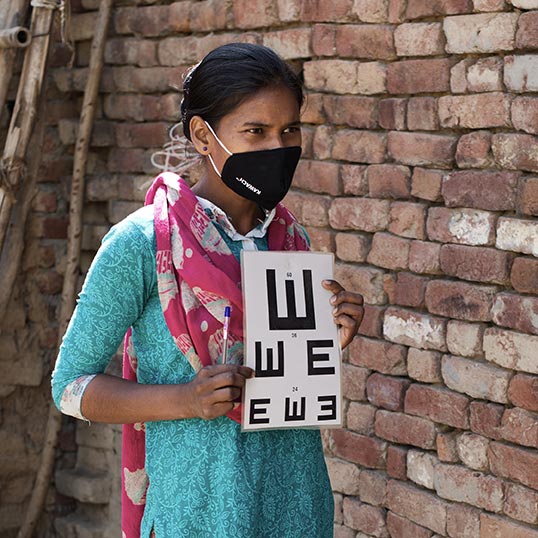
A door-to-door eye health screening in her area eventually brought two community health volunteers to the family’s doorstep. Upon examination, the volunteers told Preeti and her father that she might have a cataract. On the volunteers’ advice, Preeti’s father took her to our nearby partner hospital, the Rotary Eye and ENT Hospital in Udhampur, where doctors diagnosed her with a traumatic cataract.
“I was worried about the cost of the treatment and was almost in tears,” her father says. “But I was relieved when the hospital told me that Preeti would undergo free surgery.”
Shortly after her operation, Preeti regained her vision.
“Operation Eyesight’s work began in India 60 years ago. In that time, we have built in-roads in communities and brought access to eye health care,” explains Tapobrat Bhuyan, our local program manager. “Vision loss of one family member can be devastating for the whole family.”
For Preeti, her restored sight has been life changing for her entire family.
“Our family has found a new life,” explains Preeti’s father. “The villagers have told her she is a very cheerful child and very active.”
Preeti’s future is now full of hope, made possible through the generosity of our donors. Thank you!
By making a donation today, you can help transform the life of a child like Preeti.
For Helen Young, generosity runs in the family. Her mom Betty was passionate about donating eyeglasses. Today, Helen continues to support Operation Eyesight as an annual donor.
“I remember my mother used to donate her old glasses to Operation Eyesight. She knew that within a few months her gift would have an immediate impact in someone’s life,” Helen recalls. “I’ve continued to support Operation Eyesight for that very same reason.”
Helen lost her mom 15 years ago, but giving to Operation Eyesight is a mother-daughter bond that’s now spanned more than two decades.
Although we no longer collect used eyeglasses, providing people with new prescription eyeglasses is still a critical part of our work, made possible through monetary gifts from donors like Helen. Helen says supporting Operation Eyesight still makes sense after all these years, because of the tangible benefits it brings in the lives of individuals and communities.
“The work Operation Eyesight does has evolved over time,” she adds. “But as an annual donor, it’s satisfying to know that, by the end of the year, several people will have benefited.”
Click here to become a donor today and join Helen and with our global community of donors.
Thank you, Helen and Betty, for your years of support!
For the Jenkyns family, supporting Operation Eyesight has become a family tradition.
“For two decades, our entire family has come together each year for a shinny hockey game and fundraiser dinner,” says Linda Jenkyns, daughter of our founder Art Jenkyns. “It’s great to see the little ones growing up and becoming part of it.”
Three generations of the Jenkyns clan – including 11 grandchildren and 14 great grandchildren – gather to raise money for the organization Art and Una Jenkyns created.

Art and Una’s son, Jim, says that Operation Eyesight has become a legacy for the entire family.
“Our parents modelled for us the importance of helping others,” he says. “We call it our ‘family culture,’ and it’s an honour to continue this work.”
As children, Jim, Linda and their three other siblings watched their parents lead Operation Eyesight. Six decades later, they say our organization has grown into something that would make their father proud.
“Dad’s whole life was service to others, from a very early age. He was making the world a better place for everyone, especially those who are underprivileged,” says Linda. “But he certainly didn’t expect it would last 60 years.”
Linda says there are many organizations people can choose to support, but she says Operation Eyesight has so many long-time supporters – and new donors as well – because we have stayed true to Art’s vision.
“I wonder how Dad would feel, now that others have taken on his vision and continued it with the same integrity,” Linda adds.

Six decades is a lifetime, and in that time Linda says the world has changed, and so has Operation Eyesight.
“It’s different from fundraising back in the 60s, when everything was dependent on speaking engagements,” Linda explains. “Today, there’s social media, and the way to get the word out is totally different and keeps changing.”
Jim agrees.
“Dad just wanted to do his part and see other people get involved,” he adds. “That’s what donors are doing today. It’s a tribute to our dad and mom.”
Thank you, Linda, Jim and your entire family, for your dedicated and passionate support over all these years! Visit operationeyesight.com/60years to learn more about our 60-year history.
 I was recently in Kenya and Zambia, where I saw first hand the impact we are having, together.
In Kenya, I attended the grand opening event for the new operation theatre at Iten County Referral Hospital’s Eye Unit in Elgeyo Marakwet County. The facility’s design and construction meet international standards and will offer access to comprehensive eye examinations and treatment, diagnoses, specialist referral and surgery to more people than ever before. With our government partners and community members by our side, it was a powerful reminder of what these lifechanging eye health services mean to residents.

I then travelled to Zambia, where I attended the opening of a new vision centre in Kapiri Mposhi district. I also attended kickoff celebrations for the construction of the new Eye Unit at Kanyama General Hospital, where we are supporting both infrastructure development and staff training.
Brick and mortar facilities are just pieces of a much larger puzzle. Many people had to come together to make these events possible – from the community health volunteers who bring eye health care to people’s front doors, to the teams training healthcare staff in primary eye care, to the frontline staff providing care, to the community members who are adopting eye-healthy behaviours and seeking care when they need it. It truly is a team effort, and it was inspiring to see our global community come together.
For six decades, donors like you have been a key part of our global community and have helped projects like these come alive.
The communities and partners I visited used different languages, but the message was the same: thank you! It speaks to the lives that we are transforming, together.
The last few months of 2022 were busy ones for Caroline Ikumu, our program manager in Kenya (pictured above at far right). She spent much of that time on the road, travelling to visit our projects in Elgeyo Marakwet County.
But she isn't complaining. The cause of all this busyness was one to celebrate. Between October and the end of December of last year, 20 villages in the county were declared Avoidable Blindness-Free.
Far from being a mere formality, these declarations are the culmination of years of collaboration between the community, the local government and the partner hospital.
“In simple terms,” Caroline explains, “Avoidable Blindness-Free means that nobody in the village is suffering from blindness or visual impairment due to treatable and avoidable conditions, and the community is aware of where to get the services for new cases.”
Our approach
We call our approach the “Hospital-Based Community Eye Health Model.” It's a mouthful, but essentially it means we facilitate door-to-door screening to communities in remote and underserved villages and make referrals to our partner hospitals where people can access treatment.
In Kenya, we work with community health volunteers who are trained in primary health care and provide health education and services at the village level throughout the county. We deliver additional training in eye health, and then the volunteers go door to door in our project area to screen community members for eye conditions.
As they screen, the volunteers make referrals to the partner hospital, the eye unit at the Iten County Referral Hospital, where people can get treatment, such as cataract surgery or a pair of eyeglasses, free of charge. A volunteer might return to the same household several times to make sure every member of the family has been screened.
The community health volunteers also encourage people identified with eye problems to attend outreach camps that are centrally located within the villages to make sure everyone has access to further screenings. From there, transport may be arranged for those needing treatment at the partner hospital.
Working with community leaders and health care workers, we make sure that the community is in support of the project and can take ownership of it.
Health education
Another part of the community health volunteer’s role is providing education about health issues, often attending social meetings such as micro-savings groups called “chamas” to make sure they’re reaching people when it's convenient for them.

Due to misconceptions about surgeries, not everyone jumps at the chance to get treatment, so the volunteers identify community members who have had success with their treatment to act as ambassadors. “So they tell them, ‘I was not able to see. I could not work. Now I’m back at my farm. I’m evidence that you can be treated and start your life again,’” explains Caroline.
Our programmers also conduct PACEH meetings – PACEH being an acronym for Participatory Approach to Community Eye Health. These meetings help our team understand the perception of the community on eye diseases, eye health providers and treatment received. They also identify misconceptions and address gaps in knowledge on eye health, and they ask community members if they know of anyone who might still be experiencing vision loss or blindness. Finally, they ensure community members know where and when to seek treatment so that they can take responsibility for their own eye health going forward.
Resurvey, validation & declaration
Community health volunteers conduct door-to-door surveys again towards the end of project duration to ensure that there are no backlog cases. During these screenings, ophthalmic workers screen at least 10 per cent of the population to see if the volunteers are accurate in their assessments and whether they need any refresher training.
After a village has gone through the resurvey process and we have determined that all those requiring treatment have received it and that the level of eye health awareness is high, the next step is a declaration event. The partner hospital works with community health volunteers and local government officials to arrange a time and date for a village celebration, and they often erect a billboard to mark the achievement.

During the declaration, beneficiaries speak about how their restored sight has changed their lives. Caroline recalls one older woman who had never seen her two grandchildren due to cataracts. After surgery, the grandmother laid eyes on the children for the first time and cried with joy.
“Everyone is happy because they can see their hard work paying off,” says Caroline of the declaration events. “They are proud of themselves because it’s a milestone that we have achieved together.”
Sustainability
Caroline explains that the idea behind eye health education is to change behaviour, so that the community members take charge, prioritize their own eye health and seek treatment when necessary, without anyone having to remind them. By constructing and equipping the eye units and training ophthalmic workers, we ensure the community will continue to have access to treatment for years to come.
Operation Eyesight Universal is committed to working toward the United Nations’ Sustainable Development Goals, which are a universal call to action to create a more fair, just and equitable world ensuring no one is left behind. Sign up for our eNews to learn more about how we are working to end poverty, promote good health and well-being, increase gender equality, provide access to clean water and promote partnerships to achieve the goals.
The holidays are quickly approaching, and I know many of you are looking forward to gathering with loved ones for caroling, games and of course, turkey dinner.
Although turkey dinner isn’t a tradition in my family (I eat what turkeys eat, grass and grains), after hearing a recent story shared by the Jenkyns family, any mention of turkey dinner will forever remind me of Art Jenkyns, the founder of Operation Eyesight.
Not only did Art cherish the holidays, but being the resourceful scout that he was, he loved a good turkey bag.
Back in the 1960s, Art, his wife, Una, their five children – Arleigh, Bill, Jim, Linda and Tom – and the family dog, Cookie, would pile into their Chevy sedan and set out for a three-week camping adventure in the mountains. With space being limited, Art ensured that everything was well-organized and nicely packed in the trunk or under a canvas cover on the car’s rooftop. Each child was given one bag to pack their belongings in – and, you guessed it, it was a turkey bag.
“These camping trips are some of our fondest memories,” say the Jenkyns children, now parents and grandparents themselves. “Dad was an incredible leader, whether it was organizing our campsite and teaching us how to set up our 9x9 tent or running Operation Eyesight and inspiring others to support a cause that was so close to his heart.”
While he kept very busy with his ‘day job’ at a local insurance broker and his ‘evening job’ doing work for Operation Eyesight, Art always made time for his family and friends. He was the kind of man who took genuine interest in others. When he spoke to you, it was as if you were the only person in the room. Even today, our supporters speak warmly of the time they met Art when he made a presentation to their church or club. They might have only had a few minutes with Art, but the impression he made and the passion he ignited in them has lasted a lifetime.

I never had the privilege of meeting Art but, having seen the impact of his legacy firsthand from South Asia to sub-Saharan Africa to Canada and beyond, I can say that he was truly a visionary. He was committed to providing quality eye health services to everyone, regardless of their financial circumstances, and he was dedicated to finding local solutions to local problems, promoting the goal of sustainable development. The fact the Operation Eyesight will soon be celebrating its 60th anniversary proves this.
The facilities that Operation Eyesight helped to establish during Art’s lifetime continue to deliver critical services today. Whenever I visit our old partner hospitals, I am filled with a sense of gratitude toward Art. I see his photo proudly displayed on waiting room walls, and retired physicians share many wonderful stories with me.
The Jenkyns children say that Art never imagined that, nearly six decades later, the organization he founded would still be in existence. Yet today, Operation Eyesight is the biggest and most impactful it has ever been. Art’s legacy lives on with every pair of eyeglasses given to a child, with every cataract surgery provided to a parent or grandparent, and with every supporter who reminisces about the time they met an incredible man named Art Jenkyns.
Thank you to our donors and partners who brought Art’s vision to life all those years ago, and to those who continue to carry out his legacy today – For All The World To See.
Best wishes for a joyful, healthy holiday season. And if you’ll be enjoying a turkey dinner this year, I hope the turkey bag reminds you of Art, his legacy and the life-changing impact of your generosity.
Two years ago, as a tribute to Art and Una, the Jenkyns family rekindled the Art and Una Jenkyns Legacy Fund, which will be used to create an endowment fund that will continue the Jenkyns legacy for years to come. Those interested can contribute to the Fund here.
This June, Operation Eyesight celebrates 58 years of our sight-saving work. In recognition of this milestone, and with Father’s Day coming up soon, I connected with Linda Jenkyns Matuska and Jim Jenkyns, children of our founder Art Jenkyns, to reflect on Operation Eyesight’s humble beginnings and the incredible man who started it all.
In 1963, Art heard Dr. Ben Gullison speak in Calgary. Dr. Gullison was a Canadian doctor working in Sompeta, India to help those who were blind or visually impaired. Inspired to help Dr. Gullison’s cause, Art held a fundraising dinner in Calgary in June of 1963, with the help of members from his local church. That dinner raised $840 and served as the beginning of Operation Eyesight. Over the years, Art became a tireless champion for blindness prevention and treatment, speaking at countless events across Canada to raise financial support for the organization.
His children remember their father’s passion and dedication to providing eye health care for all. In the formative years of Operation Eyesight, Art had two desks in his home office – one for his day job at a local insurance broker and one for Operation Eyesight. At the end of his regular work day, Art would move to the second desk and work on Operation Eyesight projects well into the evening. Una Jenkyns, Art’s wife, was also very involved with Operation Eyesight and she did most of the typing and tax receipting in the early years as a volunteer.

Parents to five children, Art and Una were very busy, but family was always their top priority. Every year, the family of seven would embark on a three-week camping holiday, never staying overnight in the same place. These family trips were always educational experiences for the children and serve as some of their most cherished memories. In later years, Art would incorporate opportunities along their route to share Operation Eyesight’s work with various groups and organizations across the country.
“He would just speak to anybody and everybody about Operation Eyesight’s vision,” says Jim. “Our dad was a wonderful speaker. His enthusiasm was infectious and the excitement he created in other people was just amazing.”
Growing up, the Jenkyns Family was shaped by their commitment to service towards others. Art was avidly involved with the Scouts for 60 years, and Una volunteered frequently at the Foothills Hospital in Calgary. In turn, this instilled a strong sense of service towards others in their children.

In honour of their parents, the Jenkyns Family has started The Art and Una Jenkyns Legacy Fund to carry on their parent’s legacy and continue their vision of a world where everyone has access to quality eye health care.
“Our dad never, ever expected that the organization would grow like it grew,” says Linda. “Of course, we are all so proud of Operation Eyesight today. Dad used to say, that you can’t change the world, but you can change some people’s world. That principle was at the root of his service to others and is what continues to inspire us all today.”
If you would like to support The Art and Una Jenkyns Legacy Fund and help change someone’s world, click here to learn more.
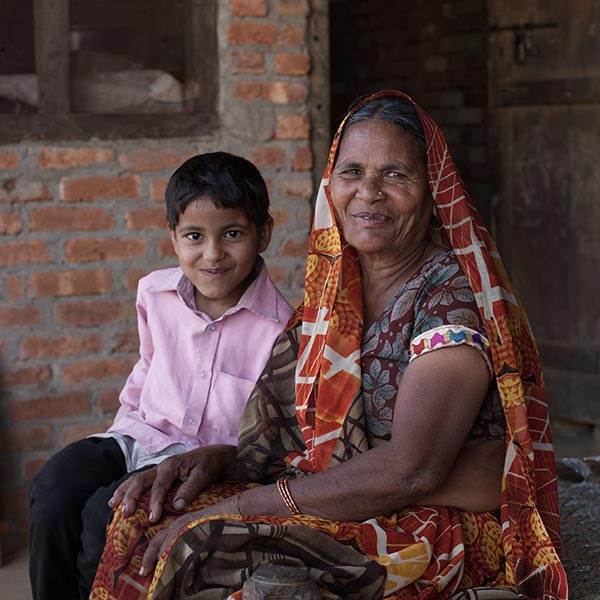
Roshni, from India, is a mother and grandmother who lived with poor vision as a result of bilateral cataracts. Living with her adult children and her son’s family, she was completely dependent on them to survive. With severe vision impairment, she was unable to do any work to contribute to the household. Her daughter, Sonam, couldn’t work outside the home, as her mother needed full-time care.
When Roshni was finally able to have cataract surgery, her vision was completely restored. She was once again able to work around the house and help with field work such as feeding the cattle. Roshni’s daughter, Sonam, was inspired by the incredible impact this sight-saving surgery had on her mother and their entire family. As Roshni no longer needed Sonam as a full-time caregiver, Sonam decided she wanted to help others the way her mother had been helped.
Sonam trained to become a community health worker, and she joined the Operation Eyesight project team in. In this role, Sonam conducts door-to-door surveys in communities near her own, screening people for eye conditions and referring them to a vision centre or hospital when further diagnosis or treatment are needed. Sonam’s visits provide hope for people who have been suffering with vision impairment, not knowing where to go for help. She also provides health education and assesses the health status of each member of the community, including pregnant women, new moms and children under the age of five.
Thanks to the help that Roshni received, her daughter is now providing eye health care to so many more people in need. Their family is thriving, and the effects of Sonam’s work in communities near her home will last for years to come.
This Mother’s Day, you can help a daughter like Sonam get the training she needs to help restore the sight of people like her mother. Please donate to Operation Eyesight to help prevent blindness and restore sight for women and girls. Every dollar will be used to ensure they get the quality eye health care they need right now, and well into the future. You can choose to make a donation in the name of your own grandmother or mother or another important woman in your life.
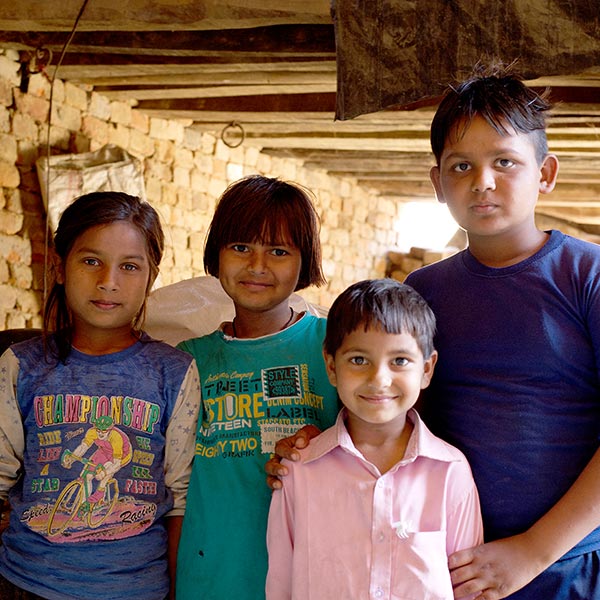
Regina is a 36-year-old mother of five who lives in Zambia’s Sinazongwe district. To provide her family with clean water, she visited her village’s borehole every day until 2018, when the borehole became dysfunctional and stopped providing clean water. At that point, the next closest borehole was 10 kilometres away.
In communities like Regina’s, providing water is generally the responsibility of the women and children of the household. With such a long distance to travel to collect clean water, they were unable to do anything else, including attending school.
When they didn’t have enough clean water, they were forced to collect from unclean sources, and Regina’s household usually suffered from diarrheal diseases. They also faced the risk of contracting trachoma, a painful bacterial disease that can lead to permanent blindness. All this sickness and daily walking took its toll on Regina and her children, and it interfered with her children’s ability to get an education.
In 2020, Operation Eyesight rehabilitated the borehole in Regina’s village, transforming the lives of her and her children. Thanks to donor support of our borehole programs, Regina is able to collect clean water right in her own community. Her children are healthier and can attend school, and she has time to do other things, including working in her vegetable garden.
This Mother’s Day, you can help a mother like Regina provide clean water for her family. Please donate to Operation Eyesight to help prevent blindness and restore sight for women and girls. Every dollar will be used to ensure they get the quality eye health care they need right now, and well into the future. You can choose to make a donation in the name of your own grandmother or mother or another important woman in your life.
