
Calgary, November 19, 2025: Operation Eyesight has been recognized by Charity Intelligence Canada (Ci) as a 2025 Top 10 Impact Charity (this is the eighth consecutive year for this recognition) and a Top 10 International Impact Charity for the sixth consecutive year. Ci evaluates more than 800 Canadian charities based on five criteria: financial transparency, results reporting, demonstrated impact, need for funding and cents to the cause.
Operation Eyesight is an international development organization and registered charity, founded in Calgary in 1963, that works to prevent blindness and restore sight in 11 countries across Africa, North America and South Asia. Work is supported by generous donors and a growing global community.
Globally, 1.1 billion people live with vision loss, which is projected to reach nearly 1.8 billion by 2050, costing the global economy an estimated $411 billion USD annually. Fortunately, 90 per cent of all vision loss is preventable or treatable. That’s where Operation Eyesight comes in.
With a global focus and a local approach, Operation Eyesight's work is fueled by the belief that everyone should have access to quality, affordable eye health care, regardless of ability to pay, gender, age or location. People in low- and middle-income countries as well as in rural and remote communities everywhere are often underserved. Addressing avoidable vision loss for all helps people better secure quality education, employment, independence and opportunities. This helps people transform their lives – see Benjamin's story to learn how.
Operation Eyesight’s impact comes from facilitating locally driven solutions. In-country teams are on the ground, building partnerships with communities, ministries of heath and education, and like-minded organizations. This builds local eye health systems that communities run now and for generations to come – For All The World To See.
Impact in 2024
Vision is about far more than sight – it is about reducing poverty, improving good health and well-being, supporting access to quality education, contributing to gender equality, ensuring clean water and sanitation, addressing climate action and building partnerships for the goals. These are all United Nations Sustainable Development Goals that will help to build a more peaceful and prosperous world for all. Through the support of its generous donors, Operation Eyesight has been contributing to building a more equitable world for more than six decades.
In 2024 alone, through local partnerships, Operation Eyesight screened 2.36 million people, performed more than 280,000 eye surgeries and distributed more than 270,000 pairs of prescription eyeglasses, while also declaring 233 villages Avoidable Blindness-Free. Read Operation Eyesight's Annual Report to learn more. View 2024 highlights below.
About Operation Eyesight
Operation Eyesight Universal is an international development organization working to eliminate avoidable vision loss and bring quality eye health care to communities where it’s needed most.
Founded in Calgary, Canada in 1963, over the past six decades Operation Eyesight has grown to become a global community that spans four continents and includes health workers and volunteers, physicians and ophthalmic personnel, donors, partners, staff and board members.
Whether it’s a simple pair of eyeglasses or a more complex eye surgery, Operation Eyesight believes that everyone should have access to affordable, quality eye health care services. Operation Eyesight's mission is to prevent blindness and restore sight – For All The World To See.
Operation Eyesight exists due to the generosity of donors who have supported this work for more than 60 years.
Donate today to make a lasting impact.
In November 2024, Kris Kelm joined us as our new Global Director of International Programs. Based in Ottawa, Kris brings with him years of experience and connections in the eye health and development sectors, which will serve him well as he leads our program teams, builds new partnerships, and oversees our government and stakeholder relations.
Like many in the development sector, Kris didn’t set out to work in philanthropy – he just sort of fell into it. He had been working at EssilorLuxottica, a producer of ophthalmic lenses and eyeglasses, when a chance meeting with the director of the company’s new philanthropic arm got him involved in charitable efforts. After a few years of running pilot projects, he found himself accepting a new position within the OneSight EssilorLuxottica Foundation Canada.
“It just resonated with me, to have that level of impact on improving somebody’s life by being able to provide better vision,” he says.
Now, he is working to prevent blindness and restore sight across the globe.
Since joining Operation Eyesight, he’s helped lead us through our involvement in the passage of Bill C-284 in Canada, a project he’d already been engaged with in his previous role. The Bill will enact the establishment of a national strategy for eye care.
Kris points out that given our 60-year history of bringing eye care to remote, rural and underserved communities, we can speak credibly on how we might approach things here at home.
On a recent trip to see some of our projects in Ghana and Zambia, Kris reflected on the insights that Canadian policymakers can take from some of our countries of work.
“Canada’s behind, in a sense, in our recognition of vision health as a priority,” he says., “I think we can learn as a country from the other nations that have come before us in prioritizing vision care nationally.”
Ottawa, Canada – November 7, 2024 – Operation Eyesight Universal is delighted to celebrate the passage, on November 7, of the National Strategy for Eye Care Act, Bill C-284. We congratulate the Hon. MP Judy A. Sgro and the Hon. Senator Mohamed-Iqbal Ravalia for their tireless work in successfully bringing this important legislation to pass. (Find the announcement press release here).
By signing this important piece of legislation, the Canadian government has established itself as a global leader by prioritizing eye health care as an integral part of universal health care, while also achieving many of the United Nations Sustainable Development Goals (SDGs). In Canada, health care is a right. This Bill now makes eye health care a right as well. The passage of Bill C-284 gives hope to the one in five Canadians suffering from a condition that puts them at risk of blindness (eight million people) and the 1.2 million Canadians living with vision loss, figures which come from the 2023 Report Card on Vision Health in Canada, released by Fighting Blindness Canada and the Canadian Council of the Blind. The report states that every year, our national economic burden from vision loss is 32.9 billion dollars. The passage of Bill C-284 is about far more than sight – it is about education for children, employment for adults and independence for seniors.
Kashinath Bhoosnurmath, President and CEO of Operation Eyesight Universal, says, “Today, Canadians have achieved the right to sight, as our universal health care will incorporate eye health care for all, with the passing of Bill C-284, the National Strategy for Eye Care Act, into law. Eye health care too is a priority now in Canada. This impacts us all. The law will support the many Canadians who have eye conditions they do not know they have. It will also shine a light into the lives of the millions of Canadians who struggle not only with their vision but also with accessing the eye health care they need—across every part of Canada. This inclusive bill signifies that eye health care must be available, accessible and affordable, and it will support child development and learning, adult employment and productivity and senior connection and independence. We are delighted that Canada has the vision to step forward as a national and international leader. We can all see the benefits ahead.”
The importance of this legislation cannot be overstated. Universal eye health care is proactive, preventative and supportive. It includes regular eye exams, early detection of eye conditions, treatment and ongoing supports. For some, treatment can be as simple as getting a pair of prescription eyeglasses which can be transformative – recent research found that students who don't get the eyeglasses they need learn half as much as students with good or corrected vision, according to the International Agency for the Prevention of Blindness. This research also stated that when vision is corrected in school it can influence lifelong earnings by up to 78 per cent. This example shows that eye health care impacts not only individuals but also local and global economies. Eye health contributes to several of the 17 United Nations Sustainable Development Goals (SDGs), which have been set to build a more peaceful and prosperous world. These include good health and well-being, quality education and poverty reduction.
For decades, Operation Eyesight has brought inclusive eye health care to communities and regions in countries in Africa and South Asia. We do this by partnering with national, regional, and local governments and leaders, including the ministries of health and education. We act as a bridge between communities, connecting every child, woman and man to local eye health care.
In Alberta, we have been piloting eye health care programs by working with medically underserved communities. We are building relationships with and listening to communities to understand their unique needs, cultures, lived experiences and lifestyles (rural, urban and more), while growing our capacity to support this work in a good way. We know that inclusive eye health care works when people are aware of its importance, it is available and accessible when and where people need it – close to home, school or work – and it is open to all regardless of ability to pay.
We welcome the opportunity to collaborate with governments, organizations and community leaders in Canada to inform this new national eye care strategy. We look forward to contributing our voice to advocate for it to be inclusive so that it is accessible, affordable and available to all. We will continue to raise awareness of the importance of eye health and the need for eye health care in Canada. Together, let us take a long view of our collective right to sight.
Kris Kelm, Global Director, International Programs, Operation Eyesight Universal
Kashinath Bhoosnurmath, President & CEO, Operation Eyesight Universal
About Operation Eyesight Universal operationeyesight.com
Operation Eyesight Universal is an international development organization and registered charity working to prevent blindness and restore sight. Our vision is the elimination of avoidable vision loss. Founded in Calgary, Alberta, Canada in 1963, we are now a global community spanning four continents – Africa, Europe, North America and South Asia. Our vision is global and our focus is local, with teams on the ground in communities of work. Through activities like community outreach, water and sanitation projects, and health education, we at Operation Eyesight are addressing the root causes of avoidable vision loss which contribute to six United Nations Sustainable Development Goals: no poverty, good health and well-being, quality education, gender equality, clean water and sanitation, and partnerships for the goals.
Operation Eyesight is celebrating a new partnership with three Ottawa Dragon Boat teams. They are competing in the Ottawa Dragon Boat Festival from June 21 to 23. The three teams are promoting the cause of good eye health for all – here in Canada, in India, and elsewhere around the world. Two teams are named Kaavéri Xpress, while a third all-women’s team is called Kaavéri Sherows.
This new partnership reflects the growth of our global community. An organic connection exists between the teams and Operation Eyesight President and CEO, Kashinath Bhoosnurmath (who goes by Kash), as most members are part of the Indian diaspora community in Canada. While members have settled in Canada, built homes, careers and community, a part of their heart lies in India. “Many of us long to support those back in our Indian home,” Kash says. “We know many people are facing very difficult life challenges there that are different than the life challenges we face here in Canada.”
One way to offer support is partnering with Operation Eyesight to work towards eliminating avoidable vision loss. This is not only about sight but also about learning for children and particularly girls, maintaining a livelihood for adults, and securing independence for seniors. Globally, more than 1.1 billion people are living with vision loss, and fortunately, 90 per cent of these cases are treatable or preventable. However, only a limited number of people are aware of this fact. Many, especially in middle- and low-income countries, are forced to live with blindness or some form of vision loss due to lack of access to affordable and quality eye care services. “This is a kind of global emergency,” says Kash. “If this issue is addressed, communities and countries will experience reduced burdens of poverty and disease, as well as increased levels of productivity and development. These factors are interlinked.”
Operation Eyesight has developed a successful model that results in the elimination of avoidable vison loss. Our tested and evidence-based model is the foundation for our projects in 10 countries. “In India alone, we proudly boast over 1,300 villages that have been declared free of avoidable blindness on a sustainable basis. Our story needs to be known and told,” says Kash. An eye exam and a pair of prescription glasses, or a simple cataract surgery is often all that is needed to bring someone's future back into focus. “Tested and often cost-effective solutions are available. What is needed is awareness, collective will, and support among those who can lend a hand.”
The partnership between the boat teams and Operation Eyesight flows not only from shared values and vision, but also from the power of water, which is fundamental to the boat teams and to healthy eyes. While the two Kaavéri Xpress teams and the all-women Kaavéri Sherows Ottawa Dragon Boat teams will be paddling down the Rideau River on race day, two rivers will be in their hearts, as the teams are named after the sacred Kaveri River in southern India. Team captain Lokesh Siddaramanna explains, “Kaaveri connects us back to our roots, as it’s a lifeline for farming and drinking water for much of Southern India.” He adds that the name was chosen because it resonates deeply with people across the region, lifting their spirits and connecting with their hearts.
There are many parallels between the dragon boat teams and the global community of Operation Eyesight. Boat teams must recruit committed members, train collaboratively and work in sync with one another to successfully compete against other teams. The global community of Operation Eyesight must recruit committed partners, train local health care workers and work collaboratively with partners, hospitals, governments and communities to eliminate avoidable vision loss. Everyone must keep their eyes on the finish line. How fast they finish the race really depends on how successfully they can work together.
During the festival, Kash and Myrna Linder, Operation Eyesight Director of Fund Development, will join a pre-race pep talk, cheer on the teams, and attend an evening dinner to connect with the members. They will also present on Operation Eyesight programs in India, South Asia and Africa. As the dragon boat teams race down the river, their support will speed Operation Eyesight along in the race to eliminate avoidable vision loss.
“We are so grateful for the partnership between the Kaavéri Xpress and Kaavéri Sherows Ottawa Dragon Boat teams, and the connection to the Indian diaspora community,” Kash says. “This is really helping us to race not only into the next village of work, but also the next 10, 100 and 1,000 villages, so that one day, hopefully very soon, we can cross the finish line by eliminating avoidable vision loss entirely.”
Support the Kaavéri Xpress and Kaavéri Sherows Ottawa Dragon Boat teams by cheering them on and helping them race towards the finish line – and towards eliminating avoidable vision loss – by donating here.
Picture this: you're on a mission to declutter your closet, so you start digging through a stack of old boxes. And what do you find? A bunch of old eyeglasses. You think to yourself, "I should donate these to help someone in need!"
But here's the thing: as much as we appreciate your thoughtfulness, we no longer take used eyeglasses. In fact, we stopped collecting eyeglasses back in 2003.
Everyone's eyesight is different. For a pair of eyeglasses to be useful, they need to be screened and fitted for someone through a professional eye exam. To make use of an existing pair, we’d need to find someone with that exact prescription.

It can be a difficult and time-consuming process to match a person’s prescription to a used pair of eyeglasses. In fact, a 2012 study1 found that matching people with used glasses can cost up to twice as much as supplying them with new ones. And even then,it’s not always an exact match. That’s why we provide people with a new pair of eyeglasses, tailored exactly to their needs.
However, people continue mailing used eyeglasses to us, showing up with boxes full of them, or leaving a bag of them on our doorstep. Unfortunately, we can’t put them to use. But don’t worry! There are other ways you can make a difference and help those who need a brand-new pair of eyeglasses.

A simple eye exam and a pair of prescription eyeglasses can transform a person’s life. It can help someone get back to work, keep a child in school and restore independence to a senior citizen.
In partnership with local hospitals and governments, we establish vision centres and eye units in communities in sub-Saharan Africa and South Asia. These facilities are community hubs where people can go for an eye exam and be fitted for a pair of custom eyeglasses.
Most of the eyeglasses we provide to patients are funded by the generosity of donors like you. As little as $20 dollars can provide a pair of life-changing eyeglasses. Please consider making a small donation to help bring someone’s future into focus with a new pair of eyeglasses. Thank you for your support!
From learning in the classroom to playing in the schoolyard and at home, vision is vital to how kids grow and develop – so vital in fact, that up to 80 percent of early learning is visual. Whether you're two or 102, vision plays a key part in quality of life.
Dr. Boateng Wiafe, our technical advisor and author of The healthy eyes activity book: A health teaching book for primary schools, says there are five things everyone should do to take care of their eye health.
1. Book that annual eye exam – In Canada, some provinces offer free eye exams to children and seniors as part of provincial health care. Just like regular visits to the dentist, annual eye exams should be part of your family’s self-care routine.
2. Know the signs – Identifying a vision problem early is a critical first step. If you or a family member squints, tilts their head, closes or covers one eye, has difficulty concentrating or needs to sit close to the TV, these are all signs that a vision problem could be at play.
3. Limit screen time – A 2021 study found that extended screen time is associated with a 30 per cent higher risk of myopia (nearsightedness) and therefore needing prescription eyeglasses. When combined with excessive computer use, the risk more than doubles, reaching approximately 80 per cent.
What’s a person to do? Remember the 20-20-20 rule – every 20 minutes, look at an object approximately 20 feet (six metres) away, for 20 seconds. Pro tip: it works for both kids and adults!
4. Get outside – Getting outside to walk, play or move is a great way to take a break from screens – not to mention get some fresh air and vitamin D. According to the Canadian Association of Optometrists, increased time outdoors protects people from the onset of myopia, or nearsightedness.
5. Protect your eyes – Besides making you très cool, the right pair of sunglasses protects eyes from ultraviolet rays from the sun. Also remember to stay safe and avoid eye injuries by using protective eye gear when you’re doing household chores and ensuring your kids have the right eye protection for sports.
Visit our child eye health page for a free eye health tip sheet and activity sheet for kids.

In focus: global eye care
In many parts of South Asia and sub-Saharan Africa, lack of access to proper eye care isolates children from their peers and often prevents them from attending school.
For adults, vision loss and lack of adequate eye health care can impact a person's ability to work, care for their family and build social connections.
Through our community eye health programs, we are giving children, women and men access to prescription glasses, treatment and surgery, with the help of our partner hospitals and through the generosity of our donors.
Whether you live here in Canada or in one of our countries of work across Africa and South Asia, we believe everyone should have access to affordable, high quality eye health care.
Learn more about what you can do to help make eye health services accessible for all.
For more eye health information and the latest news from Operation Eyesight, subscribe to receive our emails.
The recent adoption of the World Health Assembly resolution, ‘Integrated people-centred eye care, including preventable vision impairment and blindness’ (IPEC resolution), by 194 countries is a major milestone for global eye health.
In 2019, the World Health Organization launched the World Report on Vision. The first report of its kind, it laid out a comprehensive global strategy directed towards addressing global inequalities in access to eye health care and service provision. The report found that 2.2 billion people suffer from vision impairment globally, but nearly half of those cases could have been prevented or have yet to be addressed. In many cases, a pair of eyeglasses or a simple surgery can correct vision impairment. Yet for many – especially those in developing countries, those in rural areas, and women and girls – these simple solutions are out of reach.
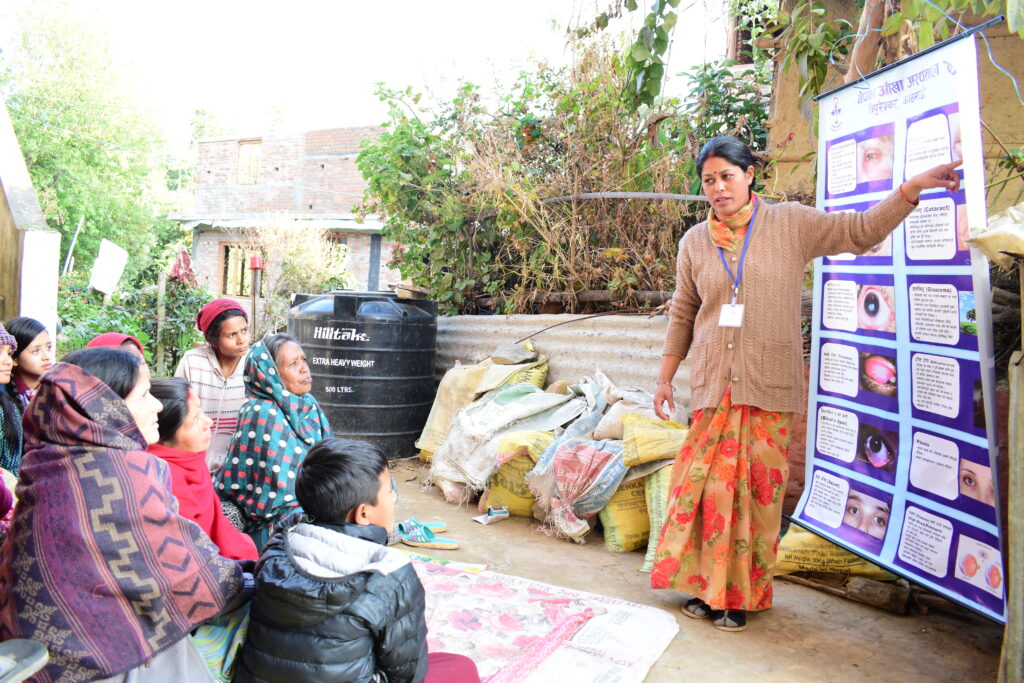
On August 4, 2020, a new World Health Assembly resolution was adopted by the 194 member states of the World Health Organization. The integrated people-centered eye care (IPEC) resolution, which was sponsored by 45 countries, is a political commitment to advancing eye health care as part of universal health care. The World Report on Vision estimated that the number of people living with blindness could triple by 2050, and that was before the COVID-19 pandemic strained health care systems even further.
Operation Eyesight welcomes the new resolution and is pleased to note that its recommendation to focus on people-centered eye care is an approach that we are already taking in our service provision. Operation Eyesight is thrilled to see that eye health is being recognized as a key component of overall health and well-being and not just a peripheral health issue. The IPEC resolution is a compelling confirmation of how crucial our mission is, now more than ever.
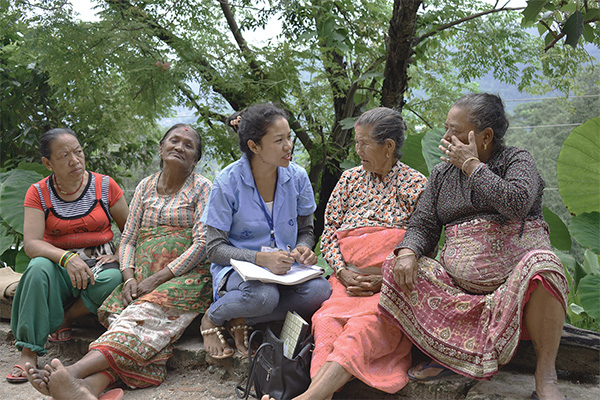
Although the COVID-19 health crisis has captured the world’s attention, the global eye health crisis has not diminished – it’s been exacerbated. As COVID-19 spreads around the world, it is continuing to strain health care resources in each of the countries where we work. As a result, it remains a challenge to our eye health programs. Operation Eyesight pivoted our day-to-day tasks to respond to COVID-19, but that did not detract from our focus. Our intent in supporting health care systems was to facilitate their ability to resume the provision of eye health services as soon as possible.
Operation Eyesight is working towards promoting a safe environment to start implementing our regular outreach activities, including re-launching community interventions, establishing new vision centres, and implementing new technologies such as telehealth. We have exciting plans to bring affordable, sustainable, quality eye health care to more people than ever before. COVID-19 has changed our day-to-day activities this year, but it has not changed our focus. We remain committed to ensuring entire communities are avoidable blindness-free.

April seventh to the 14th is National Volunteer Week in Canada. To celebrate, we sat down with Blaire, Volunteer Program Coordinator, to ask her what makes our volunteers special.
What’s the best part about working with the volunteers?
“Honestly, it’s how enthusiastic the volunteers are to learn! They want to learn and help, and each of them has their own strengths that they bring to their role. Working with them has taught me to be more flexible and to understand that everyone has a different learning style. We teach each other when we work together!”
What do the volunteers bring to Operation Eyesight?
“They’re such a huge part of what we do! They’re the ones who make it possible to thank all our donors. They’re the ones writing all the thank you cards, making thank you phone calls to recent donors, they fold tax receipts and keep our office administration running. So much of our work is made possible by the work they do!”

What’s something unique about our volunteers?
“They’re from all walks of life – we have volunteers who are in high school, university, some of them are new moms, some are on disability, some of them are between jobs, seniors and so on. There is so much diversity among our volunteers, which means we get different perspectives and talents to draw from all the time. And they’re from all over the world, too!
A pleasant surprise is that some of our volunteers have found their own replacements when they leave, mostly for a job. They believe in the work they’re doing, and even though they have to move on to a different stage in their lives, they’ll refer a friend or family member to Operation Eyesight because they want to continue to be involved in some way and enjoyed their experience working on our team.”
What would you like to thank our volunteers for?
“For bringing joy to my work every day! They bring such good energy into the office when they come for their shifts. Even on Monday mornings when I’m still getting over the weekend, they come in cheerfully and brighten my day. They’re always an inspiration! And something I want them to know is that they are employees – they go through the same onboarding, they sign all the same paper work. They may be unpaid in money, but they’re paid in six figures – S-M-I-L-E-S. Not just our smiles here in the office, but in the bright-eyed smiles of the people whose lives are being changed with the gift of sight.”

Our volunteers do so much, and we can’t thank them enough. Happy National Volunteer Week to all volunteers out there – Thank you so much for all that you do!
We celebrated World Sight Day on October 11, but for our hospital partners, one day wasn’t enough! They needed a whole week to celebrate their achievements. They were also celebrating you, because without your generous support, none of this would have been possible! Across India and Nepal, 15 partner hospitals marked their achievements in the elimination of avoidable blindness and raised awareness about eye health. Their biggest accomplishment? The declaration of a spectacular 281 avoidable blindness-free villages by eight hospitals. Wow!
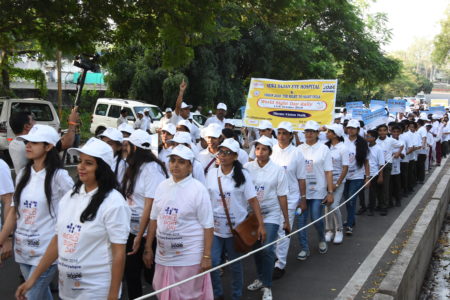
When an objective third party tells you that you're making an IMPACT in this world with the highest integrity and transparency, you shout it from the rooftops and thank the donors, supporters, partner hospitals, community health workers, volunteers and staff who are making it possible!
We’re thrilled to have been named one of the Top 10 Impact Charities of 2018 by Charity Intelligence Canada. Just as for-profit organizations have an obligation to their shareholders, we have an obligation to our donors. We invest donor funds carefully and efficiently to create the long-term changes that will help eliminate avoidable blindness.
This recognition is a significant milestone on our shared path to help more people who are needlessly suffering, and to make a generational impact that will ensure the communities we work in will have access to the eye care they need today, tomorrow and in the future.

Charity Intelligence’s impact rating is determined by analyzing the measurable return for every dollar donated. They hold charities accountable for the support they receive from Canadian donors, and they observe that people will generally give more to charities when they are confident their donation will make an impact. Operation Eyesight made the list by eliminating avoidable blindness at the community level, through our Hospital-Based Community Eye Health Program model.
When assessing our impact, we look at how well we are meeting our strategic goals. We look at the number of patients treated, how much local capacity is being built and how well our hospital partners are progressing towards operational sustainability.
We create eye health-seeking behaviour in the communities we work in through outreach and education programs, and we empower communities to take responsibility for their eye health needs. This plays a vital role in helping to ensure our projects are sustainable and that people will continue to seek help even after our formal partnership with the hospital has ended.
The ripple effect is incredible! Kids can see to read and go to school, giving them the opportunity to get an education and later find a job and provide for themselves. Parents can return to work and provide for their families. Grandparents can watch their grandkids grow up, and their grandkids don’t need to stay home to care for them. This way, children can get an education and thrive in the future. Entire communities are transformed with the gift of sight!
We can’t thank our donors enough for supporting our sight-saving program model. Thanks to people like you, we’ve declared over 1,000 villages avoidable blindness-free in India and Nepal. And we’re not done yet! We’ve had great success in the communities we work in, but there are still millions of people who need our help. With your help, we can reach them – For All The World To See!
Click here to donate and make an IMPACT.
