
As a community health volunteer, 28-year-old Faizunnahar spends her days bringing primary eye health care to the doorsteps of families who live in her area. She enjoys her job, but she knows that not everyone in her community approves of her work. In rural Bangladesh, where Faizunnahar lives, job opportunities for women are often limited by societal norms, and those who step outside of traditional roles often face criticism.
Nevertheless, with her family’s support, the young volunteer persists. She loves making an impact in her community, and she is proud to contribute to the family finances through the monthly stipend she earns. She is determined to build a better life for herself, her family and their young son.
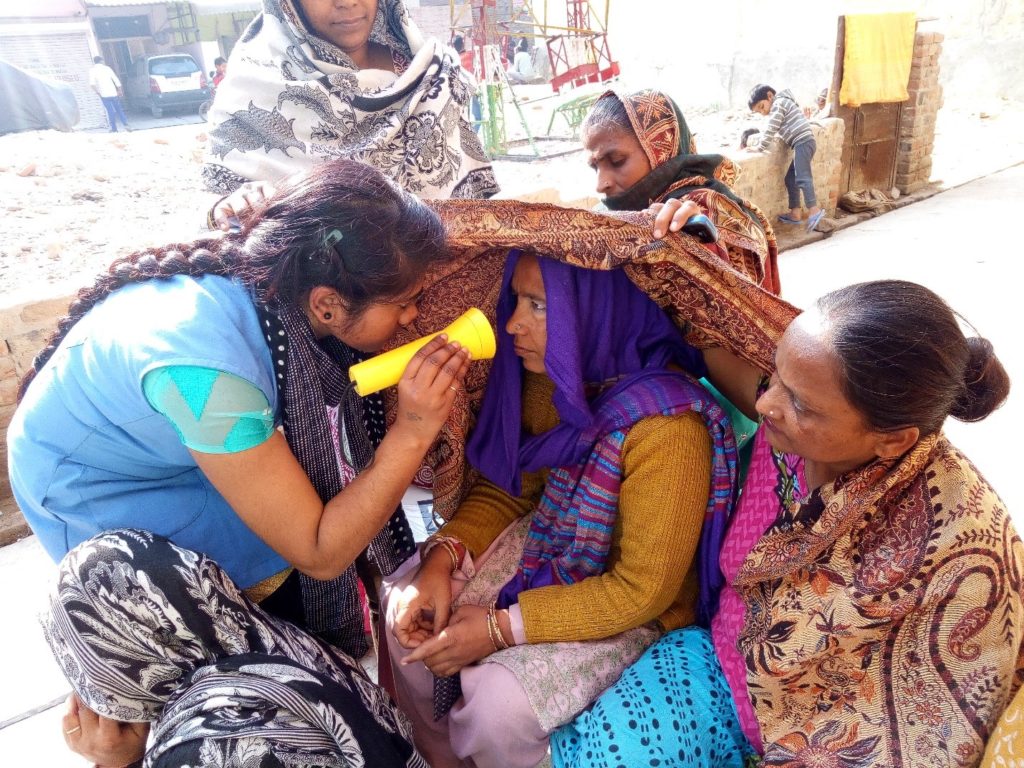
Working with our partner organization, Symbiosis International, Faizunnahar goes door to door in nearby communities doing preliminary eye screenings and referring those with vision problems to the nearby Madarganj Vision Centre.

As a child, Faizunnahar remembers her father struggling with an eye problem. To get it treated, he had to travel from their village of Ruknai to the capital city Dhaka, nearly 200 kilometres away. His difficulties in getting treatment for his vision problems stayed with her and would later inspire her to seek out work in the healthcare sector.
When she first heard about the opportunity to become a community health volunteer, Faizunnahar worked quickly to reach out to a contact and put together a resume. After writing an exam, she was excited to learn she got the job. Since then, she has worked in maternal, newborn and child health, as well as primary eye care, for which we provided the training. She is proud of her achievements and says her greatest joy comes from knowing that her work is helping transform lives.
This International Women’s Day, we celebrate the thousands of women like Faizunnahar who are breaking barriers to help us deliver essential eye health care at the community level. As community health workers/volunteers, they have an opportunity to become leaders in their communities and act as catalysts for positive health outcomes. This employment improves their ability to become active participants in their family’s socioeconomic stability.
You can help support our mission to achieve gender equality in eye health care by sharing this post with friends and family, by learning more about the issues or by making a donation.
Taking a closer look at the connections between avoidable vision loss and gender inequalities
The oldest of five children, Thandiwe in Zambia has always looked after her younger siblings. When the village borehole broke down, she had to fetch water from the river, and her family couldn’t wash as often. Thandiwe noticed some of her siblings had itchy, red eyes. Soon, she developed the same eye condition. Her left eye swelled and her eyelid turned inward, causing unbearable pain as her eyelashes scratched her cornea. With no money or access to a doctor, her eye became worse and worse until she lost vision in it entirely.
Priya in Nepal can’t remember when she first started having trouble seeing, but her vision kept deteriorating until one day she fell and injured herself while climbing the steep trail leading from the village to her house. Figuring that blindness was an inevitable part of old age, she stayed at home, unable to visit friends and grandchildren. Eventually she couldn’t even reach the outhouse without assistance. She felt like a burden to her family.
Mary, in Kenya, loved school from her very first day in the classroom and dreamed of becoming a teacher someday. After she turned 13, she started having trouble reading the chalk board. She had to copy notes from her friends and couldn’t do her homework in the dim light at her house. Her grades began to slip. She asked her parents to take her to an eye doctor, but money was too tight because they were saving to send her brother to college. By age 15, Mary quit school and decided to get married, her hopes of teaching now crushed.
None of these characters are real, but they represent the millions of women and girls around the world who are living with avoidable vision loss and blindness. We hear stories like these every day.
The prevalence of vision loss is higher among women and girls than it is for men and boys; 55 per cent of people experiencing vision loss are female. And while there are some biological factors at play, the reasons for these discrepancies are largely social.

Why women and girls experience more vision impairment
Women live on average longer than men, and many conditions that rob people of their sight are associated with old age. This includes cataract, presbyopia, glaucoma and age-related macular degeneration. According to estimates, two-thirds of cataract blindness globally occurs in women.
Traditional gender roles are another factor, especially in some regions.
Women and girls are two to four times more likely than men and boys to get trachoma – the leading infectious cause of blindness worldwide. Trachoma is caused by bacteria that spreads through contact on hands and clothing. Small children are especially susceptible, and in turn, they often pass it on to their caretakers. Women and girls may also get infected from household cleaning and doing laundry.
Obstacles to eye health care access
The barriers to health care for women and girls vary widely from region to region, but there are trends that we can observe across the countries where we work. These include:
Addressing these diverse challenges is crucial for breaking down the barriers that prevent women and girls from accessing essential eye health care services.

Working toward gender equality
Our approach, called the “Hospital-Based Community Eye Health Program Model,” is designed to address inequalities to accessing eye health care, starting at the village level.
Most of the community health workers trained by Operation Eyesight’s partner hospitals are women, which gives them the opportunity to become trusted leaders in their communities and helps them contribute to family finances. They also bring eye health screenings to people’s doorsteps, meaning that women and girls don’t need to travel to get primary eye care and referrals.
Additionally, we work with our partner hospitals to establish vision centres closer to the communities where we work, making it easier for everyone to access diagnosis and treatment. Our partner hospitals also provide safe transportation for patients – usually by bus – to the hospital so that they can get their surgeries without worrying about how they’ll get there.
Finally, by providing surgeries, eyeglasses and other treatments free of charge – or at a highly subsidized rate – we can decrease some of the financial barriers women and girls face. We strive to provide quality eye care services to everyone – regardless of gender, age, ability to pay or other personal circumstances.
Clean water for gender equality
In a village in Zambia’s Mkushi District, a group of men and women stand over a water borehole, tools scattered at their feet. Two of the women turn a pipe with wrenches, their faces furrowed in concentration.
These men and women are Area Pump Minders in training – volunteers who fix and maintain water pumps in their communities. The pump minders are just one of our strategies for keeping communities supplied with a reliable source of clean water. As well as rehabilitating boreholes, we also work with communities to drill new ones, and provide training in WASH – which stands for Water, Sanitation and Hygiene.

While traditionally the pump minder volunteers were all men, we’re seeing more women join the teams. Between 2022 and 2023, we trained half a dozen women in borehole maintenance and repair in Zambia, placing the skills to keep the water flowing in the hands of those who need it most.
Clean water means that families can wash hands, faces and clothing regularly, which prevents the spread of trachoma – lessening the chance of vision loss and blindness, particularly among women. And there are countless other ripple effects for women and girls when they have access to clean water. It helps with the maintenance of menstrual hygiene, impacting health, dignity and overall quality of life. And, as women and girls are usually tasked with hauling water for their families, having a nearby borehole can help keep girls in school and give women more time to pursue economic activities to support their families.
Dismantling gender-related eye health myths in the foothills of the Himalayas
In the villages of the Udhampur block in northern India, vision problems are often seen as a sign of bad luck. A girl wearing glasses might be told she’ll never have a good marriage, and a baby’s bad eyesight might be blamed on past life sins. A girl with a squint could be seen as a curse for the whole family.
Those are some of the beliefs a recent pilot project took aim at.
Created in partnership with NorQuest College and the Rotary Eye & ENT Hospital, the project provided services through a “Mobile Vision Centre” – a four-wheel-drive van staffed with an eye health team comprised mostly of women. The van roamed the area’s rugged roads, bringing primary eye care and education to people’s doorsteps.

More than 27,000 people received training pertaining to eye health myths during the project duration. A before-and-after survey that checked people’s attitudes and beliefs regarding eye health for girls and women showed dramatic differences after the intervention. With that success in mind, our teams are looking to implement strategies from the project throughout our programs.
Read our new Global Strategy to find out how we plan to continue providing essential eye health care to women and girls and other underserved groups. Donate today to help us bring quality eye health care to more women and girls.
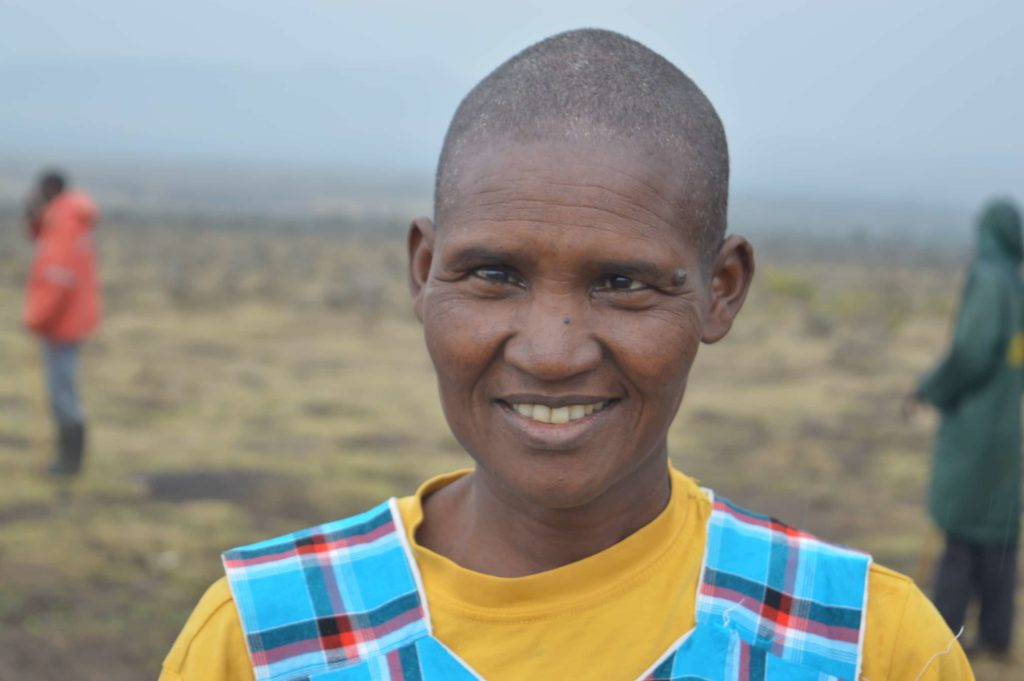
In her village of Kormantse, in Ghana’s Central Region, 38-year-old Mabel wears many hats – she’s a single mom, a nurse and a leader in her community.
She’s also proof of the unique role women can have in impacting the health of communities across Africa.
“I was working as a community health nurse before I was invited to be trained as a primary eye care worker,” Mabel says, referring to her work with the care team at the government-run Kormantse Clinic. “There’s a high prevalence of eye conditions among the fisher folk in my community. The nature of their work makes them more likely to suffer from eye diseases. That’s why I joined the fight against avoidable blindness in the municipality.”
Today, thanks to the training she received through Operation Eyesight, Mabel provides education and eye health screening to others across the Municipality of Mfantseman. “I still carry out my duties as a community health nurse, but eye care is now well integrated in the things I do,” she says.

Vision impairment disproportionately affects women and girls across the globe, yet they are less likely to be prioritized for eye care. Lack of income and transportation are common barriers, as are traditional female responsibilities like child care and collecting water. That's why it’s so important to have women like Mabel trained to screen for eye conditions. She can reach women and girls at home, provide referrals, and offer the information and reassurances that some may need to seek treatment.
As a single working mom, Mabel needs to balance her work with caring for her young daughter. She says she enjoys the flexibility that comes with working with Operation Eyesight.
“Operation Eyesight supports me with transportation and meals when I go to the field,” she says. “I save part of my wages to pay for my child’s school fees.”

Mabel says she’s passionate about helping others, especially those experiencing poverty.
She recalls a patient whose story has stuck with her. Yaw, a 69-year-old man who lives in Kormantse, had been experiencing blurred vision for three years. Mabel says she visited his home as part of a routine door-to-door screening and quickly discovered that he had cataracts. She referred him to the base hospital for surgery, which he promptly visited the next day. He underwent sight-restoring surgery and today he can see clearly.
Other times, Mabel may face more reluctant patients, so part of her job is to encourage those who have had little interaction with the healthcare system to get treatment, and to assure them that it’s both safe and worthwhile. She adds that spending time with people in her community is what makes her work so rewarding.
“The job gives me the opportunity to interact with many people,” Mabel says. “My family sees this job as an opportunity to change the perception about eye health through education.”
March 8, 2023 is International Women’s Day – it’s an opportunity to spread the message of gender equality and highlight the importance of creating a society free of gender bias. It’s also a chance to celebrate the unique role women like Mabel play in communities globally.
Most of the community health workers trained by Operation Eyesight partner hospitals are women. When women are employed as community health workers, they have an opportunity to become trusted leaders in their communities and act as catalysts for positive health outcomes. This employment improves their ability to become active participants in their family’s socioeconomic stability.
Not only is empowering women and reducing gender inequalities the right thing to do, it’s also the smart thing to do. Evidence shows that empowering women is one of the strongest catalysts for driving sustainable development across all sectors. It enhances economic growth, improves education and increases positive health outcomes. You can learn more about our gender strategies by signing up for our eNewsletter.
Today, on International Women’s Day, we are excited to tell you about an innovative project we are undertaking in partnership with NorQuest College (Edmonton, AB) and the Rotary Eye and ENT Hospital (Udhampur, India). The goal of the project is to give people in a rural district in northwest India greater access to eye health care services while addressing myths that stigmatize women with poor vision.
Udhampur Block is a rural area perched high in the foothills of the Himalayas in India’s Jammu and Kashmir region. Due to the rugged terrain and roads that are often affected by flooding, it can be difficult for the people who live there to access services like eye health care. For women and girls, the barriers are even greater, as the men and boys in their families are often prioritized for health treatment.

What’s more, our research in the area revealed health myths affecting women, including those that suggest that a woman wearing eyeglasses is in poor health overall, that poor eye health is a result of sinful behaviour in a past life and that only elderly people should wear eyeglasses.
The idea behind this project is to outfit a four-wheel-drive vehicle as a fully functioning optometry clinic. An all-female heath care team will run the mobile clinic and deliver services to everyone in the project area.
We are training eight local women as Community Health Workers to do door-to-door eye screenings and to provide referrals to the Rotary Eye and ENT Hospital. They will also deliver educational sessions to women’s groups, with the goal of debunking the female eye health myths that exist in the communities.

People in the area will also be asked for their input on what kind of eye health education they would like to receive using a type of participatory research called PhotoVoice. This research will place cameras into the hands of locals, who will be asked to take pictures of things that highlight the themes of the research: activities, beliefs and circumstances of eye health.
Ninety per cent of blindness worldwide is preventable or treatable, but people in underserved areas like Udhampur Block often fall through the cracks. This project will help people get access to the eye health care they need while also addressing some of the gender inequalities related to poor vision.
This innovative project aims to:
✔ Address the barriers faced by women and girls by targeting feminine eye health myths that perpetuate inequality;
✔ Incorporate input from local women on the content of our eye health education sessions and the delivery of eye health services on an ongoing basis;
✔ Activate a Mobile Vision Centre to provide eye health services to people’s doorsteps, so that all residents, including women and girls, can avoid travel-related barriers;
✔ Make role models of local women and girls by publicly engaging them in good eye health practices; and
✔ Generate buy-in from men and boys about the importance of women’s and girls’ eye health.
We are grateful to partner with NorQuest College on this initiative, which was awarded the Fund for Innovation and Transformation by the Inter-Council Network and Global Affairs Canada. To learn more, sign up for our newsletter to receive project updates: operationeyesight.com/signup
Women play a critical role in the advancement of global health, both in formal roles and informally within their families and communities, but men continue to hold the majority of leadership positions. Women make up 75 percent of the global healthcare workforce, yet occupy less than 25 percent of the most influential leadership positions.[1]
Globally, women experience a disproportionate burden of disease and death due to inequities in access to basic health care, nutrition and education.[2] Women’s leadership in global health is essential to address these inequities, because women know first-hand the unique barriers women and girls face when accessing health resources. Therefore, they need to be involved in decision-making processes in addressing these gaps in health provision.
Shortly after COVID-19 was declared a pandemic, United Nations Secretary General António Guterres urged governments to put women and girls at the centre of their efforts.[3]
“That starts with women as leaders, with equal representation and decision-making power…Gender equality and women’s rights are essential to getting through this pandemic together, to recovering faster, and to building a better future for everyone.” - António Guterres
In Kenya, our Country Manager Alice Mwangi provides overall strategic direction and leadership for our Kenyan programs. Alice is a public health specialist with a wealth of experience in developing, managing and implementing programs. In her role, she develops valuable partnerships with hospitals, the Ministries of Health and Education and other non-profit organizations. These relationships are essential for implementing our flagship Hospital-Based Community Eye Health model.

Women have been bearing the brunt of COVID-19 around the world.[4] Alice knows first-hand that it is important to empower women to become catalysts of change to address health issues and create a lasting impact. Under her leadership, our COVID-19 response in Kenya focused on training female community health volunteers to provide critical health information to their communities. In total, these community health volunteers provided health education on COVID-19 to 602,366 individuals.
Globally, 55 percent of people experiencing vision loss are women or girls.[5] This is partially because women tend to live longer than men and are therefore at a higher risk of age-related eye health issues such as macular degeneration. In many of the countries where we work however, women face more barriers than men when accessing eye health services.
We’re working with communities to empower them to take ownership of their eye health needs, starting with female community health workers. Women like Pinky, an Operation Eyesight-trained community health worker from Berasia, India, are champions of eye health in their communities. Pinky, who is a single mother, visits households in nearby villages to screen people for eye conditions and refer them for follow-up care if needed. In this role, she is not only able to help people in her community, but she’s also able to independently support herself and her daughter without assistance from male family members.

Because of this, Pinky has become an inspiration to many young girls in her village. They look up to her for her tireless work ethic and independence. She says she finds her work so rewarding that she hopes that her daughter will one day also choose to work in the eye health sector. Pinky and many other female community health leaders like her are helping move the dial on eye health inequity.
In celebration of #IWD2021, we #ChooseToChallenge inequities in eye health and support female leadership in global health.
[1] https://www.lshtm.ac.uk/research/research-action/women-leaders-global-health
[2] https://www.ncbi.nlm.nih.gov/pmc/articles/PMC4167801/
[3] https://www.unwomen.org/en/news/stories/2020/4/statement-sg-put-women-and-girls-at-the-centre-of-efforts-to-recover-from-covid19
[4] https://news.un.org/en/story/2020/09/1071502
[5] https://www.iapb.org/learn/vision-atlas/inequality-in-vision-loss/gender/
Although our mission to prevent blindness and restore sight is most commonly linked to the Sustainable Development Goals (SDGs) through SDG #3: Good Health and Well-being, our work touches on a number of other SDGs. A reliable supply of quality eye health care is one of the most effective ways to bring communities out of poverty, increase life opportunities and improve productivity. Eye health care intersects with the achievement of many other goals:
#1: No Poverty: by preventing blindness and restoring sight to help people keep their jobs or return to work, eye health care access helps break the cycle of poverty.

#5: Gender Equality and Women’s Empowerment: by training primarily women as community health workers, and by ensuring that women and girls receive equal access to eye health services, our programs give women the opportunity to expand their skills and work to support their families.

#6: Clean Water and Sanitation: by working with communities in Kenya and Zambia to drill boreholes to provide fresh water, and by educating communities to promote good hygiene, we help prevent bacterial infections that can cause blinding trachoma and digestive illnesses.
#17: Partnerships for the Goals: by establishing long-standing relationships with governments and Ministries of Health in the countries where we work, we work to ensure the sustainability and effectiveness of our work.

The World Health Organization’s 2019 World Report on Vision (WRV) estimates that at least 2.2 billion people suffer from vision impairment or blindness. It also estimates that at least 1 billion of these people live with vision impairment that could have been prevented or has yet to be addressed. The report warns that this is likely to increase dramatically in the coming decades due to population growth, aging, urbanization, and behavioral and lifestyle changes.
This report was released before COVID-19 began to overwhelm health systems around the world. If no significant investments are made in eye health care at this time, an even larger proportion of the world’s population will suffer from blindness and vision impairment. This means greater loss of livelihood opportunities, dependency, hunger and malnutrition, and poverty.
By following the WRV’s recommendations and incorporating eye health care into Universal Health Coverage, countries will be taking the first step towards ensuring that vision impairment doesn’t hold their citizens back in a cycle of poverty. Solutions exist right now, and the sooner countries employ them, the better off their citizens will be.
In August 2020, the World Health Assembly adopted a resolution to urge member countries to implement the recommendations of the WRV. This elevated eye health as a priority that must be integrated into national health systems. By working with our partner governments and local Ministries of Health to implement our community eye health model, we are moving one step closer to achieving good health and well-being and making eye health care accessible to entire communities.
Our work would not be possible without support from generous donors like you. Donate today to help us eliminate avoidable blindness. Not only will your gift help prevent blindness and restore sight for those in need, but you’ll also contribute to the achievement of the SDGs – For All the World To See!
Vision impairment is a gender issue. Women and girls are more likely to suffer from vision impairment than men or boys. This is due to many factors, such as their traditional roles in the household involving cleaning and caring for ill family members, and the fact that they are less likely to receive access to care and treatment when available. More than 20 million women and girls are blind, and more than 120 million are visually impaired. The numbers are staggering.
The theme of International Women’s Day 2020 is an equal world is an enabled world. We know that a gender equal world benefits everyone, not just women. We imagine a world where women and girls no longer needlessly suffer from vision impairment because they are not prioritized for treatment. We envision a world where women and girls have equal access to essential care and are empowered to take ownership over their eye health needs. In 2015, the United Nations set out 17 Sustainable Development Goals (SDGs) as a blueprint for a better world. Access to quality health care for all is paramount to SDG #3 - Good Health and Well-Being. To achieve both the SDGs and the World Health Organization’s VISION 2020 goals, we must eliminate all forms of inequity in access to eye care for women and girls.
In spirit of IWD 2020, we are sharing the successes and challenges eye health organizations have had in their gender equity programming. This gives us an idea of where we’re presently at with integrating gender strategies into global eye health, while also highlighting the gaps that still need to be addressed going forward.
Two of the biggest challenges to gender equity programming that we face in eye health are addressing cultural barriers, and getting the full buy-in and support from local partner organizations. The Fred Hollows Foundation addressed these challenges by partnering with the Ministry of Women’s Affairs in Cambodia to conduct gender equity and eye health training within communities. They also partnered with the Ministry of Health to further embed gender equity within health programs. SDG #17 - Partnerships for the Goals, advocates for inclusive partnerships between governments, the private sector and civil society. By partnering with local, regional and national levels of government, we can address gender barriers to eye health and ensure the long-term sustainability of our efforts.
To achieve gender equity in eye health, we need the full participation of women and girls and men and boys. Operation Eyesight promotes this by training community health workers who conduct door-to-door surveys in their communities. They identify all people in need of eye care services and refer them to vision centres to ensure that they receive appropriate treatment. They also counsel the patient’s family members to ensure nobody is left behind. A champion of Operation Eyesight is Jaya Raju. Jaya is a widow who lost her husband in a fatal accident and was disowned by her in-laws. She suffered from severe depression following the accident, which was compounded by her fear regarding how she could support her child and aging parents. While looking for work, Jaya learned of an opportunity to work as a community health worker for Operation Eyesight and decided to apply. Although Jaya had very little experience, her determination and commitment landed her the job. Now, Jaya travels for two hours a day visiting households, talking to people and listening to their problems and concerns. She is now the breadwinner of her family. Her parents call her “Shanni Jaya” (Smart Jaya). They say, “she has now found the purpose of her life.” Jaya is an inspiration to other women in her community. Her willingness to learn and step outside of her comfort zone has allowed her to realize her full potential and achieve her dream of helping people by eliminating avoidable blindness from her community.
The International Agency for Prevention of Blindness (IAPB) Gender Equity Working Group brings together eye health organizations working to eliminate avoidable blindness and eliminate all forms of inequity for women and girls. Collectively, we are addressing SDG #1 – No Poverty, SDG #3 – Good Health & Well-Being, SDG #5 – Gender Equality, SDG # 6 – Clean Water & Sanitation, and SDG # 17 – Partnerships for the Goals.
Thank you to Fred Hollows Foundation, Seva, Mission for Vision and Operation Eyesight for their contributions to this article.
Blessings is a twelve-year-old girl from Zambia. She attends Mweela School in the Sinazongwe district. This school is currently considered one of the best in the area, but that hasn’t always been the case. Eleven years ago, this same school had an enrollment of 112 boys and only 86 girls. Over the last decade, the school’s population has grown to 190 boys and 282 girls, a ratio unprecedented in Sinazongwe.
The reason? Simple. Water.
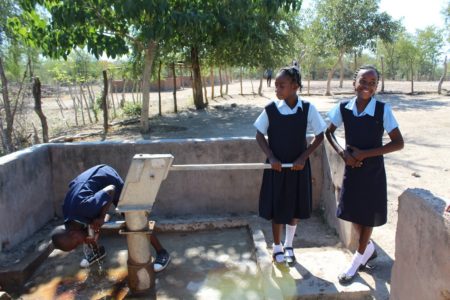
In 2008, Operation Eyesight drilled a borehole near the Mweela School. This meant that women and girls didn’t have to walk as far for water. Mothers could now walk their daughters to school on their way to get water, instead of needing their daughters to miss school to get water with them.
Marriam Matimba, the school’s headteacher, says that the school is well-known in the area for its sanitation opportunities. “A school with adequate access to clean water and sanitary facilities is a girl-friendly school,” Marriam explains.
When communities don’t have access to clean water and sanitary facilities, women and girls bear the brunt of the opportunity cost. When girls have to fetch water or are unable to attend school because of a lack of sanitary products and facilities, they miss out on valuable educational and social opportunities.
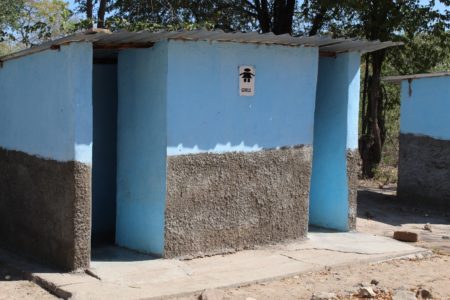
What do boreholes have to do with preventing avoidable blindness? More than you might think. We drill boreholes in communities where trachoma is endemic. Trachoma is a bacterial disease that leads to irreversible blindness when it’s not treated, and a lack of fresh water and adequate hygiene is one factor that contributes to the spread of trachoma. Due to factors such as gendered household duties such as cleaning and caregiving, women are much more susceptible to contracting trachoma than their male counterparts.
A new borehole in a community doesn’t just provide access to fresh water. It helps build resilient communities, prevents illness and can even increase the enrollment of girls in schools. Boreholes help give girls like Blessings a strong start so that she has opportunities for her future.
You can help bring clean water to a community and educational opportunities to girls who are often left behind. Please donate today.
Blindness is a gender issue. Blindness discriminates. Fifty-five per cent of the world’s blind are women and girls. More than 20 million women and girls are blind, and 120 million are visually impaired. Four out of five people who are blind don’t need to be.
And this injustice is magnified in developing countries. Women face additional barriers to accessing eye care that men don’t: lack of education, limited decision-making power, restricted access to financial resources and a lower perceived priority.
One reason for the disparity is that women live longer than men, so they are more likely to develop age-related, non-communicable eye diseases such as cataract, glaucoma and macular degeneration. But despite the fact that more women than men are affected by the condition, cataract surgery rates are lower for women.
And this is only part of the picture.
Women and girls are at greater risk of contracting trachoma, an infectious eye disease that leads to irreversible blindness. Seventy per cent of those affected by blinding trachoma are women. Very young children are at risk for trachoma, and three times as many girls as boys suffer from it.
Women and girls are at increased risk for infectious eye diseases because of their traditional roles. Women and girls carry the burden of taking care of their relatives who suffer from trachoma or other eye conditions. Not only does this increase their risk of contracting trachoma themselves, but it often limits their opportunities to go to school or find employment.
Women who are blind carry the double burden of discrimination because of their disability and their gender, which can lead to social exclusion. This impacts their ability to do day-to-day activities, increases their risk of injury, and leaves them more vulnerable to violence and depression.
To achieve the United Nations’ Sustainable Development Goals (SDGs) and the World Health Organization’s VISION 2020 goals, eye care programs must eliminate all forms of inequity in access to eye care for women and girls. Eye care programs must recognize that women and girls have different needs, preferences and constraints, and women and girls should be at the centre of eye health programming.
Organizations must work with local communities to understand the barriers women face, take affirmative action in training and human resource development to ensure there are more women in the health care system, and remove the barriers to access to services. In addition, programs should integrate eye health services into maternal and reproductive health facilities to give pregnant women access to eye health screening that is not provided routinely, and provide outreach to villages where eye disease remains largely undiagnosed and untreated.
Operation Eyesight works with local hospital and government partners to provide quality eye care services to everyone – regardless of gender, age, ability to pay or other personal circumstances – while working to address the many root causes of avoidable blindness and remove barriers to health care, specifically and deliberately targeting the barriers for women and girls.
I’m especially proud of our focus on community outreach and education. We train community health workers – women who live and work in our target communities – to conduct door-to-door eye screenings and educate families about eye health and general health topics such as prenatal care, nutrition and immunization. This approach allows us to reach women and girls who might otherwise go unreached, ensuring those with eye health issues are referred to a partner hospital or vision centre for treatment.
Community health workers also refer women and their families to primary health care facilities for pre/postnatal care, vitamin A supplementation, immunizations, etc. These are just a few examples of how we’re embedding SDG 5: Gender Equality into our everyday work.
Stats on blindness and women retrieved from the International Agency for the Prevention of Blindness, Seva Canada, this article in BMJ Open Ophthalmology and this article in Ophthalmic Epidemiology.
A variation of this article was previously published on CCIC’s website for Gender Equality Week.
(Pictured above: an Operation Eyesight-trained community health worker from India)
In poverty-stricken areas of developing countries, women are often expected to assume traditional gender roles, looking after the household and raising children. They are often less respected than men. They have few opportunities to pursue education and a career. Even if they dream of a more fulfilling job like Amita in Nepal (see Amita’s story on our International Women's Day page), they are often restricted to staying at home to look after their families.
Our Hospital-Based Community Eye Health Program model educates mostly women as community health workers (CHWs). These CHWs are fully trained to organize screening programs, conduct door-to-door surveys and get help for those who need it. They hold educational sessions about issues like maternal and pre- and post-natal health and teach people good eye health-seeking behaviour.
It’s a unique opportunity for women to work outside the home, earning an income and the trust and respect of people in the community as experts in their field. It’s also a great example for young girls in the community to see women succeeding in a career that makes a real difference.
Since the start of this program, hundreds of women have made an impact on their communities as CHWs. It’s because of their diligent work that we have been able to declare over 1,000 villages
avoidable blindness-free... and counting!
Your support for this program has empowered women in these villages to become eye health experts and transform their communities. Thank you so much!
March 8th is International Women's Day, and people like you are making a huge impact in the lives of women and their communities through your support. Since March 3rd, we've posted a story each day about a woman whose life was changed thanks to people like you. You can read those stories here.

You can empower more women by making a donation to our sight-saving programs today. Happy (early) International Women's Day!
