
On October 10, World Sight Day, hundreds of organizations around the world promoted the importance of child eye health to help children learn and thrive. At Operation Eyesight, we honoured World Sight Day by highlighting our school eye health programs. With our partners, we screened 80,592 children in 225 schools (plus some community screenings), from Bangladesh to Zambia.
The focus on child eye health highlighted the impact of vision on education and future livelihoods. Vision issues impact education significantly, new research from the International Agency for the Prevention of Blindness shows. The research states that children with poor vision learn half of what those with good vision do, while correcting a child’s vision at school increases their lifelong earnings by up to 78 per cent.
Not only did our team ramp up eye screenings in our school health programs, our country teams also engaged in community health care, hospital strengthening, integration of eye health care in primary health care, and advocacy at the national and local levels by attending meetings and press events.


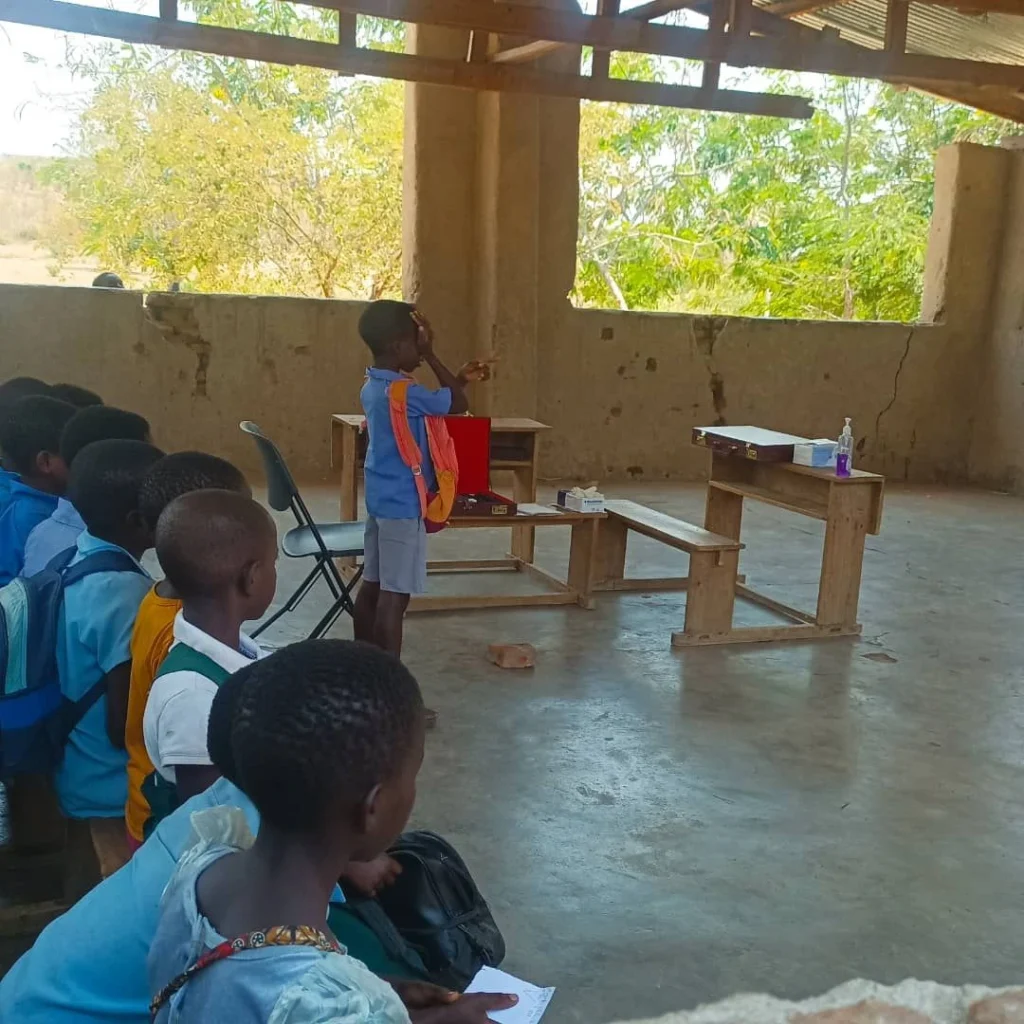
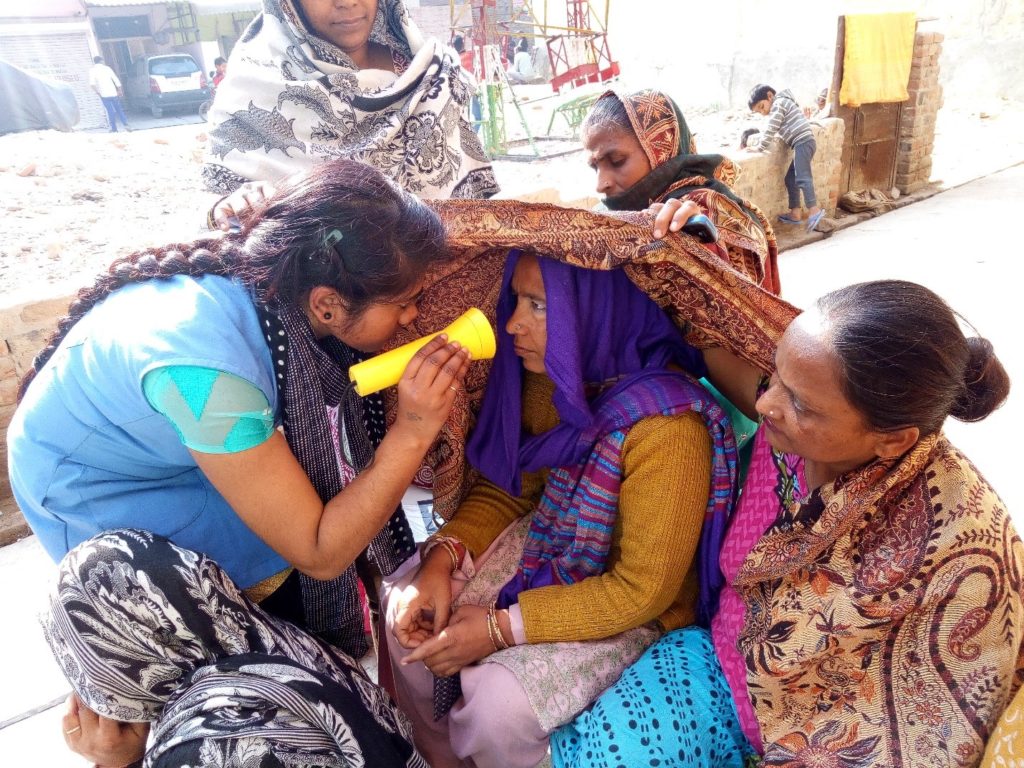
We used the lead up to World Sight Day to highlight not only school eye health programs but also programs that reach all children. Through our community health care model, we reach the entire family through door-to-door surveys and eye screenings. Those with sight issues are referred to local vision centres or hospitals for further care. When all cases of avoidable vision loss are addressed, and ongoing eye health care is in place, villages are declared as being avoidable blindness-free. In September on Aahotguri River Island in Majuli District, Assam, India, 20 villages received this declaration. See our work in this region in this video.
Through hospital strengthening and integration of eye health care into primary health care, we worked to support premature infants, who are at high risk of Retinopathy of Prematurity (ROP), a leading cause of blindness in children. When ROP is detected and treated early, it can prevent lifelong blindness. In September, in Bijnor District, India, our partner C. L. Gupta Eye Institute trained 35 neonatal intensive care staff to address ROP.
We also used World Sight Day as an opportunity to advocate for universal health care that incorporates eye health care. To do this, our teams attended 15 meetings with partners, policy makers and local and national governments. Staff also attended press briefings.


Eye health care ambassadors donned #LoveYourEyes glasses and posted eye health awareness messages online. The ambassadors included students at screenings, our President and CEO Kashinath Bhoosnurmath, staff, kids, pets, post-secondary and high school students and even Calgary, Alberta, Canada Mayor Jyoti Gondek. We are grateful for their support in raising awareness of child eye health and Operation Eyesight.
Learn more about how you can support child eye health here.


Vision impairment is a gender issue. Women and girls are more likely to suffer from vision impairment than men or boys. This is due to many factors, such as their traditional roles in the household involving cleaning and caring for ill family members, and the fact that they are less likely to receive access to care and treatment when available. More than 20 million women and girls are blind, and more than 120 million are visually impaired. The numbers are staggering.
The theme of International Women’s Day 2020 is an equal world is an enabled world. We know that a gender equal world benefits everyone, not just women. We imagine a world where women and girls no longer needlessly suffer from vision impairment because they are not prioritized for treatment. We envision a world where women and girls have equal access to essential care and are empowered to take ownership over their eye health needs. In 2015, the United Nations set out 17 Sustainable Development Goals (SDGs) as a blueprint for a better world. Access to quality health care for all is paramount to SDG #3 - Good Health and Well-Being. To achieve both the SDGs and the World Health Organization’s VISION 2020 goals, we must eliminate all forms of inequity in access to eye care for women and girls.
In spirit of IWD 2020, we are sharing the successes and challenges eye health organizations have had in their gender equity programming. This gives us an idea of where we’re presently at with integrating gender strategies into global eye health, while also highlighting the gaps that still need to be addressed going forward.
Two of the biggest challenges to gender equity programming that we face in eye health are addressing cultural barriers, and getting the full buy-in and support from local partner organizations. The Fred Hollows Foundation addressed these challenges by partnering with the Ministry of Women’s Affairs in Cambodia to conduct gender equity and eye health training within communities. They also partnered with the Ministry of Health to further embed gender equity within health programs. SDG #17 - Partnerships for the Goals, advocates for inclusive partnerships between governments, the private sector and civil society. By partnering with local, regional and national levels of government, we can address gender barriers to eye health and ensure the long-term sustainability of our efforts.
To achieve gender equity in eye health, we need the full participation of women and girls and men and boys. Operation Eyesight promotes this by training community health workers who conduct door-to-door surveys in their communities. They identify all people in need of eye care services and refer them to vision centres to ensure that they receive appropriate treatment. They also counsel the patient’s family members to ensure nobody is left behind. A champion of Operation Eyesight is Jaya Raju. Jaya is a widow who lost her husband in a fatal accident and was disowned by her in-laws. She suffered from severe depression following the accident, which was compounded by her fear regarding how she could support her child and aging parents. While looking for work, Jaya learned of an opportunity to work as a community health worker for Operation Eyesight and decided to apply. Although Jaya had very little experience, her determination and commitment landed her the job. Now, Jaya travels for two hours a day visiting households, talking to people and listening to their problems and concerns. She is now the breadwinner of her family. Her parents call her “Shanni Jaya” (Smart Jaya). They say, “she has now found the purpose of her life.” Jaya is an inspiration to other women in her community. Her willingness to learn and step outside of her comfort zone has allowed her to realize her full potential and achieve her dream of helping people by eliminating avoidable blindness from her community.
The International Agency for Prevention of Blindness (IAPB) Gender Equity Working Group brings together eye health organizations working to eliminate avoidable blindness and eliminate all forms of inequity for women and girls. Collectively, we are addressing SDG #1 – No Poverty, SDG #3 – Good Health & Well-Being, SDG #5 – Gender Equality, SDG # 6 – Clean Water & Sanitation, and SDG # 17 – Partnerships for the Goals.
Thank you to Fred Hollows Foundation, Seva, Mission for Vision and Operation Eyesight for their contributions to this article.
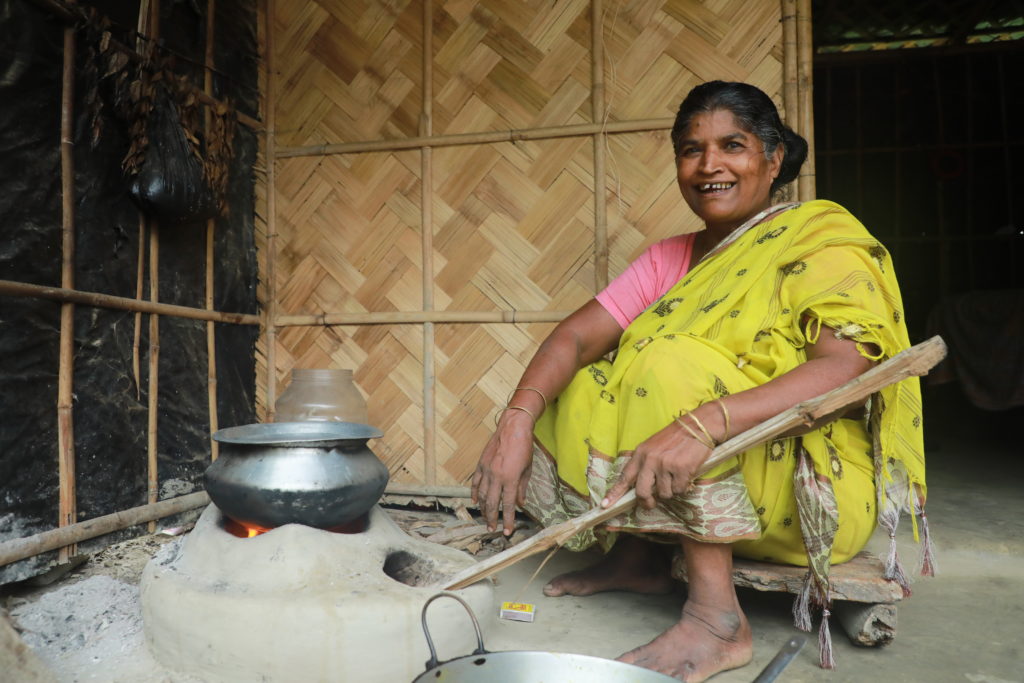
Sabitri is 51 and lives in a small hut in Milanpoly, a village in West Bengal, India. She has three sons, but all of them live with their own families. Living alone, Sabitri is completely dependent on her job as a house maid for money for food, shelter and other essentials.
One day Sabitri’s vision started to blur, and she found she had trouble keeping up with her everyday tasks at work.
"I was extremely afraid," she said. "If I lost my sight, I was on my own. There is no one to take care of me, and if I couldn’t work to support myself, I don’t know what I would have done."
Because Sabitri was already struggling financially, she didn’t seek treatment because she couldn’t afford it. Even if she could afford it, she didn’t know where to go for help.
Thankfully, a community health worker trained through your support came to Sabitri’s door and screened her eyes. She told Sabitri about Operation Eyesight and referred her to the Islampur Vision Center for diagnosis.
Thanks to YOUR support, the Islampur Vision Center was close enough for Sabitri to attend for an appointment.
At the vision center, Sabitri was told she was suffering from bilateral cataracts. She was referred to our partner, Siliguri Greater Lions Eye Hospital, where she received the surgeries she needed free of charge – all thanks to YOU!
Now Sabitri is happier than ever! She has her sight back and she can continue to work to support herself. Donors like you restored her hope for the future.
“After my surgery I can see clearly and I’m back to earning a living,” says Sabitri. “Thank you!”
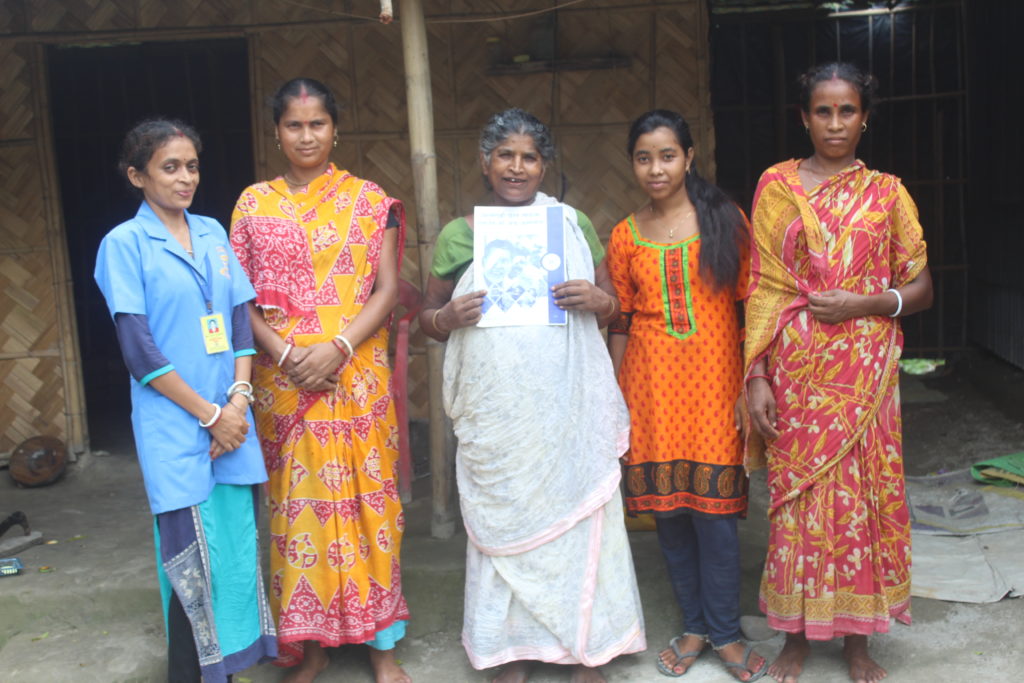
Our generous donors have made it possible for thousands of women like Sabitri to regain their independence and get back to participating in their communities. Sadly, there are thousands more women like Sabitri who are still living with avoidable blindness. Your donation could restore sight and hope to more women like her. Give the gift of sight today!

Jane is a 75-year-old widow and mother of four sons. She lives in Murubara village in Kirinyaga, Kenya, supporting her children through bean and tomato farming.
One day, two community health volunteers (CHVs), Naomi and John, were conducting a door-to-door eye screening in the area. They came knocking on Jane’s door, and as luck would have it, their timing couldn’t have been better. They screened Jane’s eyes and learned she couldn’t see.
Although she had long noticed her failing eyesight, Jane hadn’t given it much importance. After all, she figured her fading eyesight was just a part of getting older.
Despite the CHVs’ advice and referral to seek medical attention at the eye clinic, Jane was reluctant. Sadly, three months later, she lost her sight entirely to cataracts in both her eyes.
She became dependent on her family for everything, and she could no longer see to read the lyrics to hymns at church. Jane was heartbroken.
“After my mother lost her sight, it was hard for us because we had to always make sure someone stayed at home to look after her and hold her hand to lead her wherever she wanted to go,” says Jane’s daughter-in-law, Faith.
Desperate for a solution, Jane’s family decided to consult Naomi, one of the community health volunteers who had screened her. Naomi encouraged them to take Jane to seek treatment at our partner, Kerugoya Eye Unit. Naomi assured Jane that it was possible for her to regain her sight through surgery.
Jane was still reluctant at first. She lives with high blood pressure and feared that, because of her age, she might not survive surgery. Naomi counselled her, explaining the nature of the surgery.
Jane finally chose to seek treatment and had surgery on her right eye in November 2018. It was just as Naomi had said – she could see again!
She was overjoyed, saying, “I can now walk on my own, and I can continue singing in my church choir!”
With her sight restored in her right eye, Jane was able to regain her independence and once again do her daily chores on her own. Shortly after, in December 2018, she received surgery on her left eye and, just like that, she had her sight restored in both eyes!
Her family is also grateful. Now they don’t have to worry about their mother.
“We are happy we can now go to work on the farm knowing that mum can take care of herself. It’s so liberating,” says Jane’s son, Daniel.
Jane is so grateful for the work Operation eyesight is doing in her village through our Hospital-Based Community Eye Health Project.
“Many villagers are happy about this project because it has literally opened their eyes,” Jane says. “Many had eye problems, but now they have been treated.”
Jane is now an eye health ambassador in her community, and the community health volunteers seek her help when they need to encourage a fearful cataract patient to go for treatment.

You’ve made it possible for thousands of women like Jane to receive sight-restoring treatment, but there are still thousands more who need your help. Please make a donation today to and give more women the gift of sight!
Operation Eyesight’s Community Eye Health Program model sets us apart from other organizations fighting avoidable blindness – because we focus on more than just eye health. While restoring sight and preventing blindness is at the heart of our mission, we can’t simply treat “eye patients” and ignore other health problems.
Targeting eye health alone isn’t enough to eliminate avoidable blindness; if other health care needs aren’t met, there will still be people suffering from vision problems or other conditions. For example, vitamin A deficiency results in preventable childhood blindness, and increases the risk of death from common childhood illnesses such as diarrhea.

With your help, we’re enabling poor communities to lead healthier and more productive lives. Not only do we educate target communities about eye health, but we also address their essential health care needs. Our trained community health workers educate communities about eye health and general health (such as the importance of vitamin A) and create awareness of the eye care services available in or around the community. They also collaborate with health care staff to deliver services such as immunizations.
We’re always proud to report the number of sight-restoring cataract surgeries performed or prescription eyeglasses dispensed, but the pinnacle of our work is the healthy communities that are empowered to lead happy and productive lives. For example, we’ve declared 1,020 villages as avoidable blindness-free. In these villages, mortality rates have dropped significantly and school enrollment rates have increased.
Thanks to YOU, entire communities have been transformed!
There are still thousands of communities that need your help! Please donate today to prevent blindness and restore sight to some of the most vulnerable people in Africa and Asia.

Jabow’s typical day starts with completing all her household chores early in the morning. In the afternoon, she goes door-to-door in her community to screen each household for eye health issues and educates the community about the importance of eye health-seeking behaviour.
In her early days, she ran a child care centre in her community, using the money she’d make from sewing and selling clothes in the village to support the centre and the nearly 200 children enrolled.
During her first meeting with a member from our team, she was very happy to hear that people in her community would have access to quality eye care, including her mother who was struggling with her own eye health.
It wasn’t until Jabow conducted her first door-to-door screening that she understood how widespread eye health issues really were in her community. Now she identifies patients who require eye care and refers them for treatment.
One of Jabow’s major accomplishments was her contribution to the construction of a road leading into the village. A mobile eye unit was scheduled to come to the village, but residents were concerned that the unit wouldn’t reach them because of the road’s poor condition. But Jabow didn’t lose any hope. She rallied the young men in the village and requested government support for the road construction. A month later, the road was completed, and the mobile eye unit reached the village!

Jabow is respected and trusted by those in her community. Her work has made it possible for many children, women and men to receive sight-restoring eye treatments that have transformed their lives. Her community has given her the nickname “didi”, which means elder sister who cares for everyone’s health.
Because of you, Jabow will continue serving her community, and she is looking forward to declaring her village as avoidable blindness-free.
Thank you so much for being a part of Jabow’s story, and for being a part of her community’s story. You’ve already helped so many people, and together we can help so many more!
Let’s eliminate avoidable blindness – For All The World To See!
Today marks day three of World Glaucoma Week, a week to raise awareness about one of the world’s leading causes of irreversible blindness.
According to the Canadian National Institute for the Blind, 250,000 Canadians suffer from glaucoma.
Although glaucoma can be treated and sight often maintained (if diagnosed in time), an estimated seven million people are blind because of it, accounting for 2.8 percent of global visual impairment.
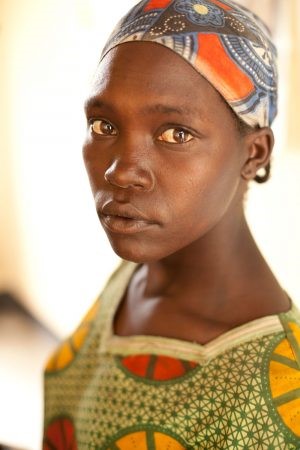
Although anyone may develop glaucoma, some people – such as those with high blood pressure – have a higher risk. You can learn about the risk factors for developing glaucoma on the International Agency for the Prevention of Blindness’ website.
This week, help spread awareness about this blinding disease by sharing this blog post with your friends and family. And remember to book your next eye examination.
You can also make a donation to support our work. Early detection is the best way to prevent blindness due to glaucoma. By facilitating eye screenings, providing eye exam equipment and supporting medical personnel at our partner facilities, Operation Eyesight helps prevent, diagnose and treat glaucoma.
Together we can help ensure that people living in Africa and Asia have access to the eye care services they need to preserve their vision – For All The World To See!
Stenwell lives in a small village in India, and he loves nothing more than to spend time playing with his grandchild. His family means the world to him, and he does his best to help take care of them. He helped contribute on the farm, but because that wasn’t enough to sustain his family, he also worked odd labour jobs in his village whenever he had the chance.
When his vision started to blur, Stenwell didn’t think much of it at first. He figured it was just a symptom of his age and a normal part of growing older.
But he became increasingly concerned as his vision deteriorated over the next three years. He realized something was very wrong, but with his family’s difficult financial situation, he knew he couldn’t afford to seek treatment. Without any options, Stenwell feared his blindness was a punishment from God.
This is where someone just like you stepped in to help. Thanks to our donors’ support, our partner, Bansara Eye Care, held an eye screening camp in Stenwell’s community. Operation Eyesight-trained community health workers went out into the village to inform everyone that there would be an eye screening camp. They reached every household, including Stenwell’s.
“When the health worker explained that I could get help for my condition, I was filled with new hope,” says Stenwell.

At the eye camp, Stenwell was diagnosed with cataracts in both eyes. He was told that two simple surgeries could restore his sight, and that the surgeries would be free of charge.
“I was anxious about the surgery, but the community health worker explained that the surgeries would be minor procedures that would help me see clearly again,” recalls Stenwell. “They were patient with me, and I felt I could trust them fully.”
For Stenwell, it was like magic to SEE again after receiving surgery. People like you made that possible! Stenwell was reached through our community eye health program and received the treatment he needed for free.

“I am extremely thankful to the people who helped me see again,” says Stenwell. “Coming from a humble family I never thought that I could get hope for my vision. Had it not been for the community health workers and the doctors of Bansara Eye Care, I could’ve gone blind permanently.”
Stenwell is now back to playing with his grandchild and helping his family with the farming, while taking time to garden when he wants to relax. His life has been transformed and he’s regained his independence, all because of our donors. Thank you!
There are thousands of people like Stenwell waiting for people like you to help restore their sight. YOU can change lives like Stenwell’s with a donation today!
When an objective third party tells you that you're making an IMPACT in this world with the highest integrity and transparency, you shout it from the rooftops and thank the donors, supporters, partner hospitals, community health workers, volunteers and staff who are making it possible!
We’re thrilled to have been named one of the Top 10 Impact Charities of 2018 by Charity Intelligence Canada. Just as for-profit organizations have an obligation to their shareholders, we have an obligation to our donors. We invest donor funds carefully and efficiently to create the long-term changes that will help eliminate avoidable blindness.
This recognition is a significant milestone on our shared path to help more people who are needlessly suffering, and to make a generational impact that will ensure the communities we work in will have access to the eye care they need today, tomorrow and in the future.

Charity Intelligence’s impact rating is determined by analyzing the measurable return for every dollar donated. They hold charities accountable for the support they receive from Canadian donors, and they observe that people will generally give more to charities when they are confident their donation will make an impact. Operation Eyesight made the list by eliminating avoidable blindness at the community level, through our Hospital-Based Community Eye Health Program model.
When assessing our impact, we look at how well we are meeting our strategic goals. We look at the number of patients treated, how much local capacity is being built and how well our hospital partners are progressing towards operational sustainability.
We create eye health-seeking behaviour in the communities we work in through outreach and education programs, and we empower communities to take responsibility for their eye health needs. This plays a vital role in helping to ensure our projects are sustainable and that people will continue to seek help even after our formal partnership with the hospital has ended.
The ripple effect is incredible! Kids can see to read and go to school, giving them the opportunity to get an education and later find a job and provide for themselves. Parents can return to work and provide for their families. Grandparents can watch their grandkids grow up, and their grandkids don’t need to stay home to care for them. This way, children can get an education and thrive in the future. Entire communities are transformed with the gift of sight!
We can’t thank our donors enough for supporting our sight-saving program model. Thanks to people like you, we’ve declared over 1,000 villages avoidable blindness-free in India and Nepal. And we’re not done yet! We’ve had great success in the communities we work in, but there are still millions of people who need our help. With your help, we can reach them – For All The World To See!
Click here to donate and make an IMPACT.
When his father was killed in an accident six years ago, Mahesh was only nine years old. Now 15, he lives with his mother Sailu and two younger siblings in Fatehnagar slum in the city of Hyderabad, India. Sailu supports the family as a daily wage labourer, earning around INR 5,000 ($92 CAD) per month. The little family barely manages to make ends meet.
Now in the equivalent of grade 10, Mahesh is a very conscientious student who wants to achieve good marks so he can take post-secondary training. He dreams of getting a job so he can support his mother and siblings.
However, over the past year, a secret anxiety gnawed at him: his marks were going down! His family started losing hope that he would pass his upcoming secondary school exams. What would become of them?
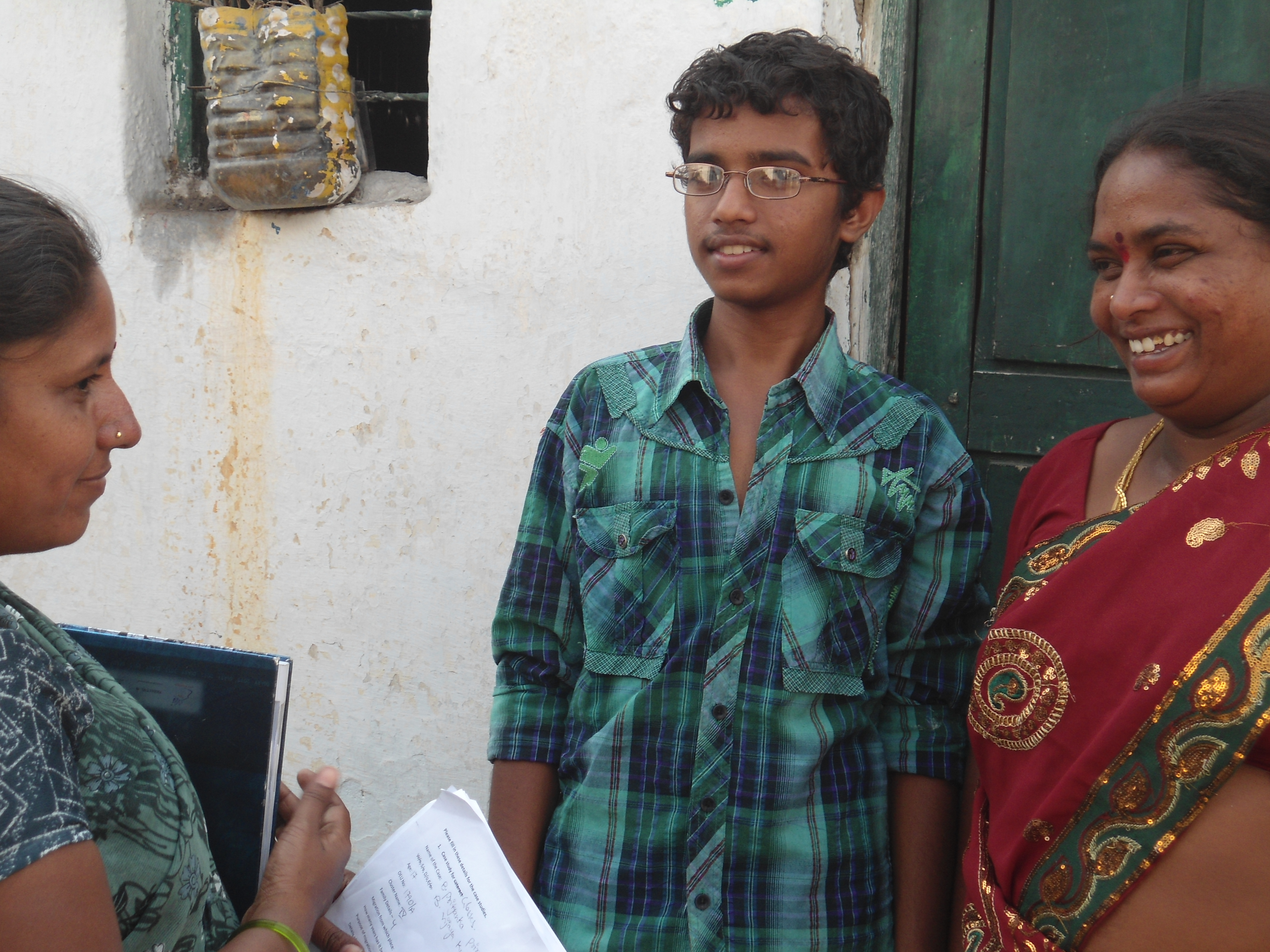
The decline in performance was not without reason: Mahesh found it extremely difficult to read the blackboard in school, and found it challenging to write in dim light. He didn’t want to worry his mother, knowing Sailu would struggle to find money for treatment.
Fortunately, Mahesh attended a school located in an area where Operation Eyesight was promoting eye screening for all students. A community health worker identified Mahesh’s eye problem, and brought him to the local vision centre, where he was diagnosed with uncorrected refractive error and prescribed eyeglasses. Considering his family’s economic status, he was given a pair of brand-new, custom-fitted glasses completely free of cost, thanks to Operation Eyesight’s generous donors.
Today, Mahesh is able to read and write without difficulty. He is preparing for his examinations and has regained confidence that he will do well in his studies and have a bright future.
But that’s not all! When the school principal learned about Mahesh’s story, he requested that the project team screen all the students in his school. The happy result: three of Mahesh’s schoolmates were diagnosed with uncorrected refractive errors – and they have also been provided with eyeglasses!
You can help other students, too. A $20 gift will provide three children with custom-fitted prescription eyeglasses. With the school year coming to a close here in Canada, please consider making a tribute gift in honour of your child’s teacher. It’s a great way to say “thank you,” and at the same time help students in India and Africa see a bright future!
