
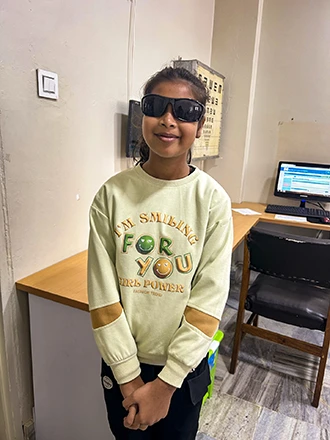
Twelve-year-old Premi, in Rajasthan, India, loves reading and going to school, but in recent years, her enthusiasm for learning came under threat when her eyesight started to fade, making it difficult for her to read the blackboard and keep up with her studies.
Premi is one of three children. Her parents and older brother work as day labourers on nearby farms to support the family. Despite their efforts, money is often tight, and a visit to the optometrist would be a stretch for them. Fortunately for Premi, her school was visited by one of our eye screening teams as part of our Vision-centre Based Community Eye Health Project with our partner in the area, the Alakh Mayan Mandir Eye Hospital. Premi was quickly diagnosed with refractive error and received a pair of prescription eyeglasses, free of charge.
The whole family is grateful that this bright young girl can continue her studies, with hope for a brighter future.
Our approach to eye health ensures entire communities – including schoolkids like Premi – get screened for eye conditions and can access treatment at low or no cost. By offering multiple screening opportunities at schools, vision centres, screening camps and right on people’s doorsteps, we make sure nobody falls between the cracks.
Our approach starts at the planning level – working with government and community partners to select a location with a high prevalence of vision loss and low socio-economic status – and a partner hospital with a compatible mission and vision.
Next, we collaborate with partners on an action plan, define the project area and decide on locations for vision centres. Once established, the vision centres act as links between communities and hospitals, providing comprehensive eye exams, dispensing glasses and making referrals to our partner hospital for surgeries.
Then, the training of community health workers begins. These frontline workers, mostly women, learn how to conduct visual acuity tests, identify various eye conditions, make referrals and provide eye health education. For many of our beneficiaries, the relationship with our programs begins and ends with the community health worker – who might visit the same household many times, offering kindness, compassion and counselling to nervous patients, as well as their eye health expertise.
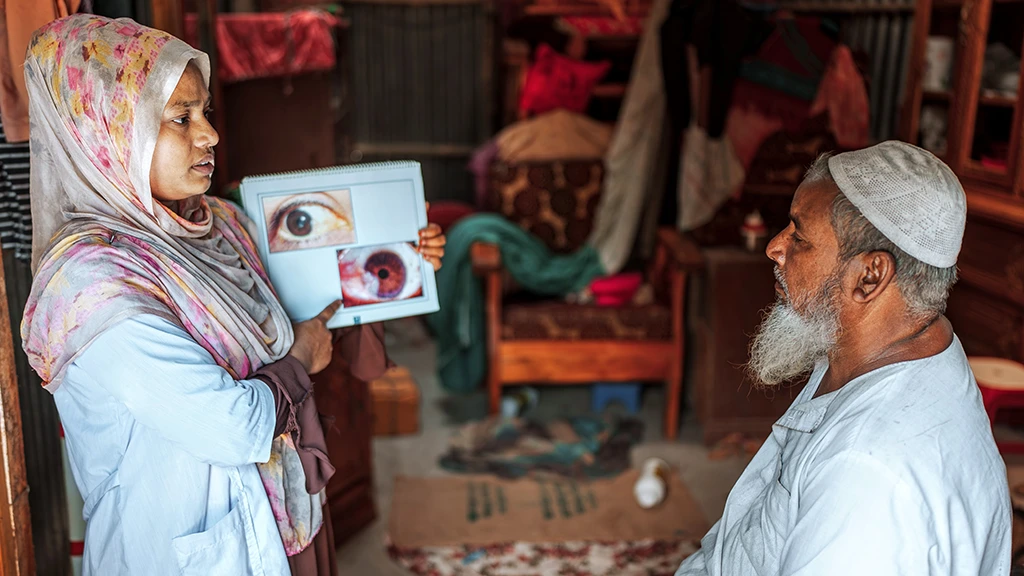
After their training, the community health workers fan out to our various communities of work, doing a baseline door-to-door survey and referring patients to the vision centres and partner hospitals for further diagnosis and treatment.
As we continue our work in the area, our teams organize various screening camps and school screenings to give everyone multiple opportunities to have their eyes checked. Community health workers also continue their door-to-door work, checking in on patients, providing eye health education and troubleshooting any problems patients might face in getting treatment. Teams crunch numbers to monitor progress and evaluate each project, later bringing in external agencies to audit the work.
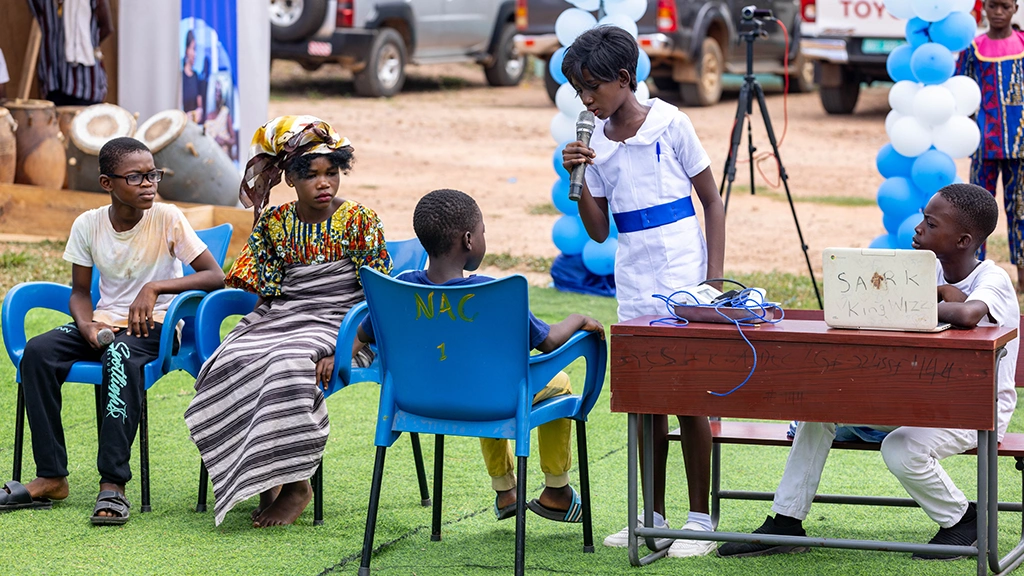
When the community health volunteers have done their final survey to make sure there are no backlog cases, villages and communities are declared as Avoidable Blindness-Free through public celebrations. At this point, the vision centres have become self-sustaining, so they can continue to deliver quality eye care services beyond the project’s duration.
The community health workers we employ for our door-to-door surveys can offer much more than just eye health expertise. Many have received additional training in primary health care and can provide advice and referrals for things like immunizations, vitamins, and maternal and newborn health care.
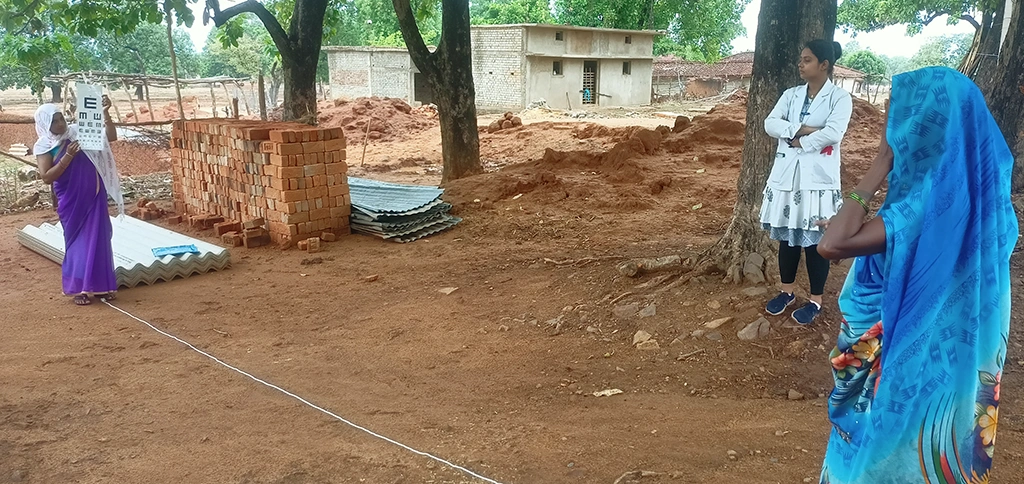
Shakuntala, an Accredited Social Health Activist (ASHA) with the Government of India, spent eight years providing advice to expectant mothers, and offering newborn care support, before she received additional training in primary eye care. With her experience, she can continue to offer referrals and education to mothers while she does her eye health screenings.
In 2024 alone, our community health workers linked more than 50,000 children aged five and under with crucial vitamin A injections, which reduces the severity of childhood illness and increases survival rates, while also helping them develop healthy vision. Also in 2024, we referred more than 16,000 expectant mothers and 12,000 nursing mothers with health facilities for check-ups.
Moreover, a community health workers frequent visits to a household can help them monitor a patient’s progress not only with an eye condition but with other health problems as well.
Take Bulal in Nepal, for example, a 97-year-old man who has cataracts as well as diabetes. When Meena, an Operation Eyesight-trained community health worker, met Bulal during a door-to-door survey in 2021, she realized that he would need additional support to get the treatment he needed for his low vision. While he had been previously diagnosed with cataracts, the doctor told Bulal that his unstable blood sugar levels – and his high blood pressure – made cataract surgery too risky. Bulal thought he would live out his final days in darkness.
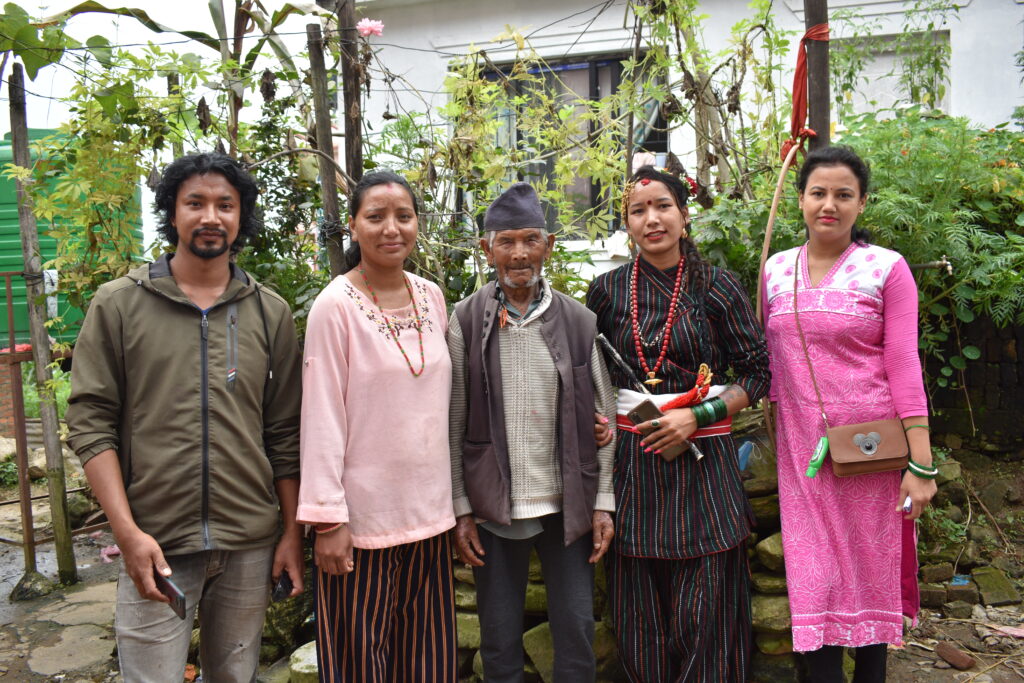
But when Meena heard his story, she set a plan in motion. Over the next few months, with Meena’s support and guidance, Bulal stabilized his sugar levels and brought down his blood pressure so he could safely undergo surgery. His family was grateful to see Bulal restored to his former dignity and independence once he could see clearly again.
From patient to ambassador – spreading the word about eye health
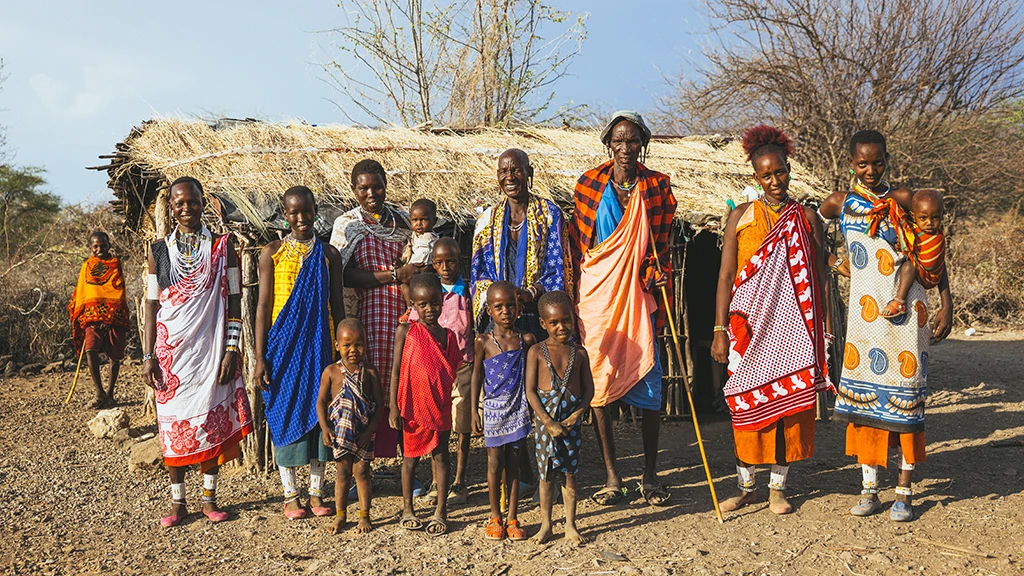
Ntiiti, a mother of five from a remote village in Kenya’s Kajiado County, started losing her vision in 2020. She didn’t know why she couldn’t see clearly and wondered if she was the victim of a curse. Soon, her vision was so poor that she could no longer perform essential day-to-day tasks like making meals, taking care of her children and looking after the family’s cattle.
Help arrived unexpectedly when a community health promoter, whom we’d trained in primary eye care, visited her home while conducting door-to-door screenings. He identified cataracts and sent her to a nearby eye screening camp for a formal diagnosis. At the camp, an ophthalmologist confirmed Ntiiti had bilateral cataracts and referred her for surgery. Ntiiti had never been to a hospital or clinic before, because of the distance to these facilities from her village, but our team helped arrange transportation so that she could get the treatment she needed. Thanks to our generous donors, she received surgeries on both eyes, free of charge.
Amazed by the difference the surgeries made to her life, Ntiiti told everyone in her community who complained of vision or eye problems about her miraculous recovery. Soon, she had her first recruit – a widowed mother of six who was living in total blindness. Ntiiti connected her to the community health promoter and even accompanied her to the hospital for her surgery.
We have many similar stories of patients like Ntiiti who become ambassadors for our programs. It speaks to the strength of our approach – by taking the time to build relationships in the community, patients with success stories become empowered to spread the word about the importance of getting treated for blindness and vision loss.

To create the biggest impact, we start at the community level. By training and empowering local health workers, we can help create lasting connections that bring eye care directly to people’s doorsteps. These trusted workers are the heart of our model – identifying problems early, guiding patients through treatment and spreading awareness that can transform entire villages.
With your support, we can train more health workers, open more vision centres and ensure that no one is left behind. Donate today to help us build a future where avoidable vision loss is eliminated for good.
Every day, 10-year-old Benjamin in Kenya proudly leads his family’s goats out to graze, a chore that once seemed unthinkable, because from a young age, Benjamin was blind.
Benjamin lives with his parents and six siblings in the village of Olookitareti in Kajiado County. The family struggles financially; Benjamin’s father Joshua has a chronic illness, while his mother, who lives with a disability, does her best to manage their livestock herds while also caring for the children.
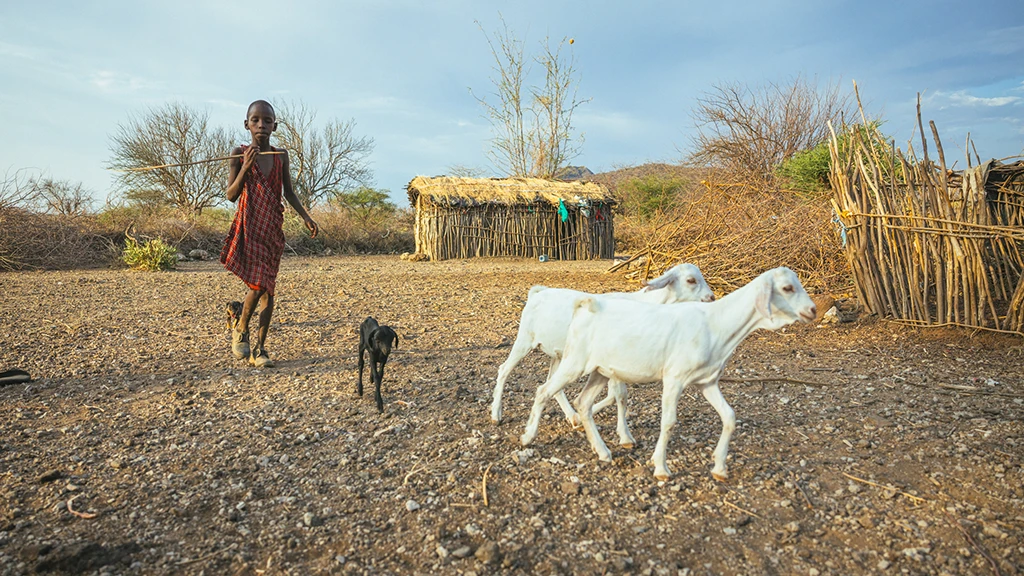
In 2023, a local disability advocacy group referred Benjamin to a special needs boarding school, where he learned to read braille. His parents were grateful that he would receive an education, but they still worried about his future.
The following year, a community health worker identified cataracts in Joshua’s eyes during a door-to-door screening and referred him to our surgical camp. He took Benjamin along, hoping for a diagnosis for the child as well.
At the camp, Benjamin was also diagnosed with cataracts and referred to our pediatric cataract camp happening at another facility. But on the day of the camp, he didn’t show up. The outreach team made calls to the family to track him down, but their calls went unanswered. Finally, our community health promoter located Benjamin at his school. She later discovered that the family had lost their phone.
Recognizing the urgency of Benjamin’s condition, our outreach team contacted the family’s close friend, Pastor Titus, who accompanied Benjamin to the surgical camp with the family’s blessing.
Thanks to the support of our partners and donors like you, Benjamin successfully underwent surgery and had his vision restored. Joshua also underwent surgery and can now see clearly.
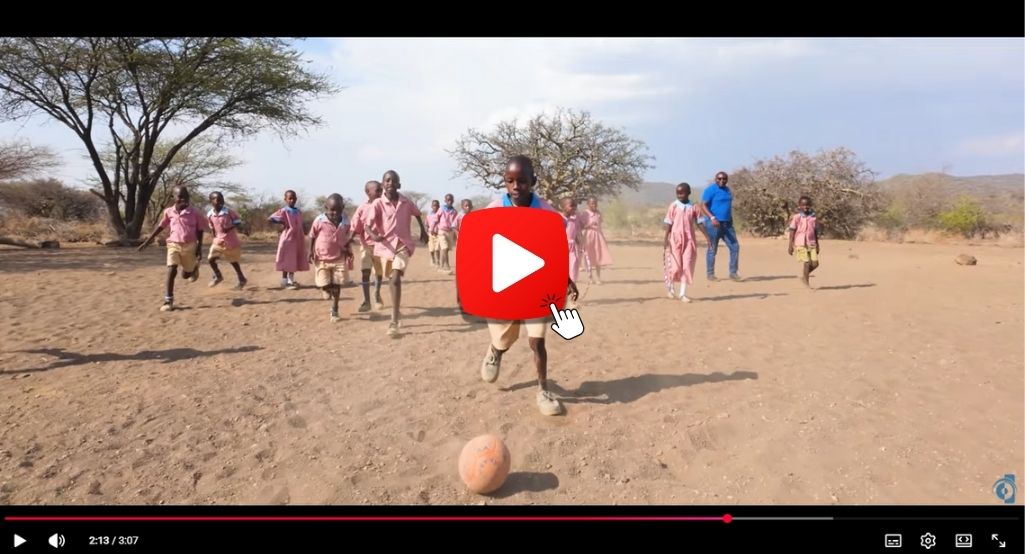
Now, Benjamin attends a regular primary school, confidently tackling Grade I. He reads and writes with ease and loves to join soccer games with the other children in the village.
His parents are grateful that Benjamin can now live up to his full potential.
Written with files from Patrick Wainaina Muthii.
This holiday season, consider giving the Gift of Sight to transform lives for more children like Benjamin!
From her earliest days in school, 13-year-old Zara in Nepal struggled to get by. She couldn’t read what her teachers wrote on the blackboard, and she often rolled her eyes around and made unusual body movements, instantly making her stand out as “different” to her peers. We can only imagine how lonely and confusing life was for the girl – not knowing why she was so unlike the other children.
What nobody realized was that some of Zara’s actions – the eye-rolling, the strange movements – are typical self-stimulatory behaviours seen in some children with severe vision impairment. As a result of these behaviours, children like Zara are sometimes misdiagnosed with autism or developmental disabilities if their low vision continues to go unrecognized.
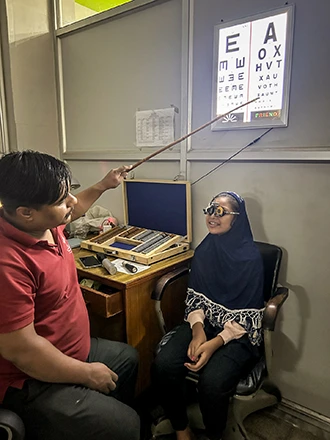
Fortunately for Zara, her school was included in a school eye screening project we had implemented in collaboration with our partner, Nepal Eye Hospital. During the screening, community health workers discovered that Zara had cataracts in both of her eyes, a condition she’d been born with, and that had severely clouded her vision throughout her young life.
The outreach team met with Zara and her mother, explained the condition to them, and told them that treatment was available. They referred the family to the nearby Simara Vision Centre for a thorough examination, where doctors confirmed the diagnosis of congenital cataracts. From there, Zara received a further referral to Nepal Eye Hospital in Kathmandu for surgery.
The Operation Eyesight project team provided crucial support, guiding Zara and her parents through the treatment process and helping them access surgery at a reduced cost, making it affordable for the family, who had limited financial resources.
Zara’s first eye surgery was a success, and a month later she returned to the hospital for surgery on the second eye. On her second visit, when she spotted Operation Eyesight’s Project Coordinator from across the hospital, she waved enthusiastically – something that would not have been possible before her first surgery.
Zara’s transformation was profound. The eye rolling stopped, her unusual movements decreased, and she became more sociable with family and friends, even interacting withstrangers. For the first time in her life, she could recognize people from a distance, read the blackboard in class and fully participate in school activities.
Zara’s mother was overwhelmed with relief to see her daughter blossom. She had been extremely worried about her child’s future, and was amazed to see Zara playing, learning and interacting like other children her age. She and her family expressed deep gratitude to the hospital, the doctors and healthcare workers, and to Operation Eyesight’s generous donors, for making this life-changing transformation possible.
Make a donation to help us reach more children like Zara with life-changing eye surgery.
Written with files from Anisha Gurung, Operation Eyesight’s Project Coordinator at Nepal Eye Hospital.
At 13 years old, Erasmus is like many other boys his age: tall, gangly and a little bit shy. He says he’d like to be a soldier when he grows up.
While joining the military seems achievable, that dream was nearly shattered for Erasmus a few years ago, when an accident threatened both his vision – and his future.
It all started one evening back in 2019. Erasmus’ mother, Joyce, was inside their home in the rural community of Essiam, in Ghana’s Central Region, when she suddenly heard shouts coming from outside, where Erasmus was playing with friends. She rushed outside and found her son clutching his eye in pain. His friends told her that something had flown through the air and hit him hard in the eye.
Initially, Joyce treated Erasmus at home with some over-the-counter eye drops, but after going to school the next day, he said he was still feeling a lot of pain. His teacher recommended Joyce take him to the hospital to get it checked out.
Joyce took him to the nearest hospital, and the doctor there referred them to the Korle Bu Teaching Hospital in the capital city, Accra. He also advised her to make sure that nothing happens to Erasmus’ other eye, as he worried that the boy might lose sight entirely on the injured side – advice that shook Joyce to the core. She imagined her son’s future melting away, along with his eyesight.
As a single mother running a small hair-braiding salon, Joyce was overwhelmed by the cost and logistics of travelling to Accra. Eventually, she got some money together and they went to the hospital. A doctor examined Erasmus and told Joyce the damage to his eye was very serious and that he would need surgery.
But Joyce couldn’t afford the surgery. She tried everything – asking family for help, borrowing what she could – but it was never enough.
In the meantime, Erasmus continued to have pain and irritation and couldn’t see much out of the affected eye. Joyce, tears spilling from her own eyes as she remembers that bleak period, says she was terrified for her son and felt completely alone in dealing with the problem.
Then, in 2023, she learned that a charity had visited Erasmus’ school and had checked on the students’ eyes. She rushed down to the school and learned that Erasmus had been identified as a student in need of a referral for a more thorough diagnosis.
That eye charity was, of course, Operation Eyesight, working in tandem with the ministries of health and education, and our partner hospital, Watborg Eye Services, in Awutu Breku. Erasmus got a referral to Watborg, where he received a thorough eye exam.
Joyce learned that her son’s injury had developed into a cataract. A traumatic cataract happens when an eye injury disrupts the lens fibers – leading to a clouding of the lens. Up to 1.6 million people lose sight to eye injuries each year.
Erasmus was scheduled for surgery in two weeks’ time. And although Joyce was told that the surgery would be provided free of charge, she couldn’t quite believe it and continued to worry about the costs.
Two weeks later, Joyce and Erasmus returned to Watborg for the cataract surgery. Doctors told her the operation went well, and they kept Erasmus in hospital for another couple days to allow the eye to heal.
To Joyce’s relief, she learned that the surgery was in fact done free of charge, made possible through our School Eye Health Project supported by the Church of Jesus Christ of Latter-day Saints Charities. The project covered all other expenses, including transportation, meals, the hospital stay and post-surgical appointments.
Due to the complexity of Erasmus’ injury, it would take him additional time to recover than most cataract patients. For weeks after the operation, Joyce anxiously asked, “Can you see yet?” The answer was always no — until one day, Erasmus burst into her salon shouting, “Ma, I can see! I can see!”
Erasmus now wears prescription glasses to school, his future once again in focus. Joyce, deeply moved, says she’s forever grateful to Operation Eyesight and our partners for restoring her son’s sight, and her hope.
Eight-year-old Fassikaw lives in Bahir Dar, where he goes to a local primary school. A second-grade student, he once faced challenges that threatened his education and well-being.
When Fassikaw was in first grade, he began to have trouble seeing objects far away. Reading books and the blackboard became difficult. Sitting in the middle or back of the classroom, he often had to borrow his classmates’ exercise books to copy notes.
At home, reading took him a long time. His eyes often watered, and his grades began to drop. More than his grades, his parents worried about his worsening vision and the way it was affecting his mood and sleep. Fassikaw even spoke about leaving school.
Around this time, his family learned about our School Eye Health Program run in partnership with Partners in Education Ethiopia. The program offers free diagnosis and eyeglasses to students in need.
After hearing this, his family went to the hospital and Fassikaw’s eyes were checked. At the hospital, tests revealed that Fassikaw’s vision required strong corrective lenses: +15.00 for his left eye and +16.00 for his right. Thanks to our partners and generous donors, he received the eyeglasses at no cost.
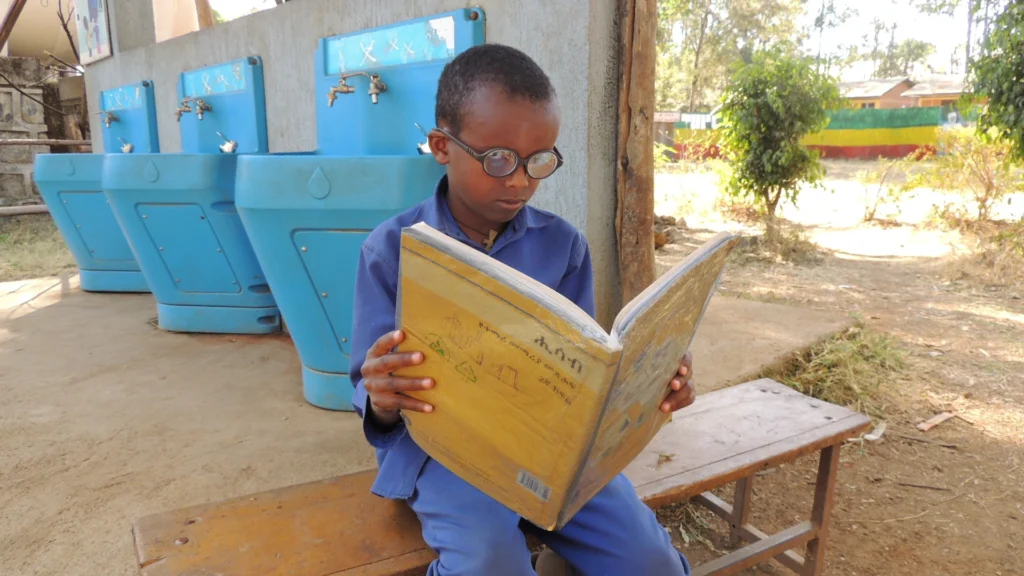
Today, Fassikaw can read easily from anywhere in the classroom. At home, he reads without headaches or watery eyes. His grades have improved, and his class ranking has risen from 27th to 21st, with steady progress.
His father says their son is now happy and confident, and the family can sleep without worry. “With God’s help, we hope you will never have to worry about anything,” he says with gratitude.
By providing eyeglasses through school-based eye health programs, we can transform the lives of children like Fassikaw, helping them see clearly, succeed in school and embrace a brighter future. Give the Gift of Sight today.
Our Work in Ethiopia
Since beginning our work in Ethiopia in 2018, we’ve made significant strides toward preventing avoidable vision loss. In 2024, our programs reached more than 33,424 people through eye health screenings, treatment, training and community outreach. From surveying over 14,000 residents in Debre Work to training frontline workers and teachers, screening students and providing eyeglasses, we are building lasting capacity for quality eye care. Read more about our work in Ethiopia in our 2024 Annual Report. Download it here.
Four-year-old Priyansh’s story begins in March 2023 when his father, Raj, noticed a strange glow in his little boy’s eyes. It was an observation that would end up saving Priyansh’s life.
Raj and his wife, Ramya, acted quickly and took Priyansh to a local doctor who diagnosed him with a tumor. After more consultations, the family was advised to get treatment at the Operation Eyesight Universal Institute for Eye Cancer at the L V Prasad Eye Institute in Hyderabad, India.
The Operation Eyesight Universal Institute for Eye Cancer was made possible by the generous gift of an anonymous Canadian family, and through our longtime collaboration with the renowned eye hospital. Since 2015, the Institute has provided comprehensive treatment for the entire range of ophthalmic tumors in both adults and children. It is one of just a handful of centres in the world that specializes in this type of treatment.
Once he arrived at the Institute, Pryiansh was examined by an ophthalmologist who diagnosed him with fourth-grade retinoblastoma, a severe form of eye cancer that largely affects very young children.
With the level of danger the cancer presented, the doctor recommended that the affected eye be surgically removed. Although heartbroken by the diagnosis, the family knew surgery was their only hope to save their son. The operation was a success, and Priyansh’s outlook improved, but the journey was far from over. Following the surgery, Priyansh underwent grueling chemotherapy sessions to make sure there were no remaining cancer cells. The little boy was left weakened and frail, but kept his spirits up during treatment.
Due to the demands of Priyansh’s treatment, Raj, who works as a taxi driver, had to take time off work. In order to help free the family from the financial burden caused by Priyansh’s diagnosis, the L V Prasad Eye Institute was able to offer the treatment completely free of charge, allowing the family to focus on recovery.
Today, Priyansh is stable, and his parents are extremely grateful for the care he received.
To date, the Operation Eyesight Universal Institute for Eye Cancer has identified and treated 18,515 patients for eye cancer.
With special thanks to the L V Prasad Eye Institute, who originally reported this story.
Imagine failing the same grade twice. And the first grade, no less.
That’s an experience 11-year-old Hayat, in Bahir Dar, Ethiopia, has gone through. Today Hayat, held back by difficulties with her eyesight, is continuing to work on her first-grade accreditation, alongside seven- and eight-year-olds.
Born with a twin brother, Hayat had vision problems from the very start. Immediately after birth, she underwent eye surgery. The hospital scheduled her for a follow-up appointment, but due to financial constraints and lack of transportation, the family was unable to return for it.
Her father explained that, as Hayat grew older, she continued to have trouble seeing.
“We knew she had difficulty seeing distant objects, but we couldn’t take her to a health facility because we didn’t have the money for treatment,” her father shared. “It pained us deeply to see her struggle. We began to lose hope in her education because her performance was poor.”
But Hayat persisted with her schoolwork, and she was in class when Operation Eyesight, in collaboration with Partners in Education Ethiopia, started a screening program at her school.
Hayat was quickly identified as having vision problems. Along with other students, she received a referral to our partner institution, the Tibebe Ghion Hospital, for a full eye exam. An optometrist diagnosed her with refractive error.
Just two days after her hospital visit, the project team returned to Hayat’s school with a life-changing package in tow – the students’ eyeglasses.
Hayat went home sporting her new eyeglasses, beaming as she announced that she could finally see clearly. Her family was thrilled, knowing that she now had what she needed to thrive in school.
“Thank Allah!” her father announced, then followed up with instructions for Hayat. “Now you can study well and improve your grades.”
The little girl was more than happy to agree.
Find out how support from our donors is helping us bring eye health care to thousands of children like Hayat through our School Eye Health programs!
Story written with files from Marnat Adugna, Senior Project Officer, Operation Eyesight / Partners in Education Ethiopia

Look at those big, beautiful eyes! This is baby Aarsh, from a small village just outside Moradabad city, in Uttar Pradesh, India. At seven months old, he weighs about seven pounds – what many babies weigh at birth.
Aarsh’s mother, Shabana, was only seven months pregnant when she delivered him prematurely. Little Aarsh had been in an incubator in the neonatal intensive care unit (NICU) at their nearby hospital for 15 days when his parents learned that he needed to have his eyes screened for Retinopathy of Prematurity, or ROP.
ROP is one of the leading causes of vision loss in children, and preterm infants are at high risk of developing this blinding condition. ROP occurs when abnormal blood vessels grow and spread throughout the retina, the tissue that lines the back of the eye. These abnormal blood vessels are fragile and can leak, which can scar the retina and pull it out of position. This causes a retinal detachment and visual impairment.
To save a child’s sight, early detection and treatment of ROP are critical. Unfortunately, many infants go undiagnosed due to the lack of awareness of ROP and the lack of screening services available outside of tertiary-level hospitals. That’s why we are working with partners like C.L. Gupta Eye Institute (CLGEI), located in Moradabad city, to provide remote diagnosis and referral services for at-risk infants and their families. With a case of specialized teleophthalmology equipment and pediatric supplies in hand, optometrists from CLGEI regularly visit 40 NICUs and maternity centres across the Moradabad District, where they capture retinal images of premature infants with assistance from nursing staff who help keep the wriggly babies calm and still.

When Aarsh’s parents first learned their baby could have ROP, they were fearful of the treatment process, and they refused to have Aarsh screened in the NICU. Fortunately, the team at CLGEI are known for their compassion and persistence. After continuous follow-up phone calls and messages from the ROP Coordinator, Aarsh’s parents agreed to bring the little boy, then six weeks old, to CLGEI for screening.
Aarsh’s retinal images revealed that he had ROP in both eyes and required urgent treatment to prevent blindness. First, his eyes would be injected with a drug that inhibits abnormal blood vessel growth, then, at a later appointment, he would receive laser treatment.

Shabana couldn’t help but get emotional she when she heard Aarsh’s little cries from the next room as the doctor did the injections. She knew that timely treatment was necessary to save her son’s sight, but still the tears streamed down her face. Her little one wasn’t even two months old, and he’d already been through so much.
Following the injections, Aarsh’s eyes were covered with bandages, and they were sent home that same day with eye drops and a list of post-procedure instructions. No doubt, the experience was a lot for Aarsh’s parents to take in, worrying about their newborn baby who required special care while also tending to their other children; but they took comfort in knowing that the pediatric staff at CLGEI were available to help them every step of the way.

Later that week, Aarsh received laser treatment. The procedure, which is done with local anesthetic, uses a beam of light to create scar tissue on the outer edges of the baby’s retina, which prevents abnormal blood vessels from forming.
Aarsh’s family went for several follow-up visits. His parents were diligent about making and keeping their appointments, even though it meant that his father, Ajmat, had to close his shop so they could travel to the hospital, which meant a loss of income. They were thankful that Aarsh’s treatment was provided free of charge. They were also grateful to the CLGEI staff who checked in with them and sent them reminders.

Today, Aarsh is doing great, and his vision is good. His mother, who is also happy and in good health, says that Aarsh even watches cartoons on the television like his big brother and sister.
“Little Aarsh's journey is a testament to the transformative power of our ROP screening program. Through the dedication of our team and the support of generous donors, we're not just preventing blindness; we're nurturing futures," says Lokesh Chauhan, Deputy General Manager at CLGEI.
“Aarsh's bright eyes now reflect a world of possibilities, and his story motivates us to continue our mission of bringing vision and hope to every child in need."
Aarsh will require lifelong follow-up visits. Doctors have stressed to his parents the importance of regular eye exams, as infants with ROP are at higher risk for developing other eye problems later in life, such as myopia (nearsightedness), strabismus (crossed eyes), amblyopia (lazy eye) and glaucoma. In many cases, these eye problems can be treated or controlled.

Thanks to the generosity of our donors, the diligence of Aarsh’s parents, and the expertise of the staff at CLGEI, little Aarsh has a big future ahead of him.
Please donate today to help more infants like Aarsh.
While most Canadian schoolkids would have a hard time finding Ghana on a map, the West African country truly came to life for donor Sharon Margison when she was 10 years old. That year, her mother, then president of the Toronto YWCA, developed a close friendship with a young Ghanaian woman named Sika (also known as Barbara) who had come to Canada to study. Sharon’s mother encouraged her daughter to think of Barbara as a big sister, and that relationship continues today, more than 60 years later.
In 1982, Sharon and her mother travelled to Ghana to meet up with their old friend. During that visit, they were made family members.
“I just always found the people very welcoming,” Sharon says. “I really enjoyed talking with people and learning about their experiences.”
When Sharon heard that we were launching a new campaign to raise funds to screen 23,000 schoolkids in Ghana for eye conditions, her interest was piqued. Beyond her personal connection to the country, Sharon had another reason for taking interest in child eye health – she too has struggled with refractive error since she was in grade school.
“I’ve been wearing eyeglasses since I was nine years old,” she says, “and I studied visual arts during my undergraduate degree. So, vision is a huge thing for me.”
Sharon has generously decided to make a $10,000 contribution towards our Ghana School Eye Health project. She says that as a longtime donor, she has confidence in Operation Eyesight’s approach to community eye health.
“I like the fact that Operation Eyesight contributes to things like cataract surgery and also the delivery of education around good healthcare practices to avoid blindness and eye diseases,” she says, adding, “I also like how it trains locals to go out and educate people in their own communities.”
We are so grateful to Sharon for kicking off our Ghana School Eye Health campaign with her donation. We invite you to join her in transforming young lives!
Dr. Ashi Khurana, Vice-Chairman, C.L. Gupta Eye Institute is a cornea specialist and manages the Retinopathy of Prematurity Eradication Project. The project screens premature infants in Moradabad and five surrounding districts for Retinopathy of Prematurity (ROP), which can cause irreversible blindness if left untreated.
World Prematurity Day: Dr. Ashi Khurana, Vice-Chairman, C.L. Gupta Eye Institute on preventing blindness in premature babies
An eye condition that is all but invisible to parents, pediatricians and the community can silently rob premature and low-weight infants of their sight. The condition must be treated early or the infant can go blind, not as a baby, but years later as a child. The condition is called Retinopathy of Prematurity (ROP), and in 2016, it became all too visible to eye doctors at C. L. Gupta Eye Institute.
Dr. Khurana remembers a doctor coming to her and being “very concerned as they found that a lot of children were coming in and had gone blind due to ROP.” It was a major problem that no other organization was addressing. ROP can be treated but it requires screening, diagnosis and urgent treatment that can include injections and laser eye surgery.

However, there was no widespread public health initiative to address ROP. Dr. Khurana and her team saw the shadow that blindness from ROP caused on children, their families, the health care system and society. Though a small number of babies develop ROP and lose their sight, “there is a huge impact on the life of that child and their family because someone, often the mother, becomes the caregiver.” There is a direct impact on the mental, physical and financial resources in a family, she says. Later treatment is also often complex, intensive and has poor outcomes. “It is very frustrating as a doctor,” says Dr. Khurana, “when there is not much you can do for a condition that could have been prevented.”
Conditions impacting premature infants, such as ROP, are on the rise

Premature births are a global issue. The World Health Organization data from 2020 estimates that 13.4 million babies, or one in 10, were born premature.
India has the highest prevalence of premature births in the world. Data from the Lancet found that three million premature babies were born in India in 2020.
The emergence of local NICUs has greatly increased the survival rate of premature infants. This has led to a shift from survival to quality of life by addressing the complications of prematurity. “ROP is a modern disease as more babies survive due to high quality NICUs,” Dr. Khurana says.
Conditions of Premature Infants on the Rise
To address the growing need and fill the gap in service, Dr. Khurana and her team launched an ROP screening program in Moradabad, Uttar Pradesh, India. Initially it was a pilot and then it expanded to include a partnership with Operation Eyesight Universal and was called the Retinopathy of Prematurity Eradication Project.

On a mission to raise awareness and start screening for ROP
At that time, Dr. Khurana remembers that C. L. Gupta Eye Institute was not getting a lot of referrals from pediatricians to screen the eyes of premature infants for ROP. She knew that they needed to start an awareness campaign to educate doctors and pediatricians about ROP and the need to screen. “It should just happen, like a vaccine,” Dr. Khurana says.
The team started knocking on doors and going into NICUs to talk to not only doctors but also NICU managers and nurses, who are often the ones responsible for requesting ROP screenings.
Screening requires specialists and equipment often found in an eye hospital. As premature infants cannot travel and spend their first few weeks in emerging NICUs, the screening needs to take place there. However, many of the infants are fighting for their lives. “They have a lot of complications and there is a lot of priorities for doctors and stress for families,” Dr. Khurana says. “And then with all that, this issue of blindness comes up.”
There are also a limited number of eye doctors, and it can be challenging for them to travel to multiple NICUs to screen premature infants “who may or may not have an eye problem.”
An ambitious screening goal
The initial goal was to screen 500 children “which was huge,” Dr, Khurana says. To achieve this they sent optometrists to screen premature infants for ROP regularly at 40 local NICUs. Infants with ROP were referred to C. L. Gupta Eye Institute for urgent treatment.
In the first phase, the team screened 464 premature infants and saved 50 children from blindness. “It has been very satisfying for our doctors,” Dr. Khurana says.
In addition to raising awareness among medical staff, Dr. Khurana’s team started to educate the community as well. Not all parents are able to understand why screening and treatment are needed. There can be literacy and poverty issues that need to be addressed and at times, parents may deny treatment. Gender can be a factor as can birth order, if there are many children in the family.
People who can pay do, those who can pay part of the cost contribute what they can and those who cannot pay are supported by Operation Eyesight Universal. In this way, “everyone receives care and treatment.”
The second phase of the project launched on July 16, 2024, expanding beyond Moradabad to Sambhal, Bijnor, Amroha, Rampur and Baduan. Reaching these semi-urban areas was possible due to a mobile van with the required equipment, made possible through the Rotary Foundation, for onsite screening and treatment in rural and underserved areas, a tele-ophthalmology platform that allows experts to provide remote consultations, diagnoses, and treatment recommendations, an expanded network of neo-natal intensive care units in the five new regions and continued medical education to raise awareness of ROP, capacity and skills of NICU staff in the additional districts.
In December 2024, the Retinopathy of Prematurity Eradication Project ends. Services will be maintained with C. L. Gupta Eye Institute, a non-profit, covering costs for those who cannot pay, and working with NICUs.
ROP is a modern disease that requires resources

ROP is being studied and the ROP Society of India is looking at the impact of the condition on the country. As more NICUs emerge and more premature infants survive, ROP is appearing more frequently.
Now, Dr. Khurana and her team are working to raise awareness of ROP in the community, among parents and with medical professionals. What is needed is more resources, public health support and training for doctors.
For now, her team is small but dedicated. “It is satisfying for us to make a difference in the lives of these children and families,” she says.
For the premature infants and their families in and around Moradabad, there is hope of a bright future.
See how this this project works in the video Born Too Soon: Retinopathy of Prematurity Project, Moradabad, India.
Read about how this project transformed the life of Baby Aarsh and his family.
