
Nairobi, Kenya, September 10, 2021 – Today, September 10, Operation Eyesight Universal and the Uasin Gishu County Government officially launched their School Eye Health Program in the county. Through support from the United States Agency for International Development (USAID) Child Blindness Program, the two-year program will provide vision screening and treatment for 80,000 children and 3,000 teachers in the sub-counties of Soy, Turbo and Aynaoui. (Video of the launch event here.)
“Access to eye care for school-age children is critical; about 80 percent of what a child learns is processed through the visual system,” said H. E. Governor Jackson Mandago, Uasin Gishu County. “This program will ensure that children receive the eye care they need, so they can continue to learn and achieve their dreams.”
While the official launch takes place today, program implementation began in March 2021 with 20 teachers being trained to use the Peek Acuity app, developed by Peek Vision, to identify students with eyesight problems. As of August 20, more than 27,000 children have been screened and 2,242 students have been referred for treatment. (Read Rehema’s story here.)
Eye screenings will be conducted in 200 schools over the course of two years. Students in need of eye care will be referred to a mobile ophthalmic triage team or the nearest eye health facility, and transportation will be provided as needed.
Essilor East Africa is supplying the prescription eyeglasses to correct the vision of children (and teachers) with refractive error. Children requiring further care, such as cataract surgery, will be referred to the Huruma Sub-County Hospital Eye Unit or one of Operation Eyesight’s partner hospitals for treatment. All students will receive the same level of quality care, regardless of their gender, treatment location or ability to pay.
“By investing in children’s eye health to treat diseases, correct refractive error and restore sight, we can transform lives, families and communities,” says Alice Mwangi, Country Manager – Kenya, Operation Eyesight. “We know that women and girls are more likely to suffer from vision impairment and less likely than men and boys to receive treatment and care. Through this project, many of the barriers faced by girls, such as cost and lack of transportation, are addressed. We will educate teachers, parents, grandparents and health workers on the additional barriers faced by girls so they understand and can play a role in addressing these challenges.”
In addition to providing screenings and treatment, the program will provide eye health education for students and teachers and encourage proper hand and face washing to prevent the spread of blinding trachoma. Eco-Soap Bank, a collaborating partner, is providing 100,000 bars of soap for children and teachers to use at school and at home. Operation Eyesight conducted a similar school screening program in Trans Nzoia County from 2016 to 2018 with great success. The program in Uasin Gishu County builds on the lessons learned and aims to not only provide quality eye health services to students but to further refine the program model for scaling up in Kenya. Program results will be shared at the county, national and international levels, enabling other organizations to use these findings when developing their school screening programs.
Operation Eyesight is working in partnership with the Ministries of Health and Education to integrate eye health care into the primary health and education systems and ensure the sustainability of eye health care services.


For more information, contact:
Elizabeth Roden
Director, Marketing & Communications
RodenE[at]operationeyesight.com
About Operation Eyesight Universal
Operation Eyesight is a Canada-based international development organization dedicated to eliminating avoidable blindness in developing countries. It was founded in 1963, and today works in Ethiopia, Ghana, Kenya, Liberia, Zambia, Bangladesh, India and Nepal to prevent blindness and restore sight. Operation Eyesight invests in sustainable treatment, prevention and community development activities to address specific eye health problems as well as the root causes of blindness. To learn more, visit operationeyesight.com.
About Peek Vision
Peek Vision powers eye health organizations with a proven suite of solutions to expedite delivery of care. The result is that more people can get the treatment they need. Peek works in low- and middle-income countries, partnering with health providers, NGOs and governments. With Peek, partners gain better insights, increase efficiency and deliver stronger health systems. Peek’s vision is to bring better vision and health to everybody.
This media release is made possible by the generous support of the American people through the United States Agency for International Development (USAID). The contents are the responsibility of Operation Eyesight Canada and do not necessarily reflect the views of USAID or the United States Government.
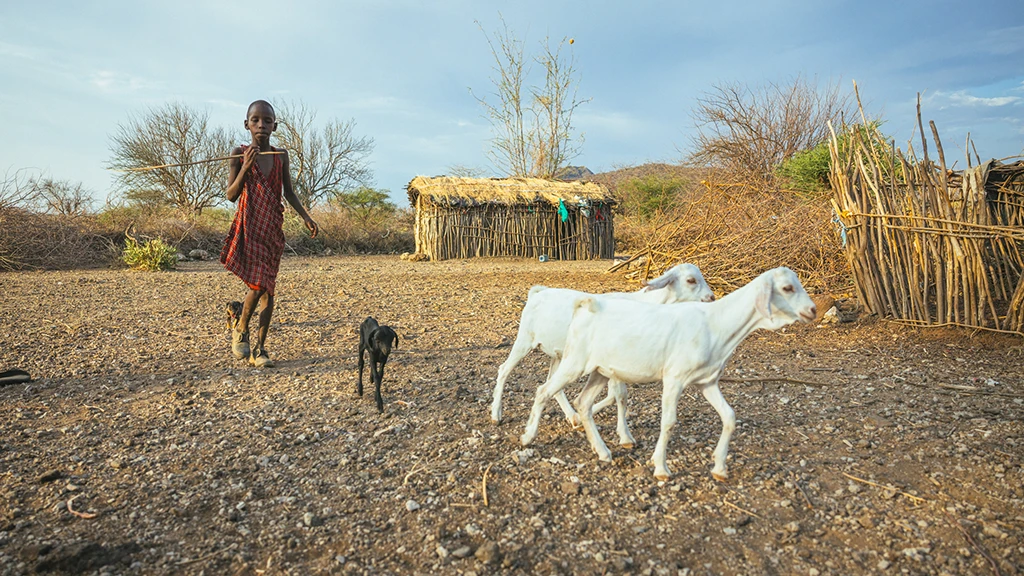
Every day, 10-year-old Benjamin in Kenya proudly leads his family’s goats out to graze, a chore that once seemed unthinkable, because from a young age, Benjamin was blind.
Benjamin lives with his parents and six siblings in the village of Olookitareti in Kajiado County. The family struggles financially; Benjamin’s father Joshua has a chronic illness, while his mother, who lives with a disability, does her best to manage their livestock herds while also caring for the children.
In 2023, a local disability advocacy group referred Benjamin to a special needs boarding school, where he learned to read braille. His parents were grateful that he would receive an education, but they still worried about his future.
The following year, a community health worker identified cataracts in Joshua’s eyes during a door-to-door screening and referred him to our surgical camp. He took Benjamin along, hoping for a diagnosis for the child as well.
At the camp, Benjamin was also diagnosed with cataracts and referred to our pediatric cataract camp happening at another facility. But on the day of the camp, he didn’t show up. The outreach team made calls to the family to track him down, but their calls went unanswered. Finally, our community health promoter located Benjamin at his school. She later discovered that the family had lost their phone.
Recognizing the urgency of Benjamin’s condition, our outreach team contacted the family’s close friend, Pastor Titus, who accompanied Benjamin to the surgical camp with the family’s blessing.
Thanks to the support of our partners and donors like you, Benjamin successfully underwent surgery and had his vision restored. Joshua also underwent surgery and can now see clearly.
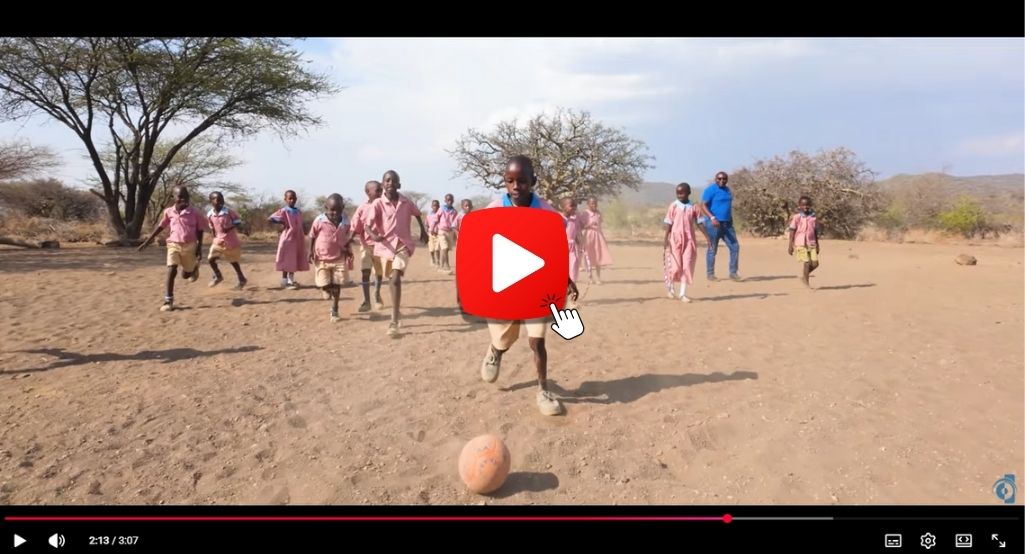
Now, Benjamin attends a regular primary school, confidently tackling Grade I. He reads and writes with ease and loves to join soccer games with the other children in the village.
His parents are grateful that Benjamin can now live up to his full potential.
Written with files from Patrick Wainaina Muthii.
This holiday season, consider giving the Gift of Sight to transform lives for more children like Benjamin!
For most of her life, Napolo, from Narok West Sub-county near the Kenya-Tanzania border, lived with constant eye pain. Now 78 years old, she first noticed discomfort in her 30s. Her eyes often felt irritated, as if filled with sand, and she experienced tearing and discharge that made it difficult to see. This attracted flies, but Napolo had no access to clean water to wash her face.
Napolo wasn’t aware that she was suffering from trachoma, a bacterial infection of the eye and the leading cause of blindness in areas with shortages of water and crowded living conditions. The bacteria spreads easily through contact with eye discharge from infected people on hands and clothing, and also through direct transmission by flies.
If left untreated, trachoma causes the eyelids to turn inward, making the eyelashes rub painfully against the surface of the eye. This causes permanent scarring of the cornea and irreversible vision loss.
Without access to regular health care, Napolo turned to traditional remedies. Her family members would pluck out her eyelashes to help ease the pain, but the relief never lasted. The irritation always returned, and over time, Napolo’s vision became worse.
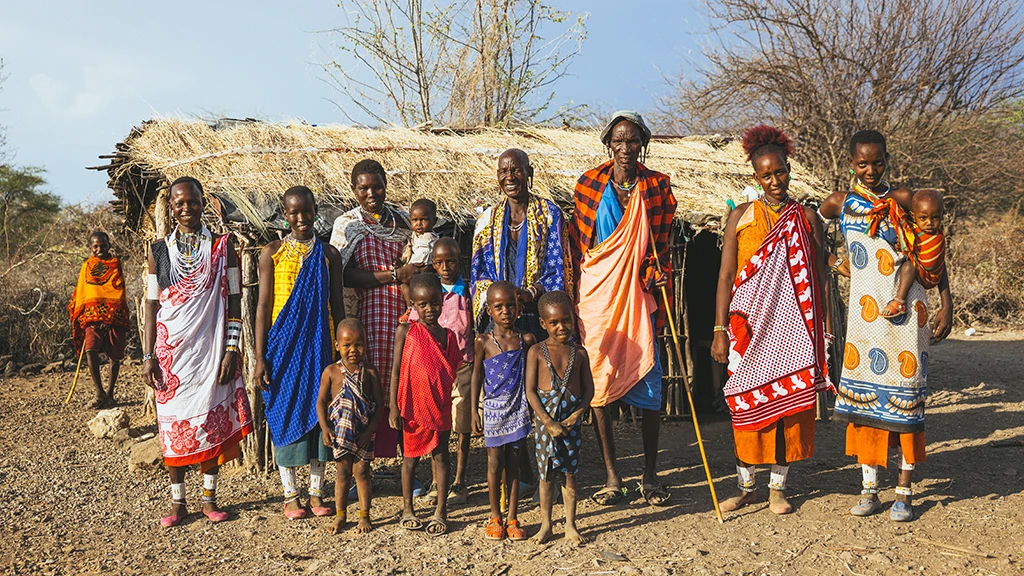
In her Maa community, many people had similar symptoms, and plucking one's eyelashes out was considered normal. Health workers occasionally visited their community, but Napolo often missed them because she was always out looking after her animals, sometimes even crossing over the border to let the animals graze in Tanzania. She somehow managed despite her diminishing vision and increasing pain.
One fateful day, an Operation Eyesight-trained Community Health Promoter visited Napolo’s home – and the visit changed everything.
You see, for many years Operation Eyesight has been working to eliminate trachoma in communities like Napolo’s. Through the Kenya Trachoma Elimination Program, funded by Sightsavers International, Operation Eyesight and partners are working to eliminate trachoma in Narok West Sub-county and the entire country by 2028. With this support, and in collaboration with the Narok County Department of Health, we launched a door-to-door screening initiative to identify remaining cases of trachoma trichiasis – the painful late stage of the disease. We provided training and resources for local Community Health Promoters. They screen people in their communities and refer those in need of eye care to our nearest partner facility.
During a community screening in November 2024, Napolo was identified and referred to Talek Health Centre, an outreach site that provides surgical treatment for trachoma patients. At the health centre, the ophthalmic team examined Napolo’s eyes and confirmed her diagnosis.
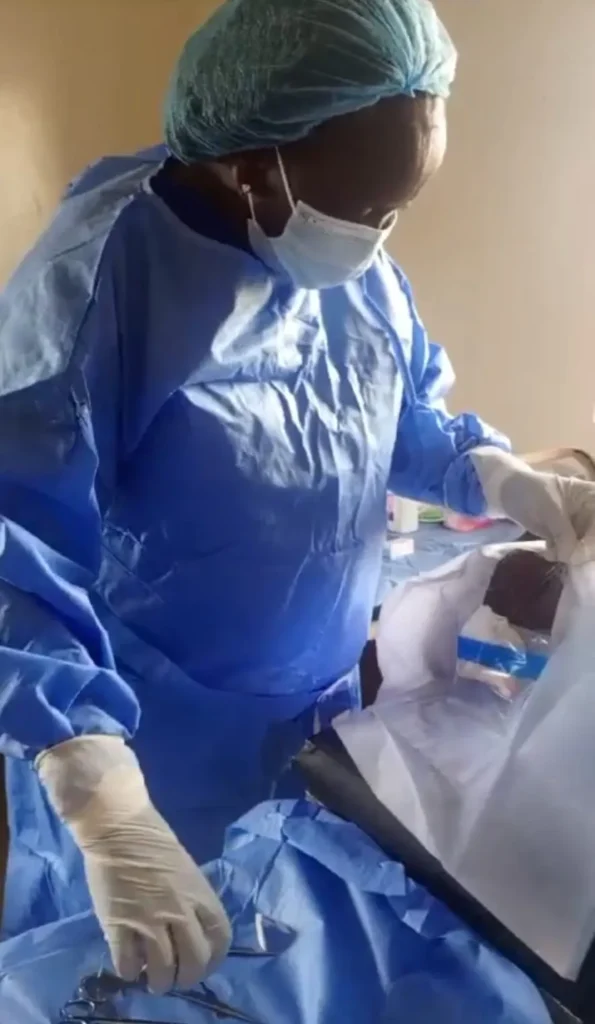
Napolo agreed to undergo eyelid surgery to correct her inward-turned eyelids. The procedure was successful, and her recovery brought immense relief, preventing further damage to her eyes and preserving her remaining vision.
“I have longed for this comfort for decades. There is no more discomfort, and I can open my eyes freely,” Napolo said. “I thank Operation Eyesight and the doctors who assisted me, and I will definitely refer anyone in my community that has the same problem so that they can be assisted.”
Napolo’s story shows how access to quality eye care can transform lives.
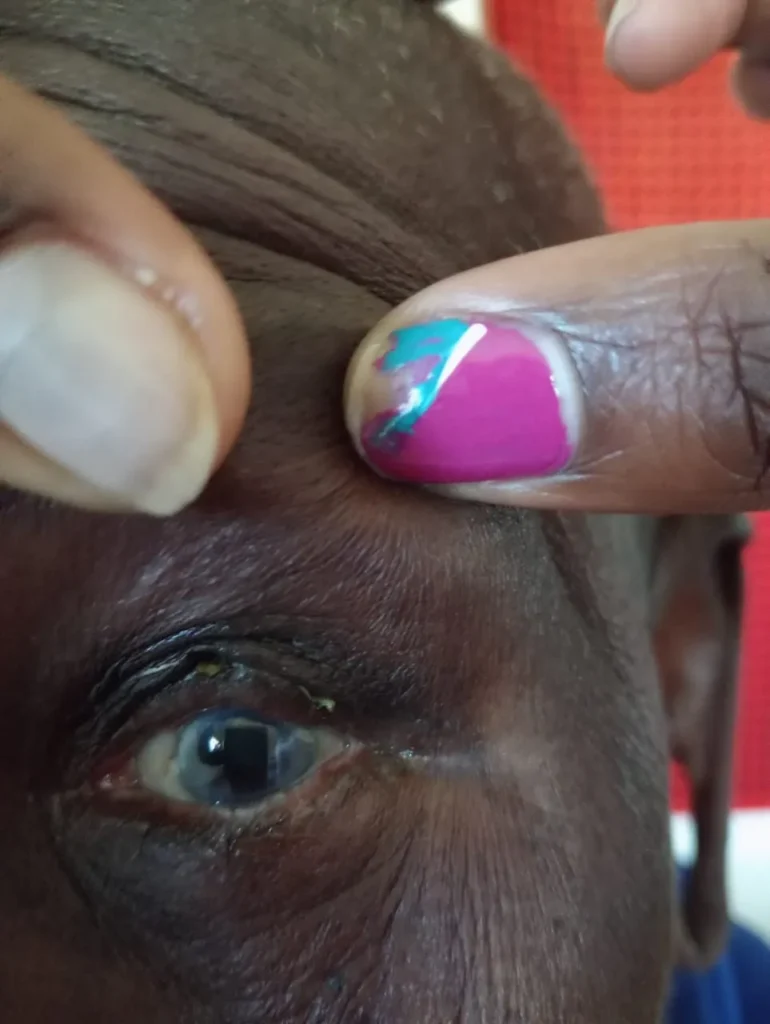
Did you know? Trachoma is the leading cause of infectious blindness.
Currently, 103 million people live in trachoma endemic areas and are at risk of trachoma blindness, and presently 1.9 million people are experiencing vision impairment or blindness due to the disease.1 It is found in 32 countries, in areas with shortages of clean water and crowded living conditions. Caused by the bacteria Chlamydia trachomatis, trachoma is spread by eye-seeking flies and personal contact. Children and women are at particular risk.
Operation Eyesight follows the World Health Organization-endorsed SAFE strategy, which has proven effective in eliminating trachoma. The SAFE strategy is a comprehensive treatment and prevention program that includes Surgery to treat the late stage of the disease, Antibiotics to eliminate infection, Face washing and hygiene education, and Environmental change including wells and latrines.
Join us in supporting programs that bring vital vision care to people like Napolo and also address the root causes of vision loss. Together, we can eliminate trachoma and ensure everyone has access to the eye care they deserve. Give the Gift of Sight today. Join us in supporting programs that bring vital vision care to people like Napolo and also address the root causes of vision loss. Together, we can eliminate trachoma and ensure everyone has access to the eye care they deserve. Give the Gift of Sight today.
Ten years ago, Esther – who lives in the village of Sitet, in Nandi County, Kenya – was chopping firewood when a log bounced and hit her left eye. The pain was sharp and immediate.
A week later, she went to the nearest hospital, where she received medication to manage the worsening pain and a referral to an eye hospital. But by then, her resources were spent. Out of money, she went home. The vision in her left eye never recovered.
She managed with her one good eye until three years ago, when she noticed the vision in her right eye was blurring. Soon, everyday tasks like picking coffee beans, cooking and walking to church became impossible.
“I felt like a burden to my daughter,” she says. “She had to leave her home to stay with me and help. At some point, I just wanted to die… I didn’t want to hold her back from her life.”
But one day, hope arrived in the form of a young man named Simon who knocked on Esther’s door. As a community health promoter we’d trained in primary eye care, Simon encouraged Esther to visit an upcoming eye screening camp we were organizing along with Meteitei Sub-County Hospital.
At the camp, doctors said that unfortunately her left eye was permanently damaged, but they could restore vision in her right eye. At 85 years old, Esther was scared of getting cataract surgery due to her age, but she was determined to reclaim her life. Thanks to our partner Johnson & Johnson, her operation was free.
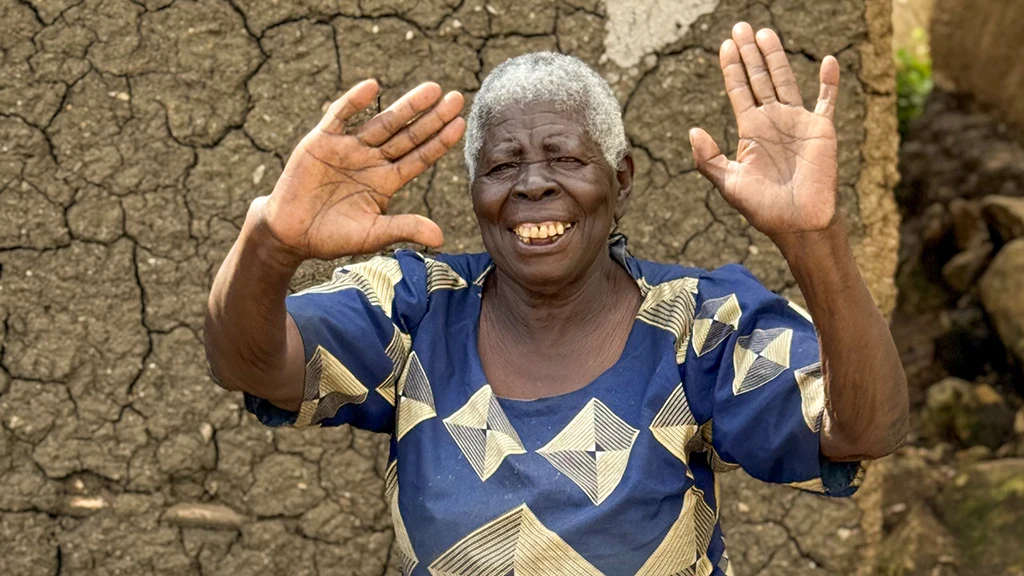
The day after her surgery Esther experienced a moment she’ll never forget.
“They removed the bandage… and I could see!” she recalls. “I couldn’t believe it. I saw my daughter’s face again. I saw the sun. I saw my home.”
Now she’s back to her daily life – picking coffee, going to market and attending church. Her message is clear: “Please go. Don’t be afraid. The surgery is not painful. You will see again, just like me. I thank the doctors. I thank the donors and Operation Eyesight, and I thank God.”
Your support helps us provide more sight-restoring surgeries for people like Esther!
With files from: Lister Barasa Maskika, MIS/MEL Officer, Kenya
On the day I arrived in Garbatulla, Kenya to begin my work with Operation Eyesight, there was no electricity, so I couldn’t let my colleagues back in Nairobi know that I had made it. The next day, the network came back online, but the incident sums up one of the challenges of working in this area – the difficulty in connecting with people, including many of our community health promoters who live in villages without network coverage.

Many people here in Isiolo County, in Kenya’s arid upper eastern region, are semi-nomadic. They move from place to place in search of pastures for their cows, sheep, goats and camels. Recently, flash floods cut off access to several villages. That’s why the new vision centre we’ve established in Garbatulla – in partnership with Garbatulla Sub-County Hospital – is so important. Now there’s a permanent eye clinic people can visit whenever the roads are open or when herders are back from distant pastures.
When I got here, I stayed at a local mission as I hadn’t found a permanent place to live.
A woman there named Hellen was very kind to me, making sure I got my tea each morning and that I had everything I needed to get settled. When I explained what had brought me to Garbatulla, she said she was struggling with her vision. I encouraged her to come to our clinic, where she was diagnosed with a cataract in her left eye. She was concerned that taking time off would disrupt her duties at the mission, but on the day of her operation she showed up and got it done.
I just had lunch with Hellen recently, and she is doing very well and has made a full recovery. I’m grateful to have helped someone who made me feel so welcome when I first got here

Samson Ngyongesa started working for Operation Eyesight in March 2025. He is the Program Coordinator supporting our Johnson & Johnson–funded Hospital–Based Community Eye Health Project in Garbatulla, Kenya. Samson previously worked for the Asante Africa Foundation, implementing a digital transformation strategy in remote parts of East Africa, and he has a background in economics.
For the past three decades, 68-year-old Meleniah has enjoyed doing bead work, a hobby she says brings her comfort. She lives with her husband in Chepaktet, a village in Elgeyo Marakwet County, Kenya, where she raises tree seedlings for a living. She supplements her income by selling her bead work.
When she was forced to put away her needle and thread due to poor eyesight, Meleniah thought her heart might break. She says she felt a lot of stress when she could no longer see to thread a needle, but she didn’t tell anyone about her eye problems because she worried one of her family members would quit work to take care of her. Besides, she figured her poor vision was simply a result of old age.
Eventually, Meleniah’s husband, having previously undergone cataract surgery himself, realized what was going on. He invited one of their granddaughters into the home to help with cooking and housework.
When a community health promoter arrived on their doorstep in January, Meleniah was assessed and told she too had cataracts. They referred her to our partner, the Iten County Referral Hospital, where she was diagnosed and underwent cataract surgery on both eyes. The treatment was provided free of charge, as had her husband’s operations, thanks to the generosity of our donors.
Meleniah recovered quickly, and soon she was back at it – beading late into the night, thrilled she could do the delicate needlework once again.

When Meleniah’s village was declared as Avoidable-Blindness Free, she was there to tell her story and to encourage everyone to seek treatment when they have eye problems.
Always the saleswoman, Meleniah had another motivation for speaking out that day. She brought along some of her fancy work and set up a table, happily selling her beaded gourds, bracelets, necklaces and keychains to neighbours attending the event.
Meleniah is grateful to donors like you for helping to bring the joy of beading back into her life!
Between textbooks, whiteboards and videos in class, most of the information that’s presented to kids at school is visual. So what does that mean for a child who can’t see clearly?
In countries where eye health care is difficult to access, a simple eye condition like myopia (nearsightedness) can cause a student to fall behind and even drop out of school, which in turn could affect the child’s income for the rest of his or her life.
Ensuring that Quality Education is available to all children is one of the 17 Sustainable Development Goals set by the United Nations’ 2030 Agenda. We’re working towards this goal by ensuring that more children get the eye health care they need to thrive at school and take charge of their education.
According to a survey by the World Bank, children with visual impairments in sub-Saharan Africa are five percentage points less likely to ever be enrolled in school or to complete primary school. They are six percentage points less likely to be literate.1
The links between academic performance and visual impairment can be harder to draw given the complexity of the issue, but one survey from francophone countries in Africa found that primary school students – who self-reported difficulties with their vision – performed worse on standardized tests in math and reading in all but one of the 10 participating countries.2 Similarly, a Stanford study of 20,000 fourth and fifth graders in rural China found that eyeglasses boosted the standardized test scores by 18 per cent over six months.3

Even studies from higher income countries, where children have better access to eye health care, show that students with poor vision tend to read more slowly than their peers and are more likely to report that they don’t like reading.4 Visual fatigue is a likely culprit for both, and the resulting headaches and tiredness that these kids experience are also thought to play a role in behavioral issues at school.
Roughly 22.16 million children ages 14 and under have Moderate to Severe Vision Impairment (MSVI) and 44.6 million have mild vision impairment, according to a panel of global health professionals called the Vision Loss Expert Group.5
Only 20-50 per cent of the children who need prescription eyeglasses worldwide actually own a pair.6 Often, this is due to a lack of access to eye health care. In rural, remote or underserved communities, especially in low- and middle-income countries, many kids don’t get regular eye exams or have access to prescription eyeglasses and other treatment. This could be due to financial constraints, lack of education about the importance of eye health, or simply because there aren’t any optometry clinics nearby.
Across lower-income communities, schools may also lack electricity or lighting, making it even more difficult for a student with vision impairment to read information written on a blackboard. Lack of adequate lighting at home can also cause difficulties in completing homework. For a secondary student who is already falling behind in class, not being able to finish homework in a timely manner could end their school career, and cause them to drop out early.

Isaac Baffoe, who manages our school eye health programs in Ghana, says one student’s story really stuck with him. The girl reported that her eyesight started to fade when she was about 12 years old, and by age 15 she had severe vision impairment. For years, she relied on a classmate to read the blackboard out loud to her during class. Isaac often wonders what would have happened to her if her friend hadn’t been so helpful, or even more importantly, if our school eye health program hadn’t reached her school and she hadn’t gotten prescription eyeglasses.
Our field staff hear a lot about the difficulties that students face before they get eyeglasses. One student in Ethiopia reported that she and her friend were frequently scolded when the friend read the blackboard notes aloud to her. Others reported that their grades dropped sharply, or that they lost interest in their studies. Many children say that they asked their parents to take them to the eye doctor, but due to tight finances or difficulty in reaching a clinic, they weren’t able to get the eye care they needed.
The good news is that, with your ongoing support, we are changing all of this – one school and one child at a time.

Part of our goal at Operation Eyesight is to reach every single member of a community with eye health care, ensuring that nobody gets left behind. Increasingly, we’re screening school-aged children for eye issues right in the classroom.
In 2023 alone, our school eye health programs helped us screen more than 240,000 students in Bangladesh, Ethiopia, Ghana, India, Kenya, Nepal and Zambia.
In Kenya, we’ve partnered with the United States Agency for International Development’s (USAID’s) Child Blindness Program and Peek Vision to deliver an innovative program where teachers are trained to do the initial eye health screenings using a simple smartphone app. This allows us to screen more students overall, while still providing referrals to those children identified with eye problems to get a complete eye exam with a healthcare professional.

In Ghana, we train community health nurses to help deliver our school eye health programs, also in partnership with USAID and with funding from the Church of Jesus Christ of Latter-day Saints and Latter-day Saints Charities. In addition to conducting school eye health screenings, the nurses provide the students with eye health education sessions, where they learn how to prevent eye injuries and infections and learn about various conditions, like refractive errors (the need for eyeglasses). By making sure children have basic eye health information and know where to go for subsidized eye care, whole families are made aware of the services that are available to them.
Isaac, who has been on hand during several of these school screening events, says the children are always very eager to get involved. “The children show lots of interest. They want to participate,” he explains. “During all the screenings we’ve attended to audit, the children are very cooperative, they really want to know what is going on.”
He adds that it’s not just the students who are happy with getting a pair of eyeglasses.
“It’s not only a relief to the children, but also to the teachers,” he says, “because it also made their work difficult to spend extra time with these children who were struggling with their studies prior to receiving eyeglasses.”
In November 2020, the borehole in the Zambian village of Kangwa broke down. The COVID-19 pandemic was in full swing, and the need for clean water was more urgent than ever. For Natasha, a teenager who was in high school at the time, the breakdown had devastating consequences. As the family member tasked with fetching water, Natasha now had to walk several kilometres each day to complete the chore, meaning she could no longer attend school. She wasn’t alone – other teenage girls in her community were in the same situation.

When our team in Zambia found out about the broken borehole, they sprang into action and quickly got it fixed. They were well equipped to do so, because we have been working with communities to repair and drill boreholes for many years to curb the spread of trachoma.
Trachoma is a bacterial eye infection that’s common in areas with water shortages and crowded living conditions. The bacteria spreads easily through contact with eye discharge from infected people on hands and clothing, and also through direct transmission by flies. If left untreated, it can cause severe pain, vision loss and even blindness. In fact, it is the leading infectious cause of blindness worldwide.
When we work with communities in areas of Zambia, Ethiopia and Kenya where trachoma is endemic, we ensure that water and sanitation issues are part of our intervention. In communities like Kangwa, this means training local volunteer teams to help maintain and repair broken boreholes, and training community WASH (Water, Sanitation and Hygiene) teams to educate their neighbours about preventing trachoma transmission in the home.

In order to ensure that girls have equal access to quality education, clean water and sanitation facilities must be part of the solution. (Watch this video to learn more about the ripple effects of clean water.)
Myopia (nearsightedness) rates are on the rise all over the world. In 2020, the global prevalence was 30 per cent. It’s estimated to rise to 50 per cent by 2050.7
In China, where the rise in myopia in children is being described as an epidemic, the government has rolled out a nation-wide strategy to curb the growth, which includes school-based eye screenings, public health education campaigns, a reduction in homework and an increase in time spent outdoors.8
As suggested by China’s strategies, many of the factors contributing to the rise of myopia are likely due to modern lifestyles: more time spent indoors, doing near-work like homework, and more time spent parked in front of digital devices.
But there may be more at play in the phenomenon, including environmental risks like increasing urbanization and changing diets. As low- to middle-income countries become more urbanized and educational pressures mount, children everywhere are at increased risk of developing the refractive error. In parts of Africa and Asia where families already face difficulties accessing eye health care, the gap between eye health services and those in need of treatment will continue to grow.
As part of our 2024-2028 Global Strategy, we are committed to providing eye health care and clean water to more children so that they can take full advantage of any educational opportunities they are presented with. This means integrating WASH projects with school eye health projects and rolling out more school eye health programs across our countries of work.
We have already seen much success with our school eye health programs in countries like Kenya and Ghana, where we’re working with the local ministries of health and education. Now, it’s time to scale our efforts to more schools, more districts and more countries. With your ongoing support, we can expand our reach and improve the quality of life for more kids around the world.
Donate today and help us restore sight and prevent blindness for more children. The Gift of Sight is the gift of education and the gift of opportunity. Thank you for your support!
Holding an awl in one hand, and a man’s leather shoe in the other, Abraham in Kenya demonstrates how he pierces a hole in the leather before stitching it up to make a repair. It’s part of his job as a cobbler that, for months, he was unable to do.
A couple years ago, Abraham started having trouble with his vision. His work suffered as he had more and more difficulty focusing his eyes on the tiny stitches and delicate work of shoe repair. He began pricking himself repeatedly with the needles, and eventually, he couldn’t get the needles threaded at all. Finally, he had to shutter his business.
At age 65, Abraham’s six children are now grown up, but his income was essential to supporting his grandkids. Without being able to repair shoes, he had to rely on his wife’s earnings as a farmer to get by.
The loss of income wasn’t the only financial difficulty exacerbated by his vision loss. Because he couldn’t see well enough to punch in his PIN on his phone, Abraham started giving the number to shop attendants while making purchases. Eventually he realized that some of them were stealing from him and transferring additional money to themselves before handing the phone back over.
Abraham went to a nearby clinic for help with his vision. He received a prescription for eyedrops, but his condition continued to worsen despite regularly using the drops.
One day, Abraham met one of our community health volunteers, who was going house to house doing eye health screenings. The volunteer gave Abraham a referral to the eye unit at our partner facility, the Iten County Referral Hospital, where he was diagnosed with cataracts in both eyes.

Just weeks later, Abraham went back to the Iten Eye Unit. The surgeries on both eyes were a success, and when our staff caught up with him, they were impressed with how quickly he had bounced back. He has started repairing shoes again and is happy to be taking care of his family with the income. He has also become an eye health ambassador, telling his neighbours about the Iten Eye Unit and how eye surgery transformed his life.
Please consider making a donation to help more people like Abraham get back to work!
Story written with files from Caroline Ikumu.
Herding cows is such a fundamental part of Maasai culture that it is common to hear people in that community greeting each other with, “I hope your cattle are well!”
So, when 70-year-old Parmuat, a Maasai herder in Kajiado County, Kenya, thought he might have to sell off his cows, he was devastated.
Several years ago, Parmuat looked outside his home and couldn’t see his cows anywhere. When he found them, he realized they had been right in front of him all along, on a hill near the house. He hadn’t been able to see them because of his increasingly blurry eyesight.

As his vision got worse, Parmuat found it harder and harder to care for his herd. He didn’t know how else to make an income, and he worried that he and his wife would become a burden to their 12 children, now grown up and raising families of their own.
Parmuat’s luck changed when a community health assistant, whom we’d trained in primary eye care, knocked on his door during a door-to-door eye screening and diagnosed him with cataracts.

Just a few weeks later, Parmuat learned he would be among the first patients to get cataract surgery at the new eye unit at the Kajiado County Referral Hospital.
After surgery, when a nurse removed the gauze from his eyes, Parmuat marveled at his restored vision. “Everything was clear again,” he says, “as if the sun suddenly came up.”
Now back at home with his wife, Parmuat says that he doesn’t need to sell any cows. In fact, he adds with a twinkle, he’s thinking about buying a couple more.
With files from Patrick Wainaina
At first, a trachoma infection looks a bit like a case of pink eye: red, irritated eyes, maybe some swelling and discharge1. But for many people in the world, a trachoma infection is a serious concern. If left untreated, it can lead to severe pain, vision loss and even blindness. The bacteria that cause trachoma spread through direct personal contact, through shared towels and clothing, and through flies that have been in contact with an infected person. And there’s a simple solution for reducing its spread…
Clean water.
When communities have access to abundant clean water, they can wash their hands and faces regularly, do laundry more often, and prevent the otherwise relentless transmission of the disease. That’s why we are working hard with communities and partner organizations to make sure that the people in our project areas have access to a local, sustainable clean water source.

There’s been a lot of good news in the eradication of trachoma in recent years. In 2023 alone, Benin, Iraq and Mali each received certification from the World Health Organization (WHO) for eliminating trachoma as a public health problem. Also, the number of people at risk of getting the infection fell from 125 million in 2022 to 115.7 million in 2023, a significant reduction.2
But the hard work must go on.

Ethiopia has some of the highest rates of trachoma worldwide, with the prevalence in the Amhara Region estimated to be nearly 63 per cent. In that country, trachoma is the second leading cause of blindness overall.3
Trachoma continues to infect people in 42 countries and has caused blindness or visual impairment in roughly 1.9 million people. It remains the leading infectious cause of blindness worldwide. And the effect on the workforce in these countries is huge. According to a recent paper by the WHO, the loss of productivity due to trachoma costs somewhere between US $3-8 billion each year.4
To people like Stephen, in Narok County, Kenya, having trachoma meant not being able to support his family. The father of four, who works as a motorcycle courier, struggled with the infection for years. He tried eye drops, eyeglasses and several surgeries before the trichiasis in his right eye, caused by repeat trachoma infections, was fully resolved.
Since undergoing a successful final surgery at one of our partner hospitals, the young man now acts as an eye health ambassador in his community, making sure people know what the infection is, the role of hygiene in stopping its spread, and how to get it treated.
Years of repeat infection from trachoma causes scarring to the eyelid. This scarring can be so severe that the eyelid turns inward, causing the eyelashes to rub against the eyeball. This leads to severe pain, light intolerance and scarring of the cornea.
If left untreated, the damage to the cornea can cause vision impairment, usually between the ages of 30 to 40 years5, although it can happen in children as well. Trachoma causes 1.4 per cent of blindness globally.6
Women become blind from trachoma four times as often as men. This is likely due to frequent infections they get while caring for small children, who often pass trachoma on to others.
At Operation Eyesight, we follow the WHO’s SAFE strategy for controlling and preventing trachoma. SAFE stands for:
S: Surgery to treat trichiasis (the painful late stage of the disease)
A: Antibiotics to eliminate infection
F: Face washing and hygiene education
E: Environmental improvement including wells and latrines

The foundation for the strategy is environmental improvement, namely – providing access to clean water. Over the decades, we’ve worked with communities to rehabilitate and drill hundreds of boreholes. In recent years, most of our work with water has been concentrated in Zambia and Kenya, but we are also getting involved in more water projects in Ethiopia as we expand our programs there.
Along with drilling and rehabilitation, we work with local governments to make sure people can fix the boreholes when they break down. In Zambia, that means financing the training of volunteers called Area Pump Minders (APMs) to do routine maintenance and repair of boreholes. The program helps ensure that there is a system for repair work, with locally-available toolkits and spare parts, and that monitoring of the water supply is happening at the village level. In addition to helping their communities, some of the APMs go on to find paid work repairing privately-owned boreholes. Over the last two years, we’ve seen several women join the traditionally all-male teams, and we hope to recruit more in future.

The community involvement doesn’t stop there. We also work with volunteers to form WASH committees who help educate other people, especially children, in Water, Sanitation and Hygiene. In Ethiopia, we are working with partners to train teachers in WASH so they can pass on their knowledge to thousands of students. Our work in Ethiopia has also involved fixing up latrines and providing menstrual supplies, both of which can help keep teenaged girls in school longer.
Antibiotics also go a long way to preventing and treating existing cases of trachoma. We work with local governments and partner organizations to provide these antibiotics to areas with high prevalence of trachoma. Earlier this year, we collaborated with partners in a Mass Drug Administration project in Kenya’s Narok County. Despite wet road conditions that made it challenging for crews to access all the communities, the project managed to administer the antibiotic azithromycin to more than 215,000 people!
Throughout the process, our trained community health volunteers work tirelessly to provide education on the importance of facial cleanliness and environmental improvements in stopping the spread of trachoma.
Finally, with help from our generous donors, our partner hospitals can offer surgeries free of charge to people with advanced stages of trichiasis to alleviate the pain and prevent further loss of sight.
We’re involved in clean water projects as a means of preventing trachoma, but the effects of providing clean water to communities are countless. The installation and maintenance of boreholes prevents dozens of waterborne diseases that sicken and threaten the lives of many, and that keep whole communities trapped in the cycle of poverty. Sustainable boreholes help people grow gardens full of fresh vegetables, allow them to raise livestock and improve the quality of life for everyone around them.
The effects of access to clean water are especially beneficial to women and girls. Here’s why:
Education and economic opportunities: In many communities, women and girls are responsible for fetching water, a task that can be extremely time consuming and physically demanding. This can prevent girls from attending school and women from pursuing income-generating activities. When clean water is locally available, girls are more likely to complete their schooling, and women have more time for activities that empower them economically.

Reduced gender-based violence: Providing access to clean water within communities reduces the need for women and girls to travel long distances for water, decreasing their vulnerability to the violence and harassment that they risk when collecting water.
Hygiene and menstrual health: Clean water is essential for maintaining proper hygiene, including menstrual sanitation. When women have access to clean water and sanitation facilities, it positively affects their overall health and dignity.
Community development: Women are often key contributors to the well-being of their communities. When they have access to clean water, they can actively take part in and lead initiatives that enhance the overall living conditions in their communities.
In 2023, we partnered on two new boreholes at schools in Ethiopia’s Amhara Region. In Zambia, we repaired 25 boreholes in the Mkushi District, trained 20 new Area Pump Minders and set up more WASH committees.
You can help us continue our water projects in 2024 by making a donation today. Thank you for your support!

