
This World Sight Day, our colours are lighting up skylines in communities across Canada, from Calgary to Winnipeg and from Guelph to Toronto. We’ll be sharing photos on our website and social media, so everyone can see them.
If you live in Calgary, where we have been based for more than six decades, look up, way up, at the Calgary Tower after dark on October 9. To help raise awareness of the importance of eye health, the Calgary Tower will shine in Operation Eyesight’s blue and orange.


If you live in Toronto, you can see the CN Tower shining in blue and orange (and yellow, for another eye-related organization that is also marketing World Sight Day). Wherever you live in Canada, urban, rural or remote, you can view the CN Tower lighting through the Tower’s webcam here. Catch the light show at the top of every hour and at every half hour.
Guelph's Market Square lit up in blue and orange overnight on October 8 to 9.
The Winnipeg Esplanade Riel Bridge and city sign will be lit up on October 11 for World Sight Day as well as World Blindness Awareness month (October).

As of 2019, in Canada, 1.2 million people experience vision loss, which is 3.2 per cent of the population, and another estimated eight million people – 19 per cent – have eye conditions that could lead to blindness.
Avoidable vision loss can be prevented or treated when detected and addressed early. This is best done through regular eye exams; however, just 51 per cent of people in Canada are aware of how often to get an exam. Vision loss impacts people of all ages and touches all aspects of life including:
World Sight Day is in focus in Canada this year with the passing of the National Strategy for Eye Care Act in November 2024.
Kris Kelm, our Global Director – International Programs and Chair of the Canadian Eye Health Coalition, says, “Canada has made eye health a national priority with the passage of the National Strategy for Eye Care Act. We’re hard at work with like-minded organizations and communities, including Indigenous communities, to help shape the framework for an eye health care system that will serve all Canadians, from Inuvik to Iqaluit, and from Victoria to St. John’s – and every urban, rural and remote community in between. We are proud to bring more than 60 years of experience – earned building eye health care systems with partners in Africa and South Asia – to the table, and we feel that there is a lot for our Canadian policy to learn from international experience.”
Our President & CEO Kashinath Bhoosnurmath says, “Together, we can build an eye health care system in Canada that improves quality of life for us all, personally and for our family, friends, colleagues and neighbours. Together, we can eliminate avoidable vision loss in Canada to expand our collective opportunities – and be a shining inspiration for others.”
On September 23, 2025, the UN Friends of Vision, collaborating with the International Agency for the Prevention of Blindness (IAPB) which facilitates World Sight Day worldwide, presented the very first The Value of Vision: The Investment Case for Eye Health to the United Nations General Assembly in New York. The case will help inform international frameworks and lay a path for countries to build eye health care systems.
We will be sharing our activities on social media and our website. Learn more or donate in honour of World Sight Day at operationeyesight.com/worldsightday.
Happy World Sight Day! And thank you to our staff, donors and partners around the world for your steadfast dedication to our mission to prevent blindness and restore sight – For All The World To See!
In November 2024, Kris Kelm joined us as our new Global Director of International Programs. Based in Ottawa, Kris brings with him years of experience and connections in the eye health and development sectors, which will serve him well as he leads our program teams, builds new partnerships, and oversees our government and stakeholder relations.
Like many in the development sector, Kris didn’t set out to work in philanthropy – he just sort of fell into it. He had been working at EssilorLuxottica, a producer of ophthalmic lenses and eyeglasses, when a chance meeting with the director of the company’s new philanthropic arm got him involved in charitable efforts. After a few years of running pilot projects, he found himself accepting a new position within the OneSight EssilorLuxottica Foundation Canada.
“It just resonated with me, to have that level of impact on improving somebody’s life by being able to provide better vision,” he says.
Now, he is working to prevent blindness and restore sight across the globe.
Since joining Operation Eyesight, he’s helped lead us through our involvement in the passage of Bill C-284 in Canada, a project he’d already been engaged with in his previous role. The Bill will enact the establishment of a national strategy for eye care.
Kris points out that given our 60-year history of bringing eye care to remote, rural and underserved communities, we can speak credibly on how we might approach things here at home.
On a recent trip to see some of our projects in Ghana and Zambia, Kris reflected on the insights that Canadian policymakers can take from some of our countries of work.
“Canada’s behind, in a sense, in our recognition of vision health as a priority,” he says., “I think we can learn as a country from the other nations that have come before us in prioritizing vision care nationally.”
Christian Labonte was thinking about what to do with his high school finance club, Capital Minds, during the summer of 2024. He was headed into grade 12. That summer, he had taken a one-week intensive finance course at Bentley University, in the United States. “I had an idea for a stock competition,” he says. At the time, he was volunteering with Operation Eyesight’s fundraising team in Calgary, and inspiration struck. “I thought, why not do it with fundraising?” He found a free software platform and set up a one-month mock stock exchange with a peer-to-peer fundraiser link from Operation Eyesight. He then set out to gather interest from sponsors and students.
Interest grew quickly. When Christian set up an Instagram account for his finance club, the Centennial Finance Club followed it. At first, Christian thought the club was from a Calgary high school; however, he says they “got to talking and I realized they were in Southern California.” The Centennial Finance Club had registered a non-profit to try and connect high school financial clubs from around the United States. They welcomed the Capital Minds Club into the 15 Club Federation, and Christian invited club members to participate in Invest for Sight.
In all, 55 students from across North America took part. Christian says he embraced the peer-to-peer aspect of fundraising by “really encouraging everyone to get their families and friends to support them.” Sponsors provided $1,000 in prizes for students for various challenges, such as submitting the top investment strategy. Together, the students raised $5,018.
Fundraising hones leadership skills and contributions to the global community
The experience of setting up a fundraiser helped Christian learn skills and experience he will use throughout his student life. “Fundraising is a good opportunity for students to experience leadership at their young age, and it helps in giving initiative to their passion. You develop skills when you develop a project.”
Christian had to manage the fundraiser, stay on top of grade 12 schoolwork and incorporate activities and sports. “I became way more efficient at managing my time and activities – and it really kept me driven in what I was doing,” he says. “At university, there’s so much more schoolwork and extra-curricular activities. Fundraising is a great thing for young high school students to do." The initiative will be noted on his application for university finance programs in the United States.
Peer-to-peer fundraiser appreciated
Robyn Wilson, our Manager of Donor Relations, says, “We are thrilled to have worked with Christian over the summer and are deeply grateful for his remarkable talent in both fundraising and building connections. Through his efforts, Christian not only secured financial support to bring people the gift of sight but also inspired and engaged his peers, helping us connect with the next generation of supporters.”
Thank you, Christian and team, for your creative support! Interested in organizing your own peer-to-peer fundraiser? Learn more at operationeyesight.com/fundraise.
While most Canadian schoolkids would have a hard time finding Ghana on a map, the West African country truly came to life for donor Sharon Margison when she was 10 years old. That year, her mother, then president of the Toronto YWCA, developed a close friendship with a young Ghanaian woman named Sika (also known as Barbara) who had come to Canada to study. Sharon’s mother encouraged her daughter to think of Barbara as a big sister, and that relationship continues today, more than 60 years later.
In 1982, Sharon and her mother travelled to Ghana to meet up with their old friend. During that visit, they were made family members.
“I just always found the people very welcoming,” Sharon says. “I really enjoyed talking with people and learning about their experiences.”
When Sharon heard that we were launching a new campaign to raise funds to screen 23,000 schoolkids in Ghana for eye conditions, her interest was piqued. Beyond her personal connection to the country, Sharon had another reason for taking interest in child eye health – she too has struggled with refractive error since she was in grade school.
“I’ve been wearing eyeglasses since I was nine years old,” she says, “and I studied visual arts during my undergraduate degree. So, vision is a huge thing for me.”
Sharon has generously decided to make a $10,000 contribution towards our Ghana School Eye Health project. She says that as a longtime donor, she has confidence in Operation Eyesight’s approach to community eye health.
“I like the fact that Operation Eyesight contributes to things like cataract surgery and also the delivery of education around good healthcare practices to avoid blindness and eye diseases,” she says, adding, “I also like how it trains locals to go out and educate people in their own communities.”
We are so grateful to Sharon for kicking off our Ghana School Eye Health campaign with her donation. We invite you to join her in transforming young lives!
Ottawa, Canada – November 7, 2024 – Operation Eyesight Universal is delighted to celebrate the passage, on November 7, of the National Strategy for Eye Care Act, Bill C-284. We congratulate the Hon. MP Judy A. Sgro and the Hon. Senator Mohamed-Iqbal Ravalia for their tireless work in successfully bringing this important legislation to pass. (Find the announcement press release here).
By signing this important piece of legislation, the Canadian government has established itself as a global leader by prioritizing eye health care as an integral part of universal health care, while also achieving many of the United Nations Sustainable Development Goals (SDGs). In Canada, health care is a right. This Bill now makes eye health care a right as well. The passage of Bill C-284 gives hope to the one in five Canadians suffering from a condition that puts them at risk of blindness (eight million people) and the 1.2 million Canadians living with vision loss, figures which come from the 2023 Report Card on Vision Health in Canada, released by Fighting Blindness Canada and the Canadian Council of the Blind. The report states that every year, our national economic burden from vision loss is 32.9 billion dollars. The passage of Bill C-284 is about far more than sight – it is about education for children, employment for adults and independence for seniors.
Kashinath Bhoosnurmath, President and CEO of Operation Eyesight Universal, says, “Today, Canadians have achieved the right to sight, as our universal health care will incorporate eye health care for all, with the passing of Bill C-284, the National Strategy for Eye Care Act, into law. Eye health care too is a priority now in Canada. This impacts us all. The law will support the many Canadians who have eye conditions they do not know they have. It will also shine a light into the lives of the millions of Canadians who struggle not only with their vision but also with accessing the eye health care they need—across every part of Canada. This inclusive bill signifies that eye health care must be available, accessible and affordable, and it will support child development and learning, adult employment and productivity and senior connection and independence. We are delighted that Canada has the vision to step forward as a national and international leader. We can all see the benefits ahead.”
The importance of this legislation cannot be overstated. Universal eye health care is proactive, preventative and supportive. It includes regular eye exams, early detection of eye conditions, treatment and ongoing supports. For some, treatment can be as simple as getting a pair of prescription eyeglasses which can be transformative – recent research found that students who don't get the eyeglasses they need learn half as much as students with good or corrected vision, according to the International Agency for the Prevention of Blindness. This research also stated that when vision is corrected in school it can influence lifelong earnings by up to 78 per cent. This example shows that eye health care impacts not only individuals but also local and global economies. Eye health contributes to several of the 17 United Nations Sustainable Development Goals (SDGs), which have been set to build a more peaceful and prosperous world. These include good health and well-being, quality education and poverty reduction.
For decades, Operation Eyesight has brought inclusive eye health care to communities and regions in countries in Africa and South Asia. We do this by partnering with national, regional, and local governments and leaders, including the ministries of health and education. We act as a bridge between communities, connecting every child, woman and man to local eye health care.
In Alberta, we have been piloting eye health care programs by working with medically underserved communities. We are building relationships with and listening to communities to understand their unique needs, cultures, lived experiences and lifestyles (rural, urban and more), while growing our capacity to support this work in a good way. We know that inclusive eye health care works when people are aware of its importance, it is available and accessible when and where people need it – close to home, school or work – and it is open to all regardless of ability to pay.
We welcome the opportunity to collaborate with governments, organizations and community leaders in Canada to inform this new national eye care strategy. We look forward to contributing our voice to advocate for it to be inclusive so that it is accessible, affordable and available to all. We will continue to raise awareness of the importance of eye health and the need for eye health care in Canada. Together, let us take a long view of our collective right to sight.
Kris Kelm, Global Director, International Programs, Operation Eyesight Universal
Kashinath Bhoosnurmath, President & CEO, Operation Eyesight Universal
About Operation Eyesight Universal operationeyesight.com
Operation Eyesight Universal is an international development organization and registered charity working to prevent blindness and restore sight. Our vision is the elimination of avoidable vision loss. Founded in Calgary, Alberta, Canada in 1963, we are now a global community spanning four continents – Africa, Europe, North America and South Asia. Our vision is global and our focus is local, with teams on the ground in communities of work. Through activities like community outreach, water and sanitation projects, and health education, we at Operation Eyesight are addressing the root causes of avoidable vision loss which contribute to six United Nations Sustainable Development Goals: no poverty, good health and well-being, quality education, gender equality, clean water and sanitation, and partnerships for the goals.
Operation Eyesight is celebrating a new partnership with three Ottawa Dragon Boat teams. They are competing in the Ottawa Dragon Boat Festival from June 21 to 23. The three teams are promoting the cause of good eye health for all – here in Canada, in India, and elsewhere around the world. Two teams are named Kaavéri Xpress, while a third all-women’s team is called Kaavéri Sherows.
This new partnership reflects the growth of our global community. An organic connection exists between the teams and Operation Eyesight President and CEO, Kashinath Bhoosnurmath (who goes by Kash), as most members are part of the Indian diaspora community in Canada. While members have settled in Canada, built homes, careers and community, a part of their heart lies in India. “Many of us long to support those back in our Indian home,” Kash says. “We know many people are facing very difficult life challenges there that are different than the life challenges we face here in Canada.”
One way to offer support is partnering with Operation Eyesight to work towards eliminating avoidable vision loss. This is not only about sight but also about learning for children and particularly girls, maintaining a livelihood for adults, and securing independence for seniors. Globally, more than 1.1 billion people are living with vision loss, and fortunately, 90 per cent of these cases are treatable or preventable. However, only a limited number of people are aware of this fact. Many, especially in middle- and low-income countries, are forced to live with blindness or some form of vision loss due to lack of access to affordable and quality eye care services. “This is a kind of global emergency,” says Kash. “If this issue is addressed, communities and countries will experience reduced burdens of poverty and disease, as well as increased levels of productivity and development. These factors are interlinked.”
Operation Eyesight has developed a successful model that results in the elimination of avoidable vison loss. Our tested and evidence-based model is the foundation for our projects in 10 countries. “In India alone, we proudly boast over 1,300 villages that have been declared free of avoidable blindness on a sustainable basis. Our story needs to be known and told,” says Kash. An eye exam and a pair of prescription glasses, or a simple cataract surgery is often all that is needed to bring someone's future back into focus. “Tested and often cost-effective solutions are available. What is needed is awareness, collective will, and support among those who can lend a hand.”
The partnership between the boat teams and Operation Eyesight flows not only from shared values and vision, but also from the power of water, which is fundamental to the boat teams and to healthy eyes. While the two Kaavéri Xpress teams and the all-women Kaavéri Sherows Ottawa Dragon Boat teams will be paddling down the Rideau River on race day, two rivers will be in their hearts, as the teams are named after the sacred Kaveri River in southern India. Team captain Lokesh Siddaramanna explains, “Kaaveri connects us back to our roots, as it’s a lifeline for farming and drinking water for much of Southern India.” He adds that the name was chosen because it resonates deeply with people across the region, lifting their spirits and connecting with their hearts.
There are many parallels between the dragon boat teams and the global community of Operation Eyesight. Boat teams must recruit committed members, train collaboratively and work in sync with one another to successfully compete against other teams. The global community of Operation Eyesight must recruit committed partners, train local health care workers and work collaboratively with partners, hospitals, governments and communities to eliminate avoidable vision loss. Everyone must keep their eyes on the finish line. How fast they finish the race really depends on how successfully they can work together.
During the festival, Kash and Myrna Linder, Operation Eyesight Director of Fund Development, will join a pre-race pep talk, cheer on the teams, and attend an evening dinner to connect with the members. They will also present on Operation Eyesight programs in India, South Asia and Africa. As the dragon boat teams race down the river, their support will speed Operation Eyesight along in the race to eliminate avoidable vision loss.
“We are so grateful for the partnership between the Kaavéri Xpress and Kaavéri Sherows Ottawa Dragon Boat teams, and the connection to the Indian diaspora community,” Kash says. “This is really helping us to race not only into the next village of work, but also the next 10, 100 and 1,000 villages, so that one day, hopefully very soon, we can cross the finish line by eliminating avoidable vision loss entirely.”
Support the Kaavéri Xpress and Kaavéri Sherows Ottawa Dragon Boat teams by cheering them on and helping them race towards the finish line – and towards eliminating avoidable vision loss – by donating here.
Those wrinkled feet. That scrunched up button nose. Those tiny little fingers. Their chest, rising and falling. Their soft little eyelids fluttering.
How many times did you just sit there, gazing lovingly at your new baby, watching them sleep, so peacefully, so innocently?
I’m sure you remember the very first moment you laid eyes on your son or daughter. That first glimpse of my precious baby girl is a moment I hope I never forget.
It’s also a moment I’ve reflected on many times. And every time, I’m overwhelmed by a feeling of gratitude.
I’m so grateful that I can SEE my daughter and watch her grow. I see her raise and furrow her eyebrows as she concentrates intently on a new toy. I see her break into a giant smile when I arrive to pick her up from daycare. I see her father reflected in every little expression she makes.
I’m also incredibly grateful that she can SEE me. Sometimes, as I’m rocking with her before bed, she just stares up at me, her beautiful blue eyes piercing my soul. She’ll cradle my cheek in her little hand, just as I’ve done to her many times.
Living in Canada, I know that I’m fortunate to have access to quality health care, and fortunate that eye care is embedded in our health care system. I know all too well that this isn’t the case for millions of people around the world.
One of the very first decisions I had to make as a new mom was whether or not to give my daughter an eye antibiotic to help prevent infection, a routine procedure done right in the hospital after a baby is born. The fact that I even had the option is incredible.
When my daughter was six months old, I excitedly took her to the eye doctor for her first eye exam, which was provided free of cost. When she got her first case of pink eye, I was able to get her a prescription right away. Both times, I felt incredibly lucky to have these services available to me and my family.
Today, my toddler’s (I still can’t believe she’s a toddler already!) favourite accessory is her sunglasses, which she calls her “eyes”. Yes, my girl, you can wear your “eyes” every time we leave the house, as you insist. I’ve been taught how important it is to protect your eyes from the sun, and we’re fortunate to live in a country where we have access to affordable sunglasses and other eyewear.
As Mother’s Day approaches and I reflect on my journey as a new mom, I can’t help but think of the mothers living halfway around the world, suffering from avoidable blindness and trying so desperately to care for their families with limited vision. Many of them don’t know that help is available, or they can’t afford treatment. Often all they need is a simple cataract surgery to restore their sight, their dignity, their hope.
I also think of the moms who are helplessly watching their children suffer from avoidable blindness, worrying what kind of future they’ll have if they can’t see to go to school and someday find employment. Many don’t know that a pair of prescription eyeglasses could transform their child’s life forever.
While it can be easy to be overcome with guilt and sadness as I think of these mothers, I find comfort in knowing this: there is a solution, and I can help.
By supporting Operation Eyesight, I can help these mothers and their children. I can help community health workers screen families for eye health problems and refer patients for care. I can help Operation Eyesight’s partner hospitals provide cataract surgeries, prescription eyeglasses and other treatment free of charge for those in need.
I might never meet the families I am helping, but I know that, as a monthly donor to Operation Eyesight, I’m transforming lives, month after month, year after year.
You can help, too.
This Mother’s Day, I invite you to make a donation in honour of your mother and mothers everywhere. You can even send your mom (or sister, or mother-in-law, or grandma or daughter) a customized eCard when you give a gift in her name.
Every mother has the right to see her child, and every child has the right to see their mother.
Thank you for your support, and Happy Mother’s Day to all the amazing moms out there!
When Dean Loewen puts his mind to something, he tends to make it happen. So we weren’t surprised to see to his team’s fundraising total climbing toward the $15,000 goal in the weeks before their Run for “Well”ness in June. (Read more about their story here.)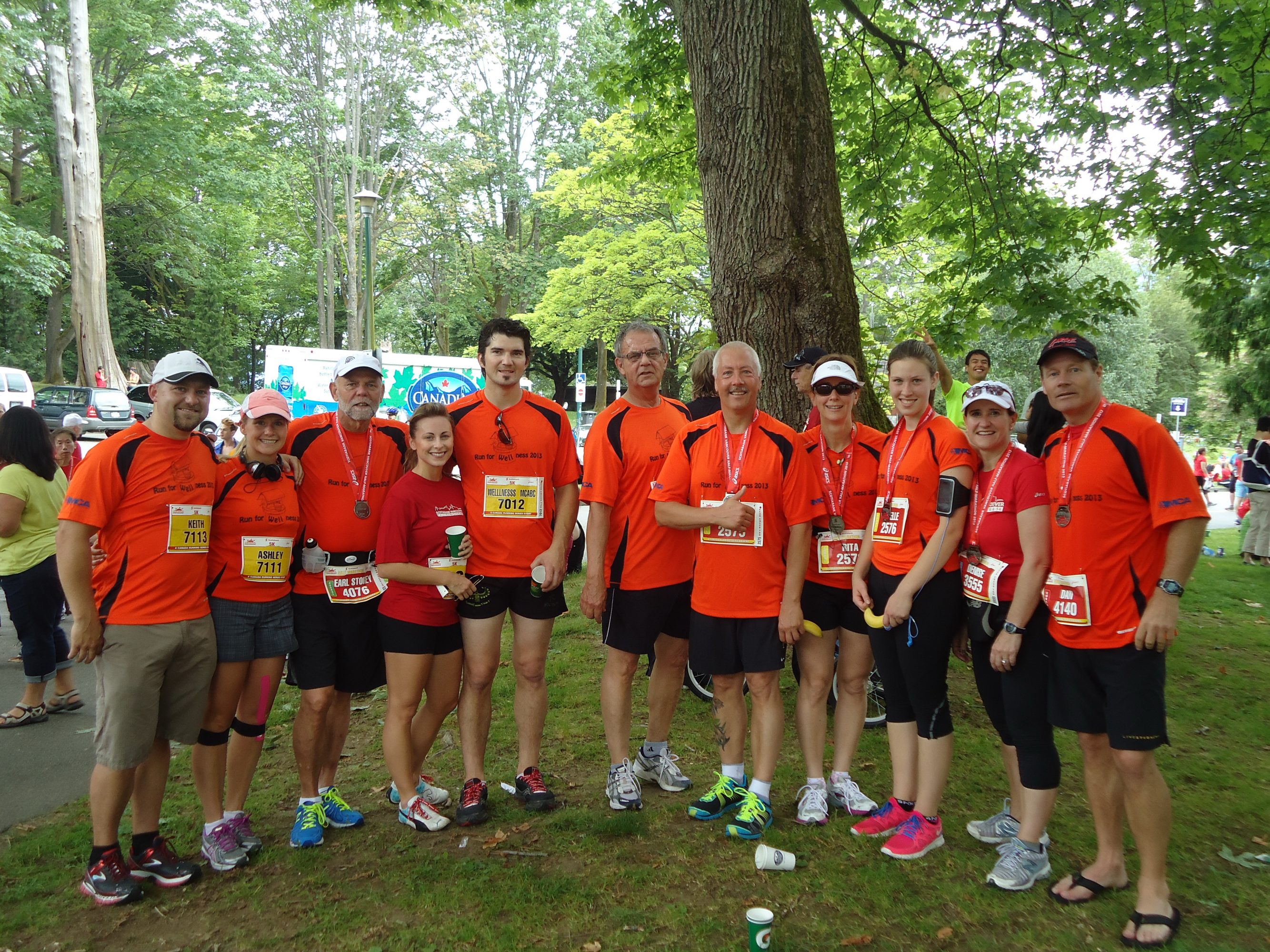 Dean and his team of 17 runners all pitched in to fundraise. “The key was reaching out to both business and personal connections,” explains Dean. “And you just never know where the donations will come from!”
Case in point: the day after the June 23 run, Dean got a Facebook message from a woman who wanted to chat and make a donation. It wasn’t someone he knew, so he thought it might be a ruse. Nonetheless, they connected by phone and he found out she was the aunt of one of his teammates. After traveling to Africa years before, she understood the need for clean water, but had never found the right organization to support. To Dean’s surprise and delight, she donated $5,000!
“We’re still in shock,” laughs Dean. “That put us over our goal and now we’d really like to get to $20,000.”
He credits their success to his great team and Rivka Lipsey, the director of Communications and Marketing for the Mechanical Contractors Association of British Columbia (MCABC), who was “the heart, soul and backbone. She kept us all in line!”
And the best part of all... Dean and the MCABC team have fundraised enough to drill four wells in Zambia! On behalf of the children, women and men who will have clean water and a brighter future, thank you:
Dean and his team of 17 runners all pitched in to fundraise. “The key was reaching out to both business and personal connections,” explains Dean. “And you just never know where the donations will come from!”
Case in point: the day after the June 23 run, Dean got a Facebook message from a woman who wanted to chat and make a donation. It wasn’t someone he knew, so he thought it might be a ruse. Nonetheless, they connected by phone and he found out she was the aunt of one of his teammates. After traveling to Africa years before, she understood the need for clean water, but had never found the right organization to support. To Dean’s surprise and delight, she donated $5,000!
“We’re still in shock,” laughs Dean. “That put us over our goal and now we’d really like to get to $20,000.”
He credits their success to his great team and Rivka Lipsey, the director of Communications and Marketing for the Mechanical Contractors Association of British Columbia (MCABC), who was “the heart, soul and backbone. She kept us all in line!”
And the best part of all... Dean and the MCABC team have fundraised enough to drill four wells in Zambia! On behalf of the children, women and men who will have clean water and a brighter future, thank you:
|
|
It’s been a great year for storytelling here at Grey Mist Lifting! We’ve certainly enjoyed the opportunity to tell you an inspiring story every Friday. Together, we’ve travelled to Africa and India and introduced you to some of the children, women and men whose lives have changed, thanks to our supporters.
Here are five highlights to check out:
We have many more heartwarming stories and great photos to share with you in the coming year, so please check back each week. Thank you for your support!
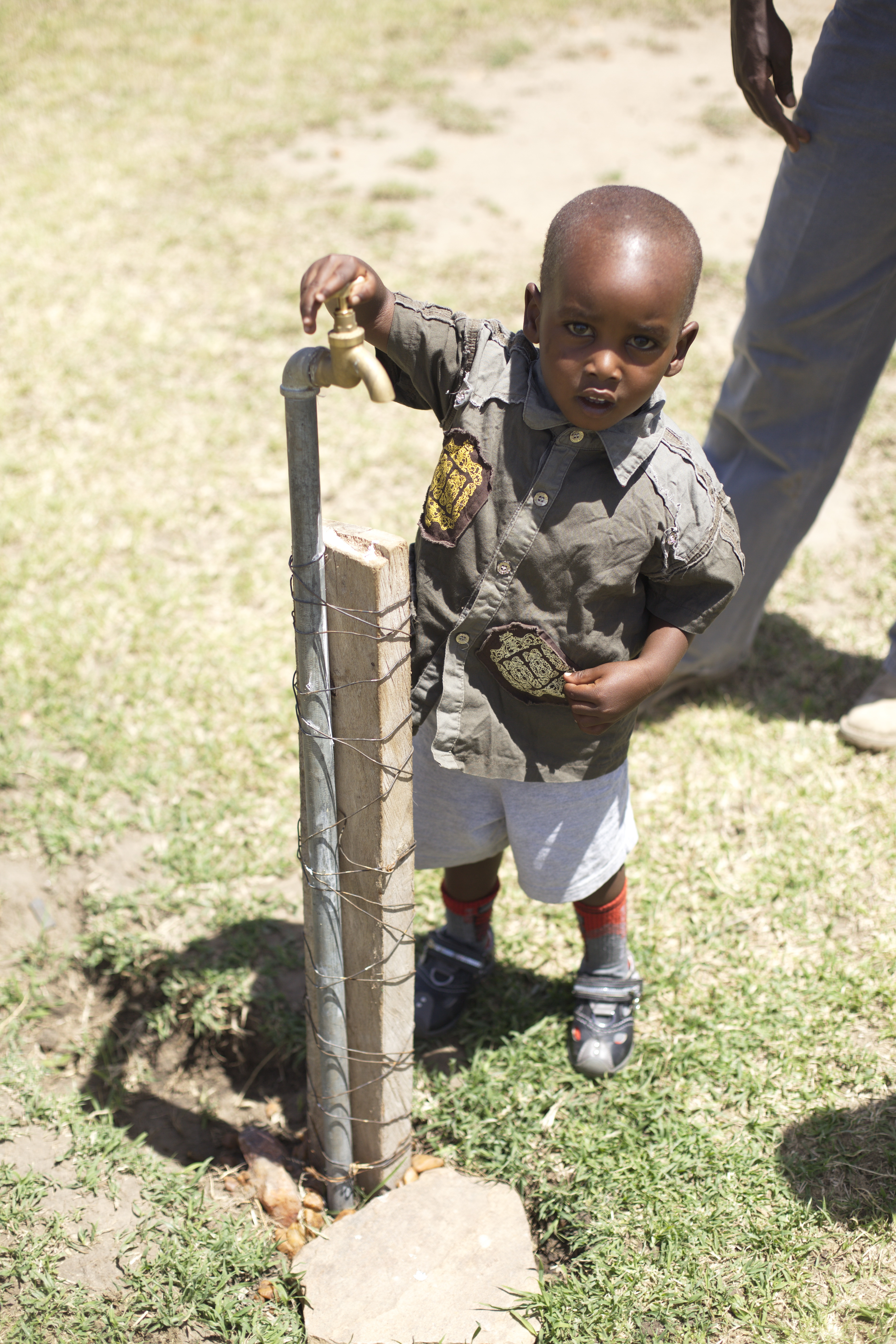
American journalist and historian Henry Adams once said, “Teachers affect eternity; you can never tell where their influence stops.” The teachers of Edmonton Public Schools have taken that statement to another level with their Charity Trust Fund.
A generous supporter of Operation Eyesight for more than 25 years, the Edmonton Public Teachers’ Charity Trust Fund’s mandate is to support Edmonton children and their families, as well as to provide general community support and reach out on an international basis. “It’s a wonderful way for our members to give back to their community,” explains Nels Olsen, a teacher and chair of the donations committee. “Our members find the Charity Trust Fund payroll deductions a convenient way to donate to local and international charities.”
The Charity Trust Fund was established more than 40 years ago and distributes donations to about 35 agencies each year. Operation Eyesight, the only internationally-focused recipient for many years, gained the Charity Trust Fund’s support for a couple of simple reasons: “The committee felt that the organization had a very large impact for what amounted to a modest donation, and Operation Eyesight uses the money we give so effectively.”
Donating internationally helps to give their students perspective about supporting community both at home and abroad. “It also shows our members that they have impact far beyond Edmonton and Canada,” says Nels.
In fact, their impact is international and reaches some of our world’s most vulnerable people. By supporting projects like community development in India and hospitals and outreach programs in Africa, countless children, women and men see a brighter future, thanks to the compassionate members of Edmonton Public Teachers Local No. 37.
