
Driven by a wealth of community-based data, we are contributing to a global body of health research and informing national eye health policies.
In 2024, we launched two research initiatives to identify learnings and to share our findings. In partnership with the Pragyaan Sustainable Health Outcomes (PRASHO) Foundation we started an evaluation of the survey tools that we use and an assessment of our Avoidable Blindness-Free methodology and its effectiveness. We look forward to sharing our findings with you!
Award-winning presentations at VISION 2020: The Right to Sight – India conference
Our team contributed four presentations to the VISION 2020 The Right to Sight – India conference, which brought together organizations, hospitals, research institutes and others to gain a deeper understanding of the challenges and opportunities across the eye health field. We submitted four presentations.
Senior Programme Manager Tapobrat Bhuyan and Programme Manager Emmanuel Benia Tanti presented. Programme Manager Aditya Sharma (left) brought home the award for Best Paper for Oral Presentation. Operation Eyesight was also honoured with an award as a founding member for its contributions to VISION 2020.
Recognized nationally and globally Our poster focusing on our donor-centric approach won second spot for Best Poster at The Right to Sight – India conference.
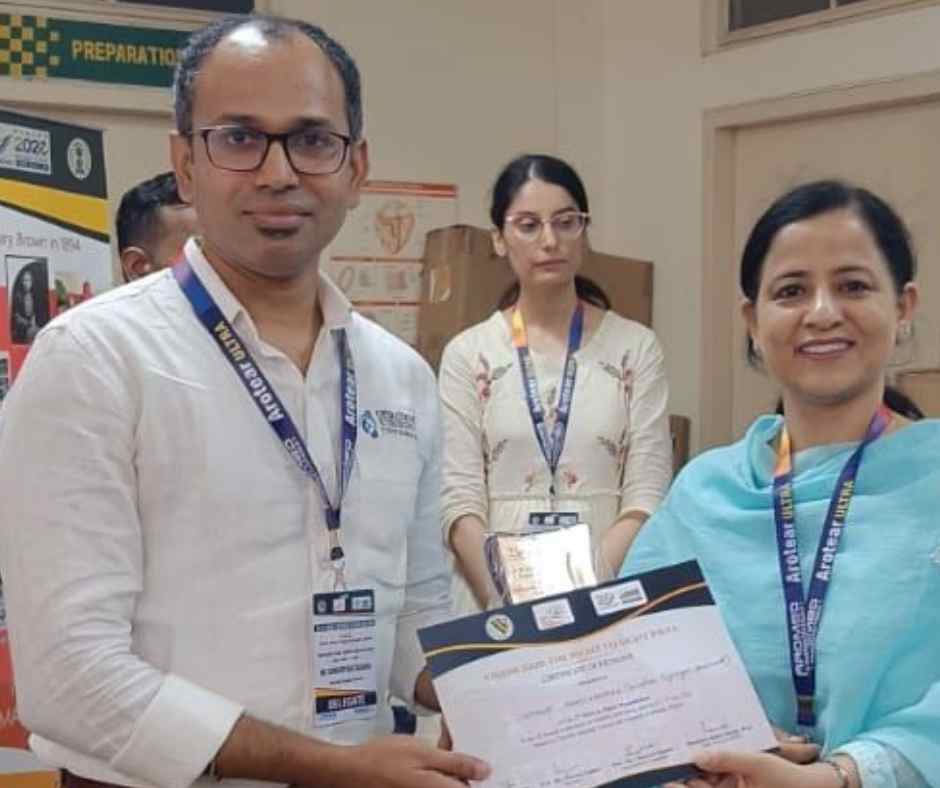
Above, our Head of Resource Mobilization Subhadip Bhattacharya (left) accepts the award. The poster was also selected to be featured at the 2024 IN SIGHT LIVE event organized by IAPB in Mexico City.
Did you know? We share our evidence-based learnings at international, national and state conferences and meetings to inform policies that support universal eye health care for all, particularly in remote and rural areas, which are underserved.
Learn more about our research and advocacy work here.
Ottawa, Canada – November 7, 2024 – Operation Eyesight Universal is delighted to celebrate the passage, on November 7, of the National Strategy for Eye Care Act, Bill C-284. We congratulate the Hon. MP Judy A. Sgro and the Hon. Senator Mohamed-Iqbal Ravalia for their tireless work in successfully bringing this important legislation to pass. (Find the announcement press release here).
By signing this important piece of legislation, the Canadian government has established itself as a global leader by prioritizing eye health care as an integral part of universal health care, while also achieving many of the United Nations Sustainable Development Goals (SDGs). In Canada, health care is a right. This Bill now makes eye health care a right as well. The passage of Bill C-284 gives hope to the one in five Canadians suffering from a condition that puts them at risk of blindness (eight million people) and the 1.2 million Canadians living with vision loss, figures which come from the 2023 Report Card on Vision Health in Canada, released by Fighting Blindness Canada and the Canadian Council of the Blind. The report states that every year, our national economic burden from vision loss is 32.9 billion dollars. The passage of Bill C-284 is about far more than sight – it is about education for children, employment for adults and independence for seniors.
Kashinath Bhoosnurmath, President and CEO of Operation Eyesight Universal, says, “Today, Canadians have achieved the right to sight, as our universal health care will incorporate eye health care for all, with the passing of Bill C-284, the National Strategy for Eye Care Act, into law. Eye health care too is a priority now in Canada. This impacts us all. The law will support the many Canadians who have eye conditions they do not know they have. It will also shine a light into the lives of the millions of Canadians who struggle not only with their vision but also with accessing the eye health care they need—across every part of Canada. This inclusive bill signifies that eye health care must be available, accessible and affordable, and it will support child development and learning, adult employment and productivity and senior connection and independence. We are delighted that Canada has the vision to step forward as a national and international leader. We can all see the benefits ahead.”
The importance of this legislation cannot be overstated. Universal eye health care is proactive, preventative and supportive. It includes regular eye exams, early detection of eye conditions, treatment and ongoing supports. For some, treatment can be as simple as getting a pair of prescription eyeglasses which can be transformative – recent research found that students who don't get the eyeglasses they need learn half as much as students with good or corrected vision, according to the International Agency for the Prevention of Blindness. This research also stated that when vision is corrected in school it can influence lifelong earnings by up to 78 per cent. This example shows that eye health care impacts not only individuals but also local and global economies. Eye health contributes to several of the 17 United Nations Sustainable Development Goals (SDGs), which have been set to build a more peaceful and prosperous world. These include good health and well-being, quality education and poverty reduction.
For decades, Operation Eyesight has brought inclusive eye health care to communities and regions in countries in Africa and South Asia. We do this by partnering with national, regional, and local governments and leaders, including the ministries of health and education. We act as a bridge between communities, connecting every child, woman and man to local eye health care.
In Alberta, we have been piloting eye health care programs by working with medically underserved communities. We are building relationships with and listening to communities to understand their unique needs, cultures, lived experiences and lifestyles (rural, urban and more), while growing our capacity to support this work in a good way. We know that inclusive eye health care works when people are aware of its importance, it is available and accessible when and where people need it – close to home, school or work – and it is open to all regardless of ability to pay.
We welcome the opportunity to collaborate with governments, organizations and community leaders in Canada to inform this new national eye care strategy. We look forward to contributing our voice to advocate for it to be inclusive so that it is accessible, affordable and available to all. We will continue to raise awareness of the importance of eye health and the need for eye health care in Canada. Together, let us take a long view of our collective right to sight.
Kris Kelm, Global Director, International Programs, Operation Eyesight Universal
Kashinath Bhoosnurmath, President & CEO, Operation Eyesight Universal
About Operation Eyesight Universal operationeyesight.com
Operation Eyesight Universal is an international development organization and registered charity working to prevent blindness and restore sight. Our vision is the elimination of avoidable vision loss. Founded in Calgary, Alberta, Canada in 1963, we are now a global community spanning four continents – Africa, Europe, North America and South Asia. Our vision is global and our focus is local, with teams on the ground in communities of work. Through activities like community outreach, water and sanitation projects, and health education, we at Operation Eyesight are addressing the root causes of avoidable vision loss which contribute to six United Nations Sustainable Development Goals: no poverty, good health and well-being, quality education, gender equality, clean water and sanitation, and partnerships for the goals.
On October 10, World Sight Day, hundreds of organizations around the world promoted the importance of child eye health to help children learn and thrive. At Operation Eyesight, we honoured World Sight Day by highlighting our school eye health programs. With our partners, we screened 80,592 children in 225 schools (plus some community screenings), from Bangladesh to Zambia.
The focus on child eye health highlighted the impact of vision on education and future livelihoods. Vision issues impact education significantly, new research from the International Agency for the Prevention of Blindness shows. The research states that children with poor vision learn half of what those with good vision do, while correcting a child’s vision at school increases their lifelong earnings by up to 78 per cent.
Not only did our team ramp up eye screenings in our school health programs, our country teams also engaged in community health care, hospital strengthening, integration of eye health care in primary health care, and advocacy at the national and local levels by attending meetings and press events.


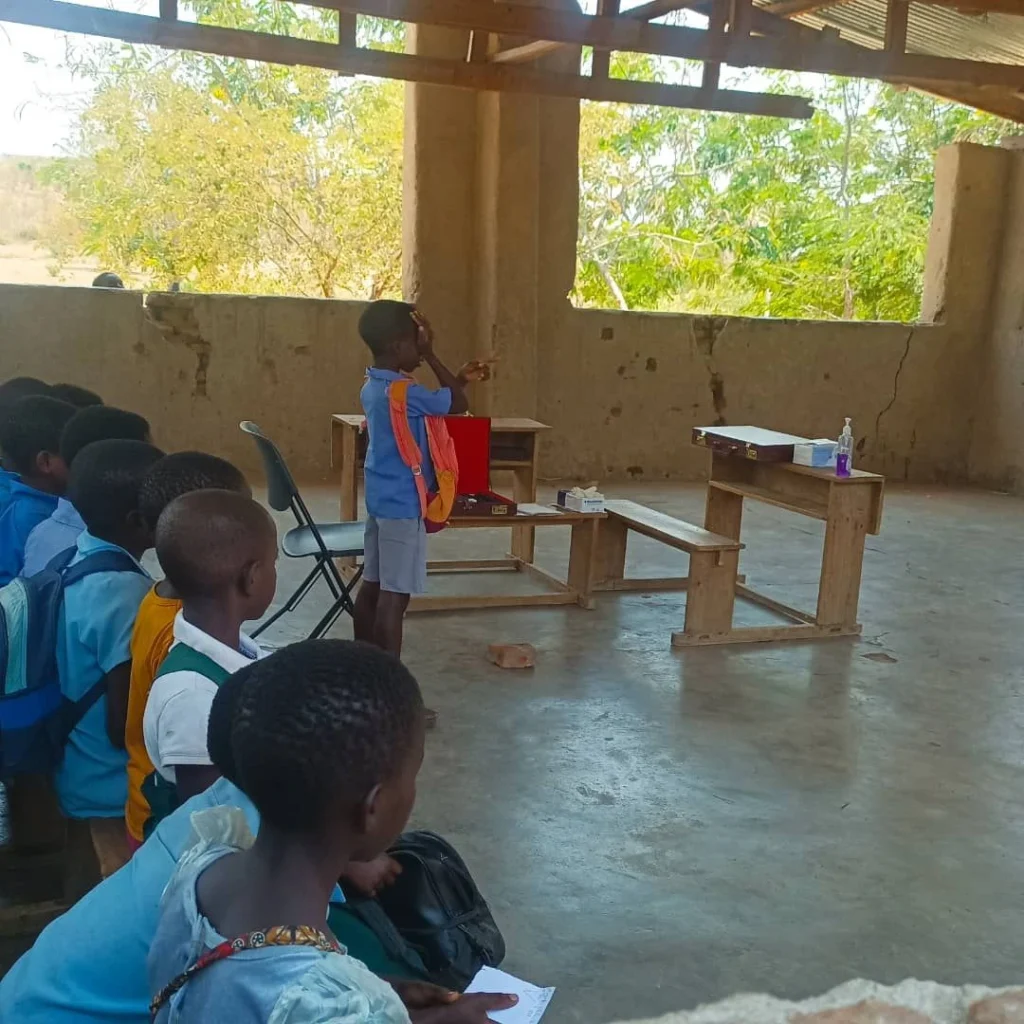
We used the lead up to World Sight Day to highlight not only school eye health programs but also programs that reach all children. Through our community health care model, we reach the entire family through door-to-door surveys and eye screenings. Those with sight issues are referred to local vision centres or hospitals for further care. When all cases of avoidable vision loss are addressed, and ongoing eye health care is in place, villages are declared as being avoidable blindness-free. In September on Aahotguri River Island in Majuli District, Assam, India, 20 villages received this declaration. See our work in this region in this video.
Through hospital strengthening and integration of eye health care into primary health care, we worked to support premature infants, who are at high risk of Retinopathy of Prematurity (ROP), a leading cause of blindness in children. When ROP is detected and treated early, it can prevent lifelong blindness. In September, in Bijnor District, India, our partner C. L. Gupta Eye Institute trained 35 neonatal intensive care staff to address ROP.
We also used World Sight Day as an opportunity to advocate for universal health care that incorporates eye health care. To do this, our teams attended 15 meetings with partners, policy makers and local and national governments. Staff also attended press briefings.


Eye health care ambassadors donned #LoveYourEyes glasses and posted eye health awareness messages online. The ambassadors included students at screenings, our President and CEO Kashinath Bhoosnurmath, staff, kids, pets, post-secondary and high school students and even Calgary, Alberta, Canada Mayor Jyoti Gondek. We are grateful for their support in raising awareness of child eye health and Operation Eyesight.
Learn more about how you can support child eye health here.


We all believe and say, 'Seeing is believing.' I personally hold this belief dear and often repeat it, as it resonates deeply with me. As the President and CEO of Operation Eyesight Universal, one of my roles is to help our growing global community to see how our collective actions and partnerships – as employees and volunteers, as donors and partner organizations, as governments and communities – are transforming our vision of eliminating avoidable vision loss into a reality, community by community.
When I travel to our countries of work and to the target villages, I see that eye health is about far more than sight. I have learnt that eye health is about children being able to learn, play at school and practice hygiene. It is about adults being able to work and run businesses, access clean water, herd animals, grow crops and care for children. It is about seniors who can meet their friends, travel and chase after their grandchildren. Eye health is about reaching everyone in a community, addressing all the avoidable vision loss issues and empowering the community to take care of their eye health themselves. Often, this is the impact of partnerships between organizations and governments, hospitals and communities with a shared vision to improve quality of life. Actually, health and partnerships are so important that they have been identified in the 17 Sustainable Development Goals (SDGs) of the United Nations (UN) as necessary for a peaceful and prosperous world.
This June, I am attending the International Agency for the Prevention of Blindness (IAPB) global event, 2030 IN SIGHT LIVE in Mexico. (See above for a photo of my eye health peers and I at last year’s event.) As an elected IAPB board member and someone who has been leading health and eye health care programmes for more than 35 years, I will join hands with fellow experts and organizations in the eye health sector to apply our collective knowledge to address:
1. What needs to be done to transform the vision of universal eye care into a global reality by 2030?
2. What ground-breaking approaches will accelerate action and transform eye health?
3. What steps can we take to embed conscious, inclusive and sustainable best practices across the eye health sector?
4. What can we do to harness our strengths and diverse skills to increase momentum together to empower change?
5. To address diverse needs and shape the future of eye health, how can we meet the rising demand and changing landscapes with strategic sustainable solutions?
My experience has shown me that a key part of the answer to all these questions lies in the power of partnerships. By working together, we can build sustainable strategies that connect international agencies, national governments, hospitals, and health care workers, and extend right down into the communities and each person there.
Partnerships at the strategic, implementational and program levels will ensure that multiple players can focus on their strengths – from sharing eye health care data with international agencies that set global goals, to working with national governments to include eye health in health care and education policies, to supporting hospitals and training health care workers who treat vision issues, to empowering communities to identify and address vision problems for everyone who lives there. Through partnerships, we stand together so we have more visibility. We have more influence and more funding. We have more technical expertise, and we have more community connections.
Over more than 60 years, Operation Eyesight has developed a sustainable model of community empowerment. I take great pride in our flagship model, which is not only sustainable but also scalable. This model serves as evidence to the successful implementation of the World Health Organization's five recommendations outlined in its World Report on Vision 2019: making eye care a part of universal health care, integrating people-centred eye care into health systems, promoting high-quality implementation and health systems research that compliments evidence for effective eye health care interventions, monitoring trends and evaluating progress for effective eye care interventions, and raising awareness, engaging and empowering people and communities about eye care needs. I attribute the success of this model to our dedicated partners and the communities we serve.
When we partner with others, we become the bridge between health care services and communities. While many organizations work down to the hospital level, we start with the hospital and work down to the community level where we reach all those individuals who are in need of eye care. With the hospital, we identify a service area and build a local vision centre. Next, we train local community health care workers in the community. In our nine countries of work, our network of more than 2,500 community health care workers conduct door-to-door surveys, knocking on doors and identifying people with vision challenges. These workers then refer people to the vision centre for eye exams and prescription eyeglasses or treatment for eye diseases. Those with issues that require services beyond the vision centre, such as cataract, are referred to the local hospital for surgery. Once all avoidable vision loss cases are addressed, the community is declared avoidable blindness-free. The community can then sustain this as they now have ownership of their own eye health care.
Time and time again we have seen this model work. We are publishing research on the results, investing in resources to replicate it, and harnessing partnerships to bring this model to new communities and new countries of work.
In Mexico City, I plan to reconnect with current partners and meet new partners. I will learn from them about their perspectives on the five key questions IAPB is asking and share my views with them. Additionally, I will discuss what more Operation Eyesight can do to further strengthen our partnerships and chart a future course that allows us to collectively reach out to many more individuals and communities. I look forward to seeing so many global community members in Mexico City and to working together to answer the five IAPB questions. I believe that together, we have the power to transform eye health care – For All The World To See.
Join our global community, partner with us and we will transform more lives together.
