
If you sprain an ankle or come down with a bad cough, your first stop is usually your family doctor. But when it comes to blurry vision, the path to care often looks very different. Around the world, eye health is still treated separately from primary health care, creating gaps that leave people without the vision help they need. Even in countries with universal health coverage, you might receive a complex eye surgery at no cost, yet pay out of pocket – or use private health insurance – for something as simple as a pair of eyeglasses.
At Operation Eyesight, we believe this needs to change. That’s why we’re working to strengthen areas of overlap between primary eye care and primary health care in our countries of operation. That means supporting the World Health Assembly’s integrated people-centred eye care (IPEC) resolution by working to integrate eye health into national health systems – and increasing access to free or subsidized eye health care.
It also means addressing the root causes of avoidable vision loss. In some regions in Africa, we bring fresh water and hygiene education to communities to help prevent infectious eye conditions. We also work to make sure our services offer more than just eye care, but can also link patients to other types of health care.
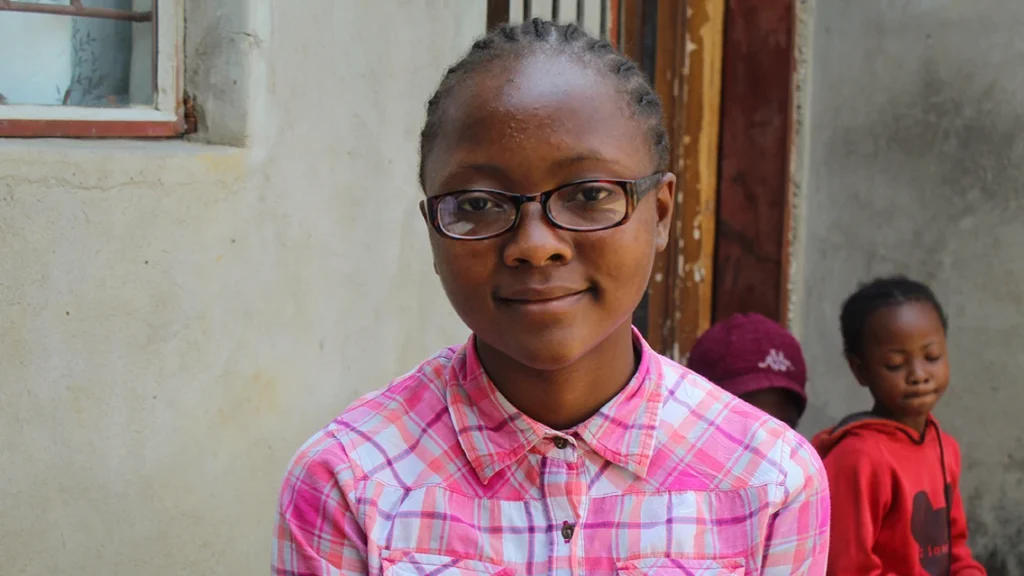
Health conditions rarely exist in silos – and vision loss is no exception. Diabetes, for example, increases the risk of eye conditions like cataracts. For 15-year-old Vanessa in Zambia, blurry vision was one of the first signs of the disease. When she started having problems reading the blackboard at school, a teacher sent her to our vision centre in her community of Matero for a checkup. From there, she received a referral to our partner hospital, where she learned that she not only had cataracts, but diabetes as well. Doctors helped her get her blood sugar levels under control, and then she got cataract surgery. Today, she is managing her diabetes and thriving in school, with dreams of becoming a doctor.
Vision problems can also cause a downward mental health spiral. Benson, a farmer in Kenya, lost his ability to work due to poor vision. As a result, he became angry and depressed, then turned to alcohol and drugs to cope with his situation. Luckily, his family got him into a drug and alcohol rehabilitation facility, where a visiting doctor diagnosed him with cataracts. Benson underwent surgery on both eyes, provided free of charge thanks to the support of our donors, and can see clearly now. Buoyed by his miraculous recovery, Benson finished up his time at the rehabilitation facility and happily threw himself back into farming.
In Canada, where Operation Eyesight is based, navigating eye care can be confusing. While the Canada Health Act covers medically-necessary eye health services, routine vision care like eye exams and prescription glasses often isn’t part of the deal. That leaves provinces and territories to fill in the gaps, and the result is a patchwork system. For example, seniors in Ontario get routine eye exams covered once they hit 65, but in Newfoundland and Labrador, those same seniors might have to pay out-of-pocket. It’s inconsistent, and it’s especially tough on vulnerable populations.
There is some support through the Federal Non-Insured Health Benefits (NIHB) program, which covers eye exams and eyewear for eligible First Nations and Inuit individuals. But even that has its hurdles: remote communities, limited healthcare infrastructure and cultural differences that make accessing care more complicated than it should be.
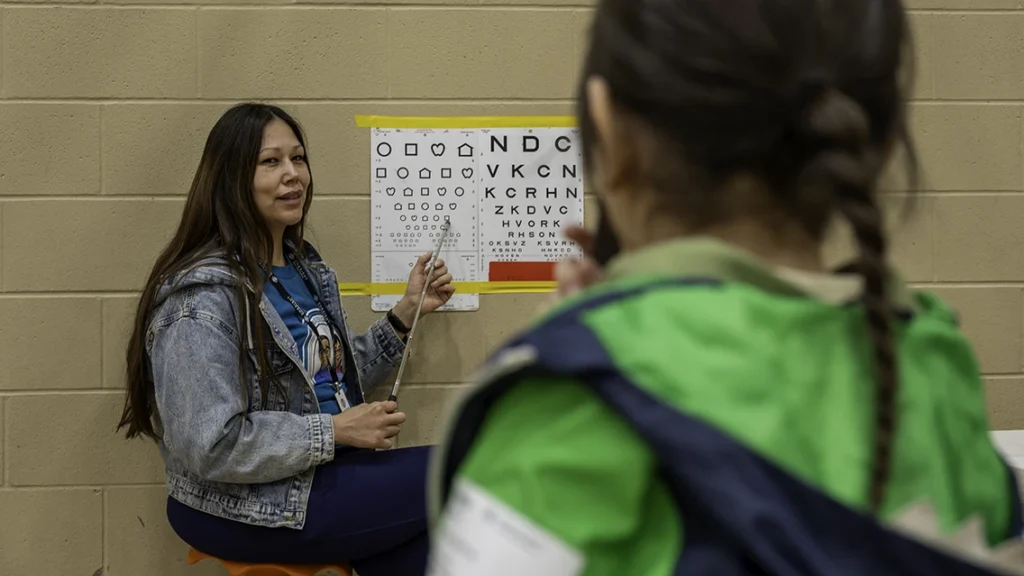
The passage of the National Strategy for Eye Care Act in 2024 was a major step forward in addressing these issues. As chair of the Canadian Eye Health Coalition, Operation Eyesight is helping shape a national framework that prioritizes equitable access to vision care. Our Global Director of International Programs, Kris Kelm, explains why it’s important that we have a seat at the table during the consultation period and beyond.
“We know that there will be many voices in this conversation with diverse interests, and we want to ensure there is representation from patients who have the least means and the least ability to access vision care,” he says. “The fact that we have over 60 years of experience working in this sector gives us a strong background to speak credibly to how we need to approach things in Canada, and our community partners can provide valuable insights to help shape eye care for all.”
He adds that Canada can learn from some of our countries of work, where eye health has been better integrated into the overall health systems and other public frameworks. As an example, he points to Ghana, where we work with the ministries of health and education to screen and treat students for eye conditions in the public school system. We have similar programs in Kenya and Zambia, too.
Another example is in India, where we are working with state governments to establish vision services in pre-existing government health centres. Building the capacity of vision care facilities within the country’s national health care system ensures that services reach the most underserved populations, as patients who are able to pay most typically seek care at for-profit facilities, rather than attending government services.
Shakuntala, in Madhya Pradesh, India, spends her days walking door to door through villages in her region, checking in on the health and well-being of families. She’s one of the million-strong network of Accredited Social Health Activists (ASHAs), employed by the Indian government, who deliver primary health care at the community level.
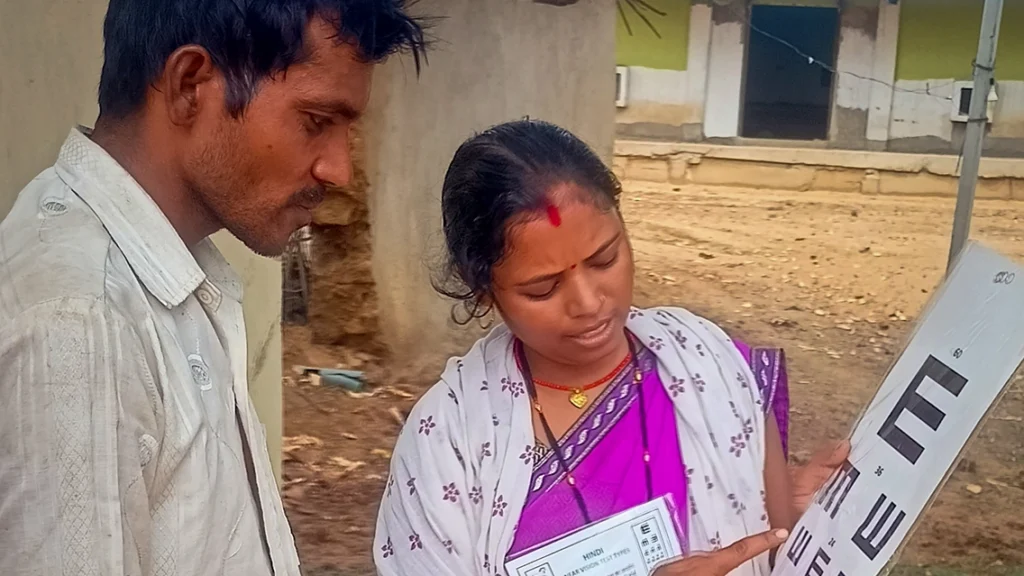
Her work includes providing pregnancy advice, supporting newborn care, educating parents about vaccinations and vitamins for children, and making all kinds of referrals to local clinics and hospitals. In 2022, Shakuntala added another set of skills to her toolkit: conducting primary eye health screenings, thanks to training provided by our Operation Eyesight team, in partnership with the Government of Madhya Pradesh. Shakuntala learned to measure visual acuity using an eye chart. She also learned to identify the signs and symptoms of various eye conditions. Once she identifies a patient with a possible eye condition, she refers them to the base hospital for diagnosis and treatment. In the meantime, she continues to provide advice and referrals on nutrition, vaccinations, prenatal care and other health concerns.
Shakuntala is just one of the thousands of community health workers we work with across the globe. In all our countries of work, we partner with existing health systems to recruit community health workers, mostly women, to help us deliver our programs. The health workers develop strong ties within the communities, resulting in high acceptance and trust in our programming.
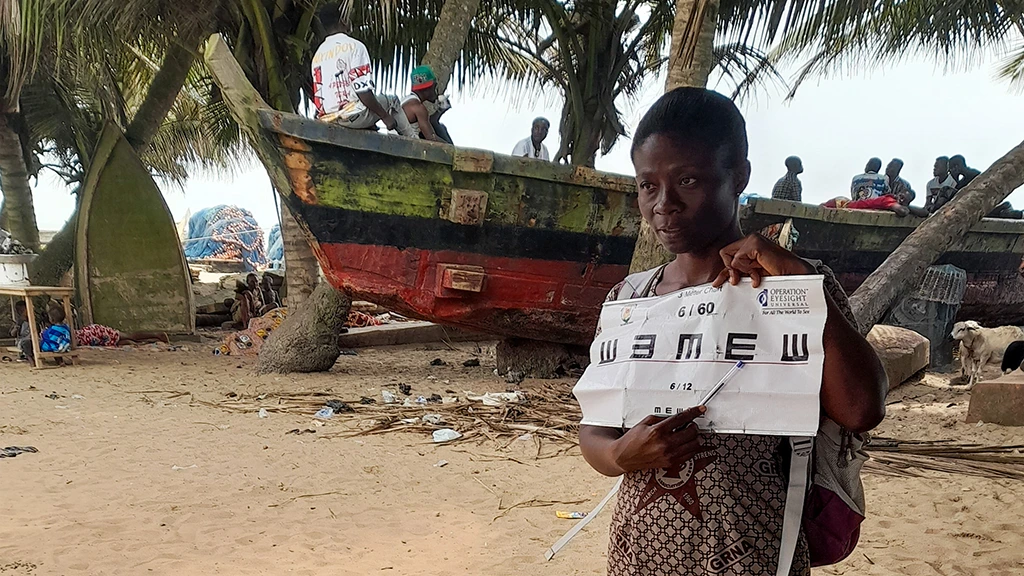
Mabel, a community health nurse in Ghana, was trained in primary eye care so that she could identify eye health issues in addition to her regular duties. She says that being able to screen people at their home allows her to reach many women and girls who probably wouldn’t have left the village to seek eye health care, due to household responsibilities.
Anyone who has had a case of pink eye knows that having red, inflamed and itchy eyes isn’t much fun. But in some parts of the world, an eye infection can be a much more serious problem. Trachoma is an infectious eye disease that leads to vision loss and blindness in millions of people across the globe. It spreads easily through contact with eye discharge from infected people on hands and clothing, and through flies. If left untreated, chronic infections turn the eyelid inwards, causing intense pain and scarring of the cornea, which can lead to irreversible blindness.
Trachoma is preventable, and clean water is key to curbing the spread. When communities have access to clean water, people can clean their hands, faces and clothing more often, which prevents it from spreading.
In countries like Zambia, we work with Water Affairs (the government department responsible for water) to drill, rehabilitate and repair boreholes near where people live, work and go to school, so that whole villages have access to clean water. We also provide training to local volunteers in these communities in WASH (Water, Sanitation and Hygiene) and borehole repair and maintenance to ensure the clean water continues to flow. In areas where trachoma is endemic, we also work with partners to distribute antibiotics, which both treats and prevents trachoma.
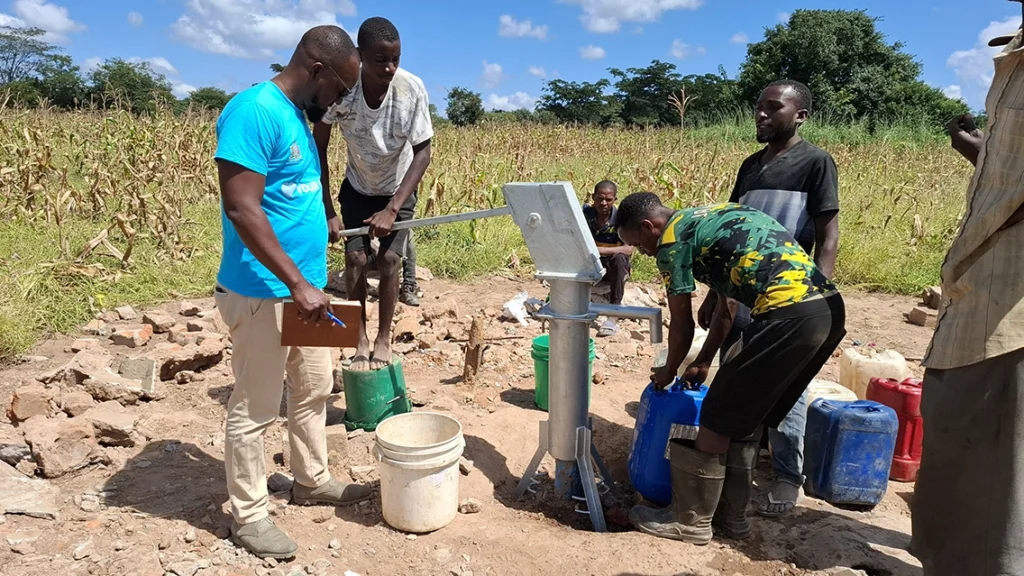
It's another way that we work to address one of the root causes of avoidable vision loss, but it also helps us tie into improved health outcomes overall. Accessible clean water helps prevent dozens of infectious diseases. It also improves quality of life for women and girls, who are often tasked with the job of fetching water, which can take up hours out of the day and prevent them from participating in school, work or other activities. Moreover, clean water means people can grow vegetable gardens, raise livestock and keep entire families, and communities, happier and healthier.
When we invest in sight, we invest in education, productivity and dignity. To eliminate avoidable vision loss, vision care needs to be recognized as a public health priority and integrated into national health strategies. Operation Eyesight’s global experience – from rehabilitating boreholes in Zambia to collaborating with partners on new policies in Canada – demonstrates that integrating eye health into primary care, addressing environmental determinants like access to clean water, and empowering community health workers leads to sustainable, measurable outcomes. Policymakers have a critical role to play in building resilient health systems that ensure equitable access to vision care for all.
Read more about our approach to Hospital-Based Community Eye Health.
Taking a closer look at the connections between avoidable vision loss and gender inequalities
The oldest of five children, Thandiwe in Zambia has always looked after her younger siblings. When the village borehole broke down, she had to fetch water from the river, and her family couldn’t wash as often. Thandiwe noticed some of her siblings had itchy, red eyes. Soon, she developed the same eye condition. Her left eye swelled and her eyelid turned inward, causing unbearable pain as her eyelashes scratched her cornea. With no money or access to a doctor, her eye became worse and worse until she lost vision in it entirely.
Priya in Nepal can’t remember when she first started having trouble seeing, but her vision kept deteriorating until one day she fell and injured herself while climbing the steep trail leading from the village to her house. Figuring that blindness was an inevitable part of old age, she stayed at home, unable to visit friends and grandchildren. Eventually she couldn’t even reach the outhouse without assistance. She felt like a burden to her family.
Mary, in Kenya, loved school from her very first day in the classroom and dreamed of becoming a teacher someday. After she turned 13, she started having trouble reading the chalk board. She had to copy notes from her friends and couldn’t do her homework in the dim light at her house. Her grades began to slip. She asked her parents to take her to an eye doctor, but money was too tight because they were saving to send her brother to college. By age 15, Mary quit school and decided to get married, her hopes of teaching now crushed.
None of these characters are real, but they represent the millions of women and girls around the world who are living with avoidable vision loss and blindness. We hear stories like these every day.
The prevalence of vision loss is higher among women and girls than it is for men and boys; 55 per cent of people experiencing vision loss are female. And while there are some biological factors at play, the reasons for these discrepancies are largely social.

Why women and girls experience more vision impairment
Women live on average longer than men, and many conditions that rob people of their sight are associated with old age. This includes cataract, presbyopia, glaucoma and age-related macular degeneration. According to estimates, two-thirds of cataract blindness globally occurs in women.
Traditional gender roles are another factor, especially in some regions.
Women and girls are two to four times more likely than men and boys to get trachoma – the leading infectious cause of blindness worldwide. Trachoma is caused by bacteria that spreads through contact on hands and clothing. Small children are especially susceptible, and in turn, they often pass it on to their caretakers. Women and girls may also get infected from household cleaning and doing laundry.
Obstacles to eye health care access
The barriers to health care for women and girls vary widely from region to region, but there are trends that we can observe across the countries where we work. These include:
Addressing these diverse challenges is crucial for breaking down the barriers that prevent women and girls from accessing essential eye health care services.

Working toward gender equality
Our approach, called the “Hospital-Based Community Eye Health Program Model,” is designed to address inequalities to accessing eye health care, starting at the village level.
Most of the community health workers trained by Operation Eyesight’s partner hospitals are women, which gives them the opportunity to become trusted leaders in their communities and helps them contribute to family finances. They also bring eye health screenings to people’s doorsteps, meaning that women and girls don’t need to travel to get primary eye care and referrals.
Additionally, we work with our partner hospitals to establish vision centres closer to the communities where we work, making it easier for everyone to access diagnosis and treatment. Our partner hospitals also provide safe transportation for patients – usually by bus – to the hospital so that they can get their surgeries without worrying about how they’ll get there.
Finally, by providing surgeries, eyeglasses and other treatments free of charge – or at a highly subsidized rate – we can decrease some of the financial barriers women and girls face. We strive to provide quality eye care services to everyone – regardless of gender, age, ability to pay or other personal circumstances.
Clean water for gender equality
In a village in Zambia’s Mkushi District, a group of men and women stand over a water borehole, tools scattered at their feet. Two of the women turn a pipe with wrenches, their faces furrowed in concentration.
These men and women are Area Pump Minders in training – volunteers who fix and maintain water pumps in their communities. The pump minders are just one of our strategies for keeping communities supplied with a reliable source of clean water. As well as rehabilitating boreholes, we also work with communities to drill new ones, and provide training in WASH – which stands for Water, Sanitation and Hygiene.

While traditionally the pump minder volunteers were all men, we’re seeing more women join the teams. Between 2022 and 2023, we trained half a dozen women in borehole maintenance and repair in Zambia, placing the skills to keep the water flowing in the hands of those who need it most.
Clean water means that families can wash hands, faces and clothing regularly, which prevents the spread of trachoma – lessening the chance of vision loss and blindness, particularly among women. And there are countless other ripple effects for women and girls when they have access to clean water. It helps with the maintenance of menstrual hygiene, impacting health, dignity and overall quality of life. And, as women and girls are usually tasked with hauling water for their families, having a nearby borehole can help keep girls in school and give women more time to pursue economic activities to support their families.
Dismantling gender-related eye health myths in the foothills of the Himalayas
In the villages of the Udhampur block in northern India, vision problems are often seen as a sign of bad luck. A girl wearing glasses might be told she’ll never have a good marriage, and a baby’s bad eyesight might be blamed on past life sins. A girl with a squint could be seen as a curse for the whole family.
Those are some of the beliefs a recent pilot project took aim at.
Created in partnership with NorQuest College and the Rotary Eye & ENT Hospital, the project provided services through a “Mobile Vision Centre” – a four-wheel-drive van staffed with an eye health team comprised mostly of women. The van roamed the area’s rugged roads, bringing primary eye care and education to people’s doorsteps.

More than 27,000 people received training pertaining to eye health myths during the project duration. A before-and-after survey that checked people’s attitudes and beliefs regarding eye health for girls and women showed dramatic differences after the intervention. With that success in mind, our teams are looking to implement strategies from the project throughout our programs.
Read our new Global Strategy to find out how we plan to continue providing essential eye health care to women and girls and other underserved groups. Donate today to help us bring quality eye health care to more women and girls.
Universal Health Coverage (UHC) is about ensuring people have access to the health care services they need, when they need them, without suffering financial hardship. UHC includes the full spectrum of health services from health promotion, prevention, treatment and rehabilitation. This also means having a qualified workforce of trained and motivated health workers.
When countries invest in UHC, they are investing in their greatest asset: people. Good health keeps people out of poverty and allows them to fully contribute to their families and communities. Men and women can go to work and children can go to school and learn. Good health enables prosperity for all.
A common misconception of UHC is the notion that all health services are available to everyone for free, regardless of the cost. Each country has its own path to achieving UHC. What coverage looks like will depend on a country’s resources and the needs of its people. It is important to note that UHC emphasizes the importance of access to health services and information as a basic human right.
UHC is not a new concept, it is based on the 1948 WHO Constitution which declares health a fundamental human right and commits to ensuring the highest attainable level of health for all. In recent years UHC has gained significant momentum. In 2019, at the United Nations General Assembly, world leaders adopted the goal of working together to achieve UHC by 2030 as part of the Sustainable Development Goals.
The COVID-19 pandemic has disrupted health systems globally. Countries everywhere have experienced shortages of hospital beds, medical supplies and health care workers. It has exposed gaps in public health care and has exasperated inequities. Many of the gains achieved towards achieving UHC have been lost due to the pandemic. The time to act is now.
Eye health, a critical component of UHC, has been severely impacted by the pandemic. Over 2.2 billion people globally suffer from vision impairment or blindness. Avoidable blindness is a global issue that has been made even worse by the strain COVID-19 has put on health systems particularly in low- and middle-income countries.
The pandemic has brought many challenges, but it also brings an opportunity to re-think how we deliver health care and services. At Operation Eyesight, we are focused on ensuring our hospital partners and community health workers can deliver care in a safe environment by protecting themselves and their patients. Looking ahead to 2021, we are imagining new ways to bring affordable, sustainable, quality eye health care to more people than ever before. This includes innovations and technologies to bring eye health services closer to communities, reducing the need to travel long distances to reach a hospital.
Operation Eyesight is committed to providing the highest quality of care to everyone regardless of their ability to pay. We work to address the root causes of avoidable blindness and remove barriers to access to care for women, girls, men and boys. In celebration of UHC Day 2020, we invite you to join us in eliminating avoidable blindness for the most vulnerable. Together, we have an opportunity to build a safer and healthier future for all.
References:
https://www.who.int/health-topics/universal-health-coverage#tab=tab_1
https://www.who.int/news-room/fact-sheets/detail/universal-health-coverage-(uhc)
WHO. (2019, October). World Report on Vision.
