
Seventy-year-old Debeswari, from Golaghat District, Assam, India once led an active life, walking to her nearby village to visit. When cataracts clouded her vision, her world shrank to the four walls of her home.
Once cheerful and independent, she became totally dependent on her family. Financial struggles and fear of surgery kept her from seeking treatment. She felt isolated, helpless and like a burden to her loved ones.
One day, an Operation Eyesight-trained community health volunteer named Daiboki visited Debeswari’s home. Together, they worked through her eyesight issues and her fears. Later, a team from our partner, Chandraprabha Eye Hospital, visited Debeswari and explained cataract surgery. Reassured, she accepted treatment and was transported to hospital that very day.
Now, Debeswari again walks independently to her nearby village – a freedom she hadn’t enjoyed in years. In having her vision restored, she has also recovered her dignity and joy.
Did you know?
Globally, 100 million people have cataracts, the leading cause of blindness. In India, cataract causes 66 per cent of blindness, 81 per cent of severe vision loss, 70 per cent of moderate vision loss and 24 per cent of mild vision loss according to the IAPB Vision Atlas. Cataract surgery is one of the most cost-effective treatments at approximately $75 CAD (surgery and associated costs such as travel).
Learn how you can support cataract surgeries here.
Sriramappa, from Karnataka, India, was living with vision loss from cataracts. This left him dependent on his family for his daily needs, and he could no longer support them by grazing his cows and goats. When his wife passed away from an illness, and he lived in darkness, mentally and physically, for three years.
His hope returned when a community health worker visited his home. Sriramappa took part in eye screening and was diagnosed with cataracts. Referred to our partner, Netradeep Eye Hospital (Globe Eye Foundation), Sririmappa accessed sight-restoring surgery free of charge.
Sriramappa expressed his gratitude to our donors. He is now enjoying life’s simple pleasures, especially roaming the forest with his animals, which helps to support his family.
Did you know?
There is a strong correlation between vision loss and age. People who are 50 years of age and older experience 73 per cent of all vision loss according to the IAPB Vision Atlas (2025). This puts people at risk of poverty, dependence and reduced health and well-being. At times, beliefs that vision loss is inevitable or that older people are not worthy of treatment can be barriers to overcome.
Fortunately, 90 per cent of all vision loss is avoidable. This means it can be prevented or treated. Of all the treatments, cataract surgery is one of the most cost-effective solutions. It costs approximately $75 CAD for one cataract surgery and associated cost, such as travel.
Learn how you can support sight-saving work here.
Every day, 10-year-old Benjamin in Kenya proudly leads his family’s goats out to graze, a chore that once seemed unthinkable, because from a young age, Benjamin was blind.
Benjamin lives with his parents and six siblings in the village of Olookitareti in Kajiado County. The family struggles financially; Benjamin’s father Joshua has a chronic illness, while his mother, who lives with a disability, does her best to manage their livestock herds while also caring for the children.
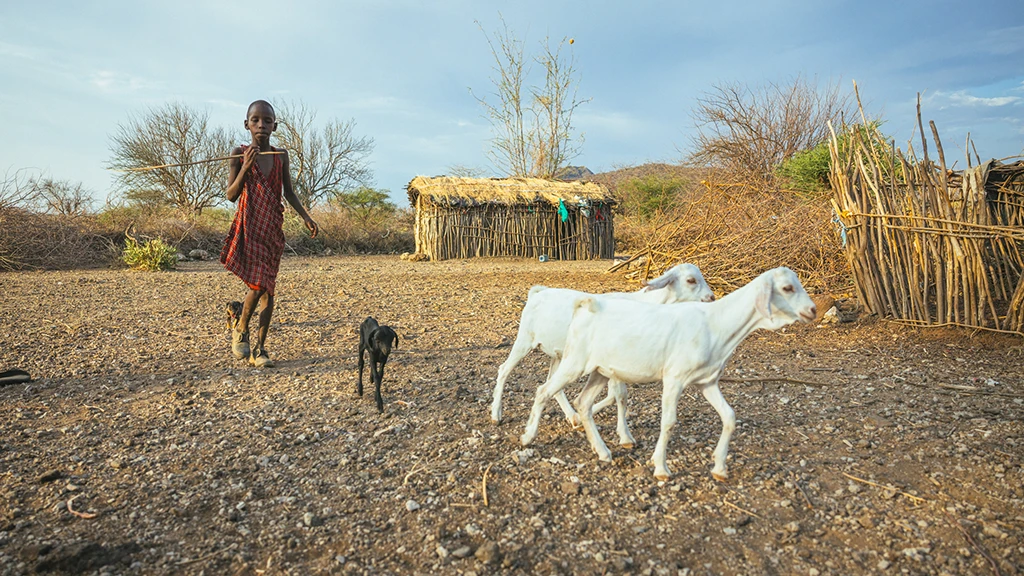
In 2023, a local disability advocacy group referred Benjamin to a special needs boarding school, where he learned to read braille. His parents were grateful that he would receive an education, but they still worried about his future.
The following year, a community health worker identified cataracts in Joshua’s eyes during a door-to-door screening and referred him to our surgical camp. He took Benjamin along, hoping for a diagnosis for the child as well.
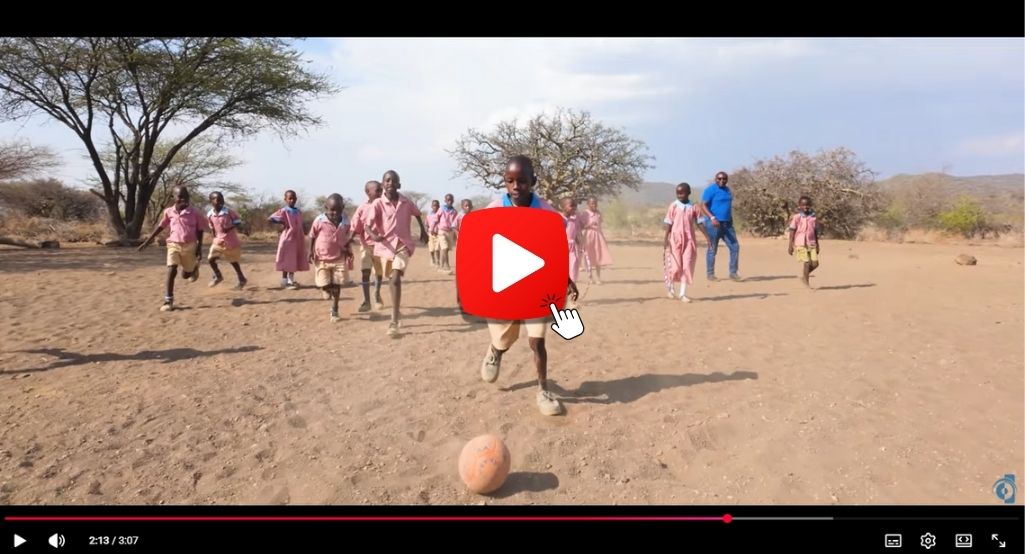
At the camp, Benjamin was also diagnosed with cataracts and referred to our pediatric cataract camp happening at another facility. But on the day of the camp, he didn’t show up. The outreach team made calls to the family to track him down, but their calls went unanswered. Finally, our community health promoter located Benjamin at his school. She later discovered that the family had lost their phone.
Recognizing the urgency of Benjamin’s condition, our outreach team contacted the family’s close friend, Pastor Titus, who accompanied Benjamin to the surgical camp with the family’s blessing.
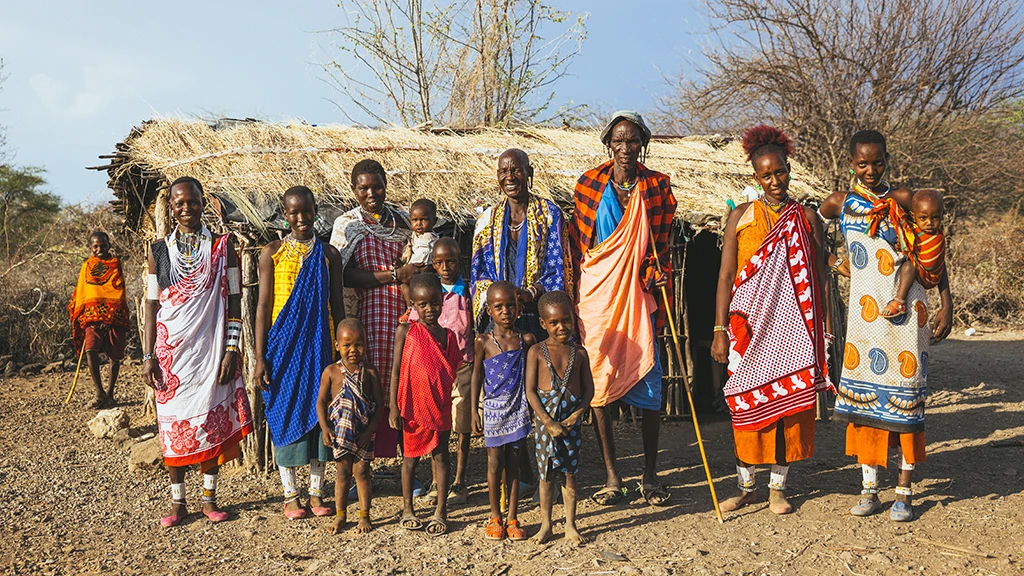
Thanks to the support of our partners and donors like you, Benjamin successfully underwent surgery and had his vision restored. Joshua also underwent surgery and can now see clearly.
Now, Benjamin attends a regular primary school, confidently tackling Grade I. He reads and writes with ease and loves to join soccer games with the other children in the village.
His parents are grateful that Benjamin can now live up to his full potential.
Written with files from Patrick Wainaina Muthii.
This holiday season, consider giving the Gift of Sight to transform lives for more children like Benjamin!
For most of her life, Napolo, from Narok West Sub-county near the Kenya-Tanzania border, lived with constant eye pain. Now 78 years old, she first noticed discomfort in her 30s. Her eyes often felt irritated, as if filled with sand, and she experienced tearing and discharge that made it difficult to see. This attracted flies, but Napolo had no access to clean water to wash her face.
Napolo wasn’t aware that she was suffering from trachoma, a bacterial infection of the eye and the leading cause of blindness in areas with shortages of water and crowded living conditions. The bacteria spreads easily through contact with eye discharge from infected people on hands and clothing, and also through direct transmission by flies.
If left untreated, trachoma causes the eyelids to turn inward, making the eyelashes rub painfully against the surface of the eye. This causes permanent scarring of the cornea and irreversible vision loss.
Without access to regular health care, Napolo turned to traditional remedies. Her family members would pluck out her eyelashes to help ease the pain, but the relief never lasted. The irritation always returned, and over time, Napolo’s vision became worse.
In her Maa community, many people had similar symptoms, and plucking one's eyelashes out was considered normal. Health workers occasionally visited their community, but Napolo often missed them because she was always out looking after her animals, sometimes even crossing over the border to let the animals graze in Tanzania. She somehow managed despite her diminishing vision and increasing pain.
One fateful day, an Operation Eyesight-trained Community Health Promoter visited Napolo’s home – and the visit changed everything.
You see, for many years Operation Eyesight has been working to eliminate trachoma in communities like Napolo’s. Through the Kenya Trachoma Elimination Program, funded by Sightsavers International, Operation Eyesight and partners are working to eliminate trachoma in Narok West Sub-county and the entire country by 2028. With this support, and in collaboration with the Narok County Department of Health, we launched a door-to-door screening initiative to identify remaining cases of trachoma trichiasis – the painful late stage of the disease. We provided training and resources for local Community Health Promoters. They screen people in their communities and refer those in need of eye care to our nearest partner facility.
During a community screening in November 2024, Napolo was identified and referred to Talek Health Centre, an outreach site that provides surgical treatment for trachoma patients. At the health centre, the ophthalmic team examined Napolo’s eyes and confirmed her diagnosis.
Napolo agreed to undergo eyelid surgery to correct her inward-turned eyelids. The procedure was successful, and her recovery brought immense relief, preventing further damage to her eyes and preserving her remaining vision.
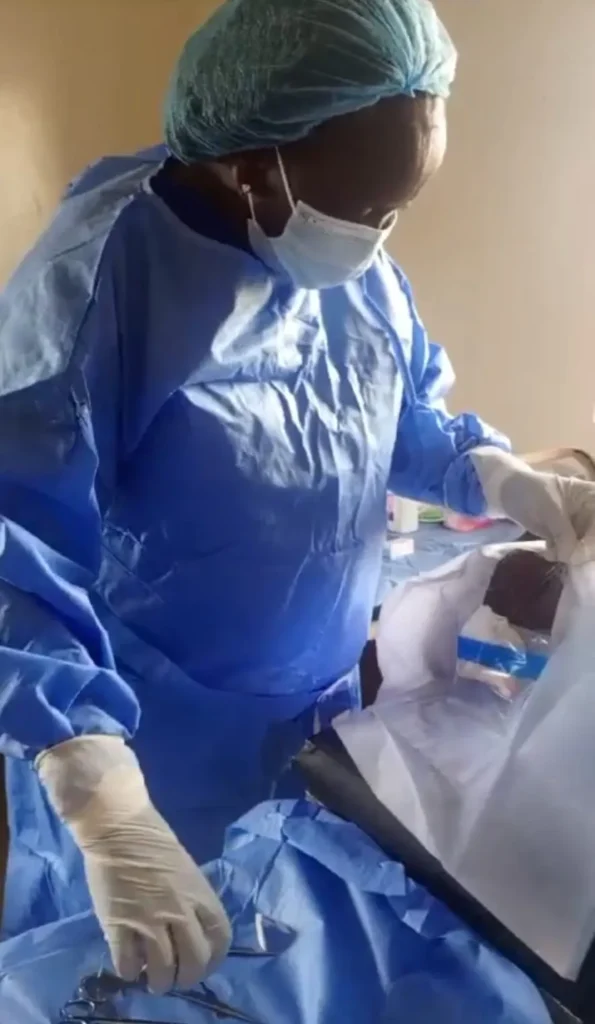
“I have longed for this comfort for decades. There is no more discomfort, and I can open my eyes freely,” Napolo said. “I thank Operation Eyesight and the doctors who assisted me, and I will definitely refer anyone in my community that has the same problem so that they can be assisted.”
Napolo’s story shows how access to quality eye care can transform lives.
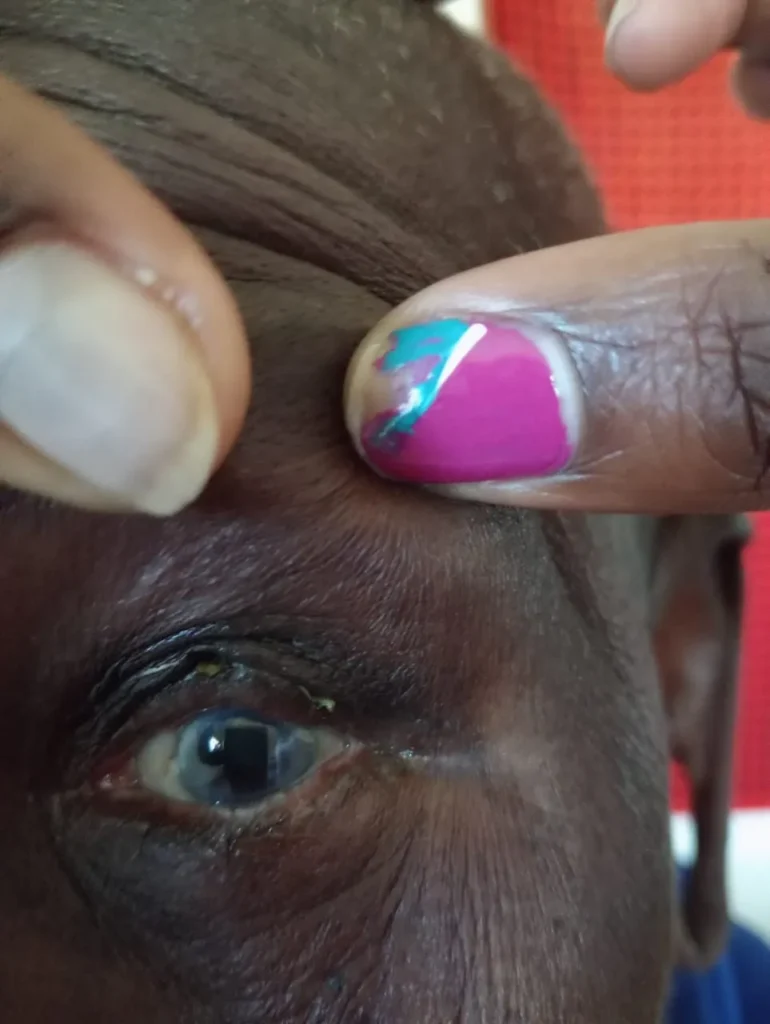
Did you know? Trachoma is the leading cause of infectious blindness.
Currently, 103 million people live in trachoma endemic areas and are at risk of trachoma blindness, and presently 1.9 million people are experiencing vision impairment or blindness due to the disease.1 It is found in 32 countries, in areas with shortages of clean water and crowded living conditions. Caused by the bacteria Chlamydia trachomatis, trachoma is spread by eye-seeking flies and personal contact. Children and women are at particular risk.
Operation Eyesight follows the World Health Organization-endorsed SAFE strategy, which has proven effective in eliminating trachoma. The SAFE strategy is a comprehensive treatment and prevention program that includes Surgery to treat the late stage of the disease, Antibiotics to eliminate infection, Face washing and hygiene education, and Environmental change including wells and latrines.
Join us in supporting programs that bring vital vision care to people like Napolo and also address the root causes of vision loss. Together, we can eliminate trachoma and ensure everyone has access to the eye care they deserve. Give the Gift of Sight today. Join us in supporting programs that bring vital vision care to people like Napolo and also address the root causes of vision loss. Together, we can eliminate trachoma and ensure everyone has access to the eye care they deserve. Give the Gift of Sight today.
From her earliest days in school, 13-year-old Zara in Nepal struggled to get by. She couldn’t read what her teachers wrote on the blackboard, and she often rolled her eyes around and made unusual body movements, instantly making her stand out as “different” to her peers. We can only imagine how lonely and confusing life was for the girl – not knowing why she was so unlike the other children.
What nobody realized was that some of Zara’s actions – the eye-rolling, the strange movements – are typical self-stimulatory behaviours seen in some children with severe vision impairment. As a result of these behaviours, children like Zara are sometimes misdiagnosed with autism or developmental disabilities if their low vision continues to go unrecognized.
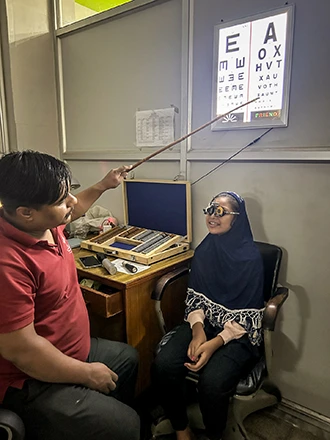
Fortunately for Zara, her school was included in a school eye screening project we had implemented in collaboration with our partner, Nepal Eye Hospital. During the screening, community health workers discovered that Zara had cataracts in both of her eyes, a condition she’d been born with, and that had severely clouded her vision throughout her young life.
The outreach team met with Zara and her mother, explained the condition to them, and told them that treatment was available. They referred the family to the nearby Simara Vision Centre for a thorough examination, where doctors confirmed the diagnosis of congenital cataracts. From there, Zara received a further referral to Nepal Eye Hospital in Kathmandu for surgery.
The Operation Eyesight project team provided crucial support, guiding Zara and her parents through the treatment process and helping them access surgery at a reduced cost, making it affordable for the family, who had limited financial resources.
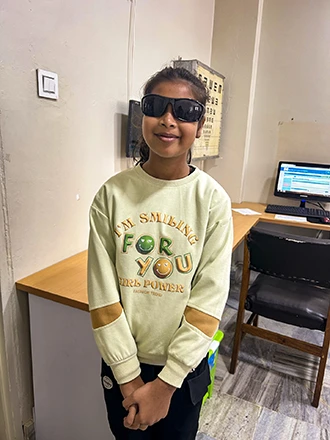
Zara’s first eye surgery was a success, and a month later she returned to the hospital for surgery on the second eye. On her second visit, when she spotted Operation Eyesight’s Project Coordinator from across the hospital, she waved enthusiastically – something that would not have been possible before her first surgery.
Zara’s transformation was profound. The eye rolling stopped, her unusual movements decreased, and she became more sociable with family and friends, even interacting withstrangers. For the first time in her life, she could recognize people from a distance, read the blackboard in class and fully participate in school activities.
Zara’s mother was overwhelmed with relief to see her daughter blossom. She had been extremely worried about her child’s future, and was amazed to see Zara playing, learning and interacting like other children her age. She and her family expressed deep gratitude to the hospital, the doctors and healthcare workers, and to Operation Eyesight’s generous donors, for making this life-changing transformation possible.
Make a donation to help us reach more children like Zara with life-changing eye surgery.
Written with files from Anisha Gurung, Operation Eyesight’s Project Coordinator at Nepal Eye Hospital.
At 13 years old, Erasmus is like many other boys his age: tall, gangly and a little bit shy. He says he’d like to be a soldier when he grows up.
While joining the military seems achievable, that dream was nearly shattered for Erasmus a few years ago, when an accident threatened both his vision – and his future.
It all started one evening back in 2019. Erasmus’ mother, Joyce, was inside their home in the rural community of Essiam, in Ghana’s Central Region, when she suddenly heard shouts coming from outside, where Erasmus was playing with friends. She rushed outside and found her son clutching his eye in pain. His friends told her that something had flown through the air and hit him hard in the eye.
Initially, Joyce treated Erasmus at home with some over-the-counter eye drops, but after going to school the next day, he said he was still feeling a lot of pain. His teacher recommended Joyce take him to the hospital to get it checked out.
Joyce took him to the nearest hospital, and the doctor there referred them to the Korle Bu Teaching Hospital in the capital city, Accra. He also advised her to make sure that nothing happens to Erasmus’ other eye, as he worried that the boy might lose sight entirely on the injured side – advice that shook Joyce to the core. She imagined her son’s future melting away, along with his eyesight.
As a single mother running a small hair-braiding salon, Joyce was overwhelmed by the cost and logistics of travelling to Accra. Eventually, she got some money together and they went to the hospital. A doctor examined Erasmus and told Joyce the damage to his eye was very serious and that he would need surgery.
But Joyce couldn’t afford the surgery. She tried everything – asking family for help, borrowing what she could – but it was never enough.
In the meantime, Erasmus continued to have pain and irritation and couldn’t see much out of the affected eye. Joyce, tears spilling from her own eyes as she remembers that bleak period, says she was terrified for her son and felt completely alone in dealing with the problem.
Then, in 2023, she learned that a charity had visited Erasmus’ school and had checked on the students’ eyes. She rushed down to the school and learned that Erasmus had been identified as a student in need of a referral for a more thorough diagnosis.
That eye charity was, of course, Operation Eyesight, working in tandem with the ministries of health and education, and our partner hospital, Watborg Eye Services, in Awutu Breku. Erasmus got a referral to Watborg, where he received a thorough eye exam.
Joyce learned that her son’s injury had developed into a cataract. A traumatic cataract happens when an eye injury disrupts the lens fibers – leading to a clouding of the lens. Up to 1.6 million people lose sight to eye injuries each year.
Erasmus was scheduled for surgery in two weeks’ time. And although Joyce was told that the surgery would be provided free of charge, she couldn’t quite believe it and continued to worry about the costs.
Two weeks later, Joyce and Erasmus returned to Watborg for the cataract surgery. Doctors told her the operation went well, and they kept Erasmus in hospital for another couple days to allow the eye to heal.
To Joyce’s relief, she learned that the surgery was in fact done free of charge, made possible through our School Eye Health Project supported by the Church of Jesus Christ of Latter-day Saints Charities. The project covered all other expenses, including transportation, meals, the hospital stay and post-surgical appointments.
Due to the complexity of Erasmus’ injury, it would take him additional time to recover than most cataract patients. For weeks after the operation, Joyce anxiously asked, “Can you see yet?” The answer was always no — until one day, Erasmus burst into her salon shouting, “Ma, I can see! I can see!”
Erasmus now wears prescription glasses to school, his future once again in focus. Joyce, deeply moved, says she’s forever grateful to Operation Eyesight and our partners for restoring her son’s sight, and her hope.
When I first met Mary*, she told me how she had been blind since 2012. She had started losing her vision when she was very young – when she was a new bride and expecting her first child. Living in a rural area, far from any hospitals, she went to a traditional healer for help but continued to lose her sight. People whispered that she must have been doing witchcraft that backfired on her… asking what else could explain blindness in someone so young. Believing the witchcraft rumours, Mary’s husband left her before the baby was born. Her family abandoned her too. The only person who helped Mary was her niece, who has been supporting her and her child all this time.
When the niece heard that Operation Eyesight was offering free eye exams, she brought Mary to a surgical camp we were hosting. After all her years of alienation, Mary had little confidence in getting her sight restored, but she agreed to a checkup in hopes that it would reduce the eye pain she was experiencing. The team diagnosed her with bilateral cataracts and recommended surgery, which she agreed to.
I went to check on her in hospital shortly after her bandages came off. I was initially disappointed because she kept saying, “No, I can’t see you. I can't see anything.” Worried something had gone wrong with the operation, I called her over to see the doctor, when she finally said, “Actually… I can see you, but I’ve been blind for so long, I thought I was imagining you! I’ve been able to see you the whole time.”
She erupted into laughter, then tears. Her niece joined in.
We escorted her home by bus, and the whole time she was pointing and smiling at things she saw rushing by through the window. She said her greatest excitement was seeing the face of her daughter – now 12 years-old – as soon as she got home.
*name has been changed to protect the patient’s privacy

Candy Siadibbi joined our Zambia team in 2022, first working in the Lusaka area before relocating to Mkushi, in Central Province. She has a bachelor’s degree in psychology and public administration from the University of Zambia. Before joining Operation Eyesight, she worked as a research assistant, freelancing with various nonprofit organizations.
Plowing the fields, checking on his crops and just walking around the farm all became difficult – and even hazardous – for Harprasad when his eyesight started to fade. For the 69-year-old farmer in India, the idea of quitting work and sitting at home all day was unbearable. His pride was in maintaining the family’s land, alongside his wife, daughter and three sons.
Harprasad discussed his failing vision with his family, but they were unsure where to seek eye treatment.
Happily, the family’s village was included in one of our outreach projects. A community health worker showed up on their doorstep and examined Harprasad’s eyes, concluding that he had cataracts, a diagnosis that was confirmed after she sent him to the nearby Nehtaur Vision Centre.
Initially, Harprasad’s diagnosis caused him even more anxiety, as he worried about how he’d pay for the recommended cataract surgery. But the community health worker explained that he qualified for a free operation and that his transportation, meals and hospital stay would also be taken care of, thanks to the support of generous donors like you.
Harprasad underwent bilateral cataract surgery at our partner hospital, the C.L. Gupta Eye Institute in Moradabad. When the bandages came off, he was amazed by his clear vision. Now he’s confidently working on his farm once again.
Ten years ago, Esther – who lives in the village of Sitet, in Nandi County, Kenya – was chopping firewood when a log bounced and hit her left eye. The pain was sharp and immediate.
A week later, she went to the nearest hospital, where she received medication to manage the worsening pain and a referral to an eye hospital. But by then, her resources were spent. Out of money, she went home. The vision in her left eye never recovered.
She managed with her one good eye until three years ago, when she noticed the vision in her right eye was blurring. Soon, everyday tasks like picking coffee beans, cooking and walking to church became impossible.
“I felt like a burden to my daughter,” she says. “She had to leave her home to stay with me and help. At some point, I just wanted to die… I didn’t want to hold her back from her life.”
But one day, hope arrived in the form of a young man named Simon who knocked on Esther’s door. As a community health promoter we’d trained in primary eye care, Simon encouraged Esther to visit an upcoming eye screening camp we were organizing along with Meteitei Sub-County Hospital.
At the camp, doctors said that unfortunately her left eye was permanently damaged, but they could restore vision in her right eye. At 85 years old, Esther was scared of getting cataract surgery due to her age, but she was determined to reclaim her life. Thanks to our partner Johnson & Johnson, her operation was free.
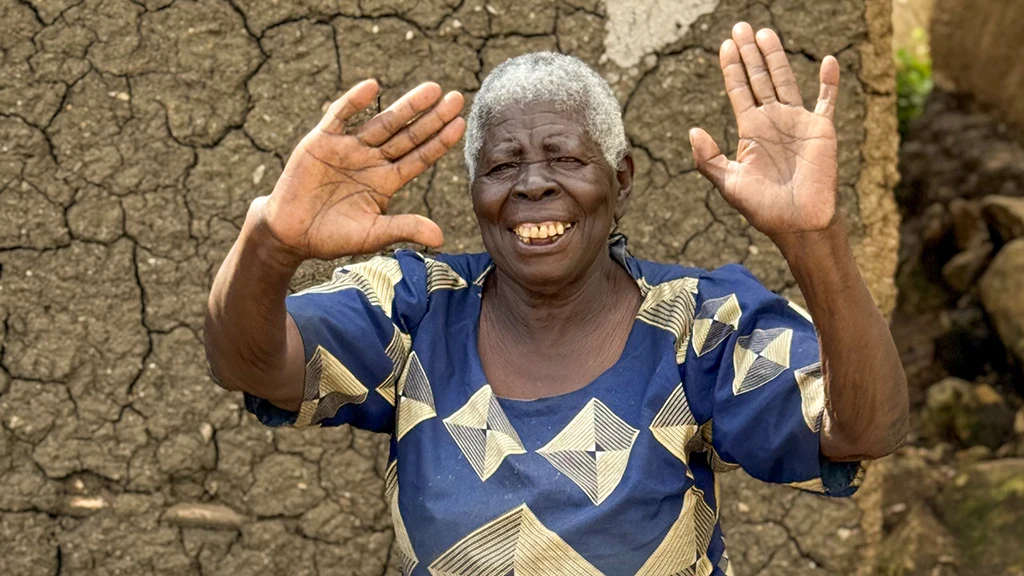
The day after her surgery Esther experienced a moment she’ll never forget.
“They removed the bandage… and I could see!” she recalls. “I couldn’t believe it. I saw my daughter’s face again. I saw the sun. I saw my home.”
Now she’s back to her daily life – picking coffee, going to market and attending church. Her message is clear: “Please go. Don’t be afraid. The surgery is not painful. You will see again, just like me. I thank the doctors. I thank the donors and Operation Eyesight, and I thank God.”
Your support helps us provide more sight-restoring surgeries for people like Esther!
With files from: Lister Barasa Maskika, MIS/MEL Officer, Kenya
In a small village in Bangladesh, 60-year-old Gulbahar lives alone and supports herself. She works as a maid, stretching every ounce of strength to make it through each day.

Her world grew darker as cataracts began to cloud her vision and left her nearly blind. Everyday things like walking through crowded streets, cooking with the right spices and finding her way around her home became uncertain and difficult.

Despite the challenges, her spirit stayed strong as she searched for the right eye health treatment, only to discover that the surgery she needed was far beyond what she could afford.
One day she heard about a nearby outreach eye care camp by Operation Eyesight. Gulbahar made her way to the camp and embraced the chance for cataract surgery.

She received cataract surgery at no cost. When the bandages were removed, she smiled.
"I can see my world again,” she said. “I don’t need to stumble in the dark anymore. I’ve been given a second chance.”

Today Gulbahar is back on her feet. She works and moves through her days with confidence and no longer depends on others. Her restored vision gave her more than sight. It gave her freedom.
But stories like Gulbahar’s are far too common.
You can help change that. Your contribution provides people with the knowledge and resources they need to regain their vision and independence.

By giving the Gift of Sight, you can help prevent blindness, restore sight and create second chances for more people like Gulbahar. Thank you for your support!
