
Right across the street from a new Operation Eyesight-supported vision centre in Sahaspur, India is a small shop that sells a variety of items. The shop is run by a man named Sarjeet, who had been struggling with gradual vision loss for a year. Unable to read the currency notes given to him by his customers or the ones he gave them as change, Sarjeet’s struggled to balance his books and his business began to lose money. The situation grew even more dire when lockdowns swept across the country in response to the COVID-19 pandemic.
As India gradually started to adapt to the pandemic and people settled in to the new normal, Sarjeet once again opened his shop. By this point, his vision had deteriorated so much that it was hard for him to even move around the shop or step out on the street. He became reliant on his son to help him run the shop.
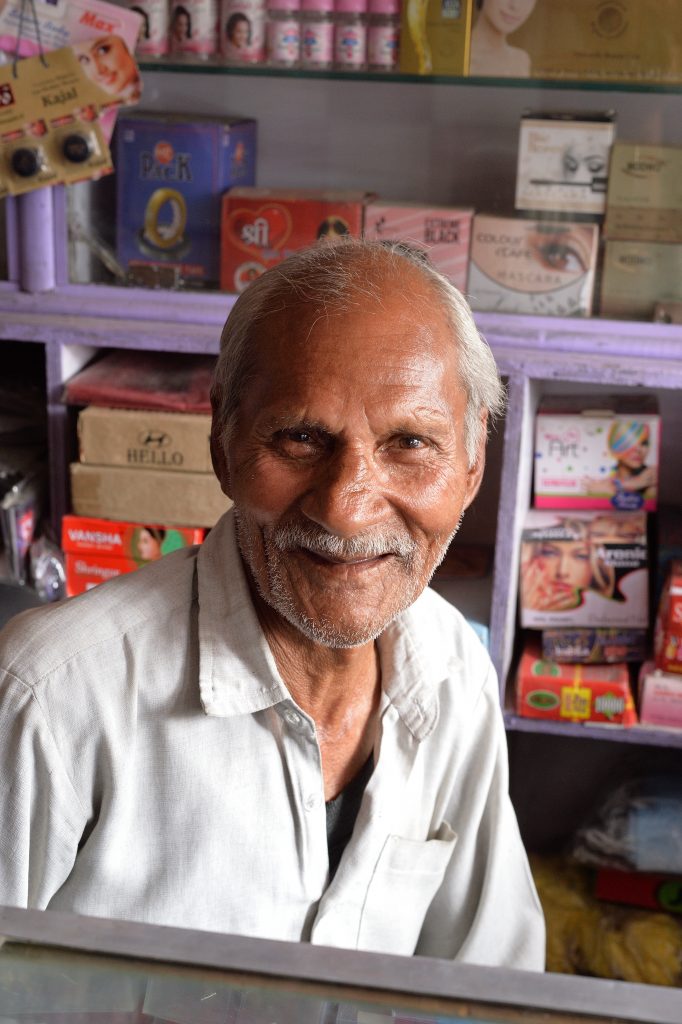
When the vision centre opened up across the street, Sarjeet was initially skeptical of approaching them. He had concerns about the quality of care that would be offered at this centre, because it was so far away from the nearest hospital. After talking with his neighbours, Sarjeet found out that the vision centre was actually an extension of the main hospital, and therefore followed all of the same quality and safety protocols. Reassured by this, he consulted the resident optometrist who diagnosed him with cataracts.
With the support of the staff at the vision centre and thanks the generosity of donors like you, he received sight-restoring cataract surgery. Now, he is able to manage his shop on his own and is no longer reliant on his son. Sarjeet is grateful to Operation Eyesight for helping him get back to his normal life, even if normalcy is looking a bit different these days.
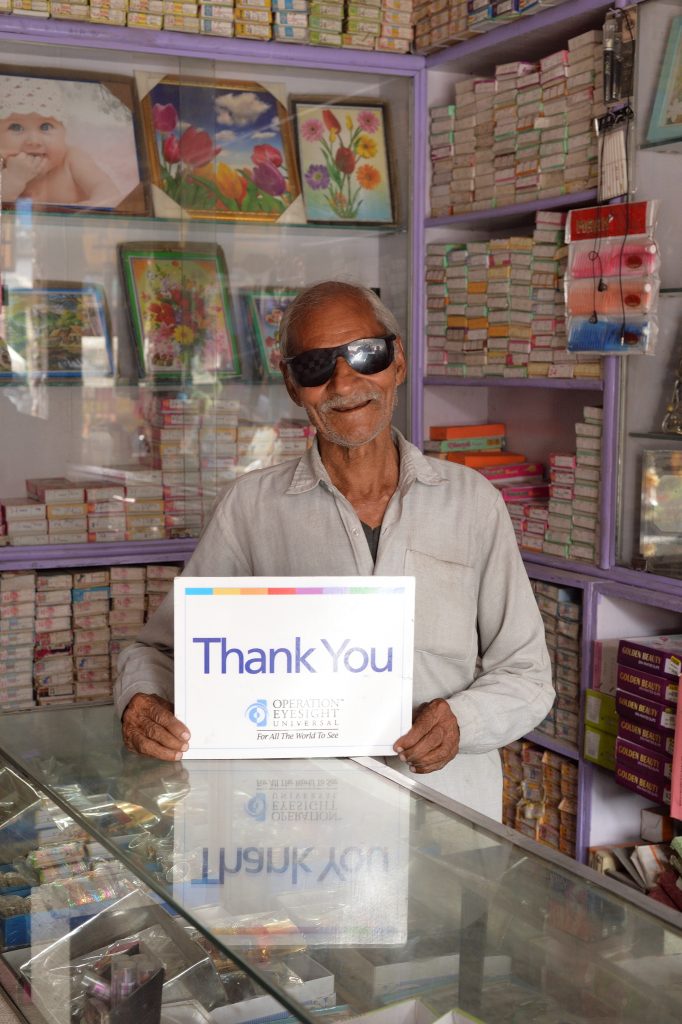
Unfortunately, India is currently going through a second, deadly wave of COVID-19. Businesses are once again being shut down. People like Sarjeet continue to need sight-restoring eye care, but several of our partner hospitals have been converted into COVID-19 care units and eye health care services are extremely limited or unavailable. The situation is overwhelming, and the hospitals need our support now so they can return to delivering eye health care services once the situation has improved.
Click here to learn more about our COVID-19 emergency response in India and how you can help.
Recently, I was fortunate to have the opportunity to interview Dr. G. Chandra Sekhar, or Dr. GC as he is popularly known. Dr. GC is Chair of the Operation Eyesight India Board of Directors and Vice-Chair of the L V Prasad Eye Institute (LVPEI), a world-renowned institute and long-time partner of Operation Eyesight. He is an ophthalmologist specializing in glaucoma and a passionate trainer and professor. I learned a great deal during our conversation, and I know our team and supporters will enjoy learning from his experience and expertise, too.
(Note: This blog post was written in March 2021. As has been the case throughout the COVID-19 pandemic, the situation in India is evolving on a day-by-day basis, and the availability of health care services will vary by region/level.)
You have been the Chair of Operation Eyesight India for over 15 years now. What keeps you motivated to serve on the Board, especially considering that it is a voluntary position?
The amount of work that needs to be done to take care of avoidable blindness in the world is huge. As an individual, as an ophthalmologist and as part of the L V Prasad (LVP) Eye Institute, my main goal is to help us achieve this. The connection between the work I do at LVP and the work of Operation Eyesight is very strong, and the program models are the same. As Chairman of the Board, I’m able to facilitate my life’s ambition through Operation Eyesight, which is the reason why I’m doing what little bit I can do. Operation Eyesight teams, in India and other countries of work, are doing a tremendous job. Their values and team effort have kept the organization’s vision going, and I’m happy to contribute whatever I can.
What is your opinion about the work that Operation Eyesight has been doing in India? Do you find any differences between Operation Eyesight’s work and what other international NGOs are doing?
Each NGO has a niche and each of them contributes significantly when it comes to the elimination of avoidable blindness. When I got involved with Operation Eyesight, the organization was going through a change in strategic direction, moving from a focus on volume to a focus on quality. It was around that time when the organization reassessed its hospital partnerships, reduced the number of partners, and supported partners so that they could focus on delivering better quality of care rather than place priority on numbers and statistics. That was very motivating, and I think it was an excellent strategic direction.
As things progressed, the organization moved from a funding agency to a knowledge partner, and that also took off very well. It also differentiated Operation Eyesight from other organizations. In my perspective, both of these changes in strategic direction have been very successful, very meaningful and right on the mark.
This year, Operation Eyesight is continuing its focus on creating access to eye health services. When it comes to eye health services, what are currently the biggest barriers standing in the way of people receiving eye health care in India?
Compared to other health care delivery areas, eye care is probably doing much better. The program models that LVP and Operation Eyesight have created are addressing the barriers to access to a great extent. The major challenge, however, is how much we can replicate our models and expand throughout the country, especially at the primary care level. Another challenge is providing access to secondary and tertiary care closer to people’s homes. The COVID-19 pandemic has fast-tracked the need for this, and LVP and Operation Eyesight are both working to implement solutions.
How has COVID-19 changed the eye health sector in India? How long do you think it will take the sector to function normally?
Drawing from the LVP experience… From the beginning, one of the LVP models has been to take care closer to people’s doorsteps, and we have successfully created a model where we triage the care that is required at the community level. For example, at the primary care level, we have one vision centre for every 50,000 people, and 10 vision centres would feed into a secondary level of care. This model has worked great for us.
During the initial lockdown, patient care at our three tertiary centres dropped to zero. From June 2020 onwards, the care started slowly picking up, at the primary and secondary levels, as well as at the tertiary level. However, the speed with which it picked up at the primary and secondary levels was much more than the speed with which it picked up at the tertiary level.
At this point in time, all levels of care are functioning close to how they were before, but what’s interesting is that the secondary-level care has gone beyond what it was doing earlier. In the past, some people who could access care closer to home would still end up travelling to visit a tertiary centre because of their false sense of quality difference between secondary facilities and tertiary centres. Now, with people afraid to travel because of COVID-19, everyone is accessing care to a great extent at the secondary level. As a result, this level has picked up much faster and has grown much more than what the tertiary level has done.
What are your recommendations to improve access, especially in the rural setting? Can the use of telehealth technology help overcome some of the barriers to eye care?
What COVID-19 has taught us is, if you create an infrastructure and take health care closer to people’s doorsteps, the barriers to accessing eye health care are addressed to a great extent. We need to consider what kind of primary and secondary care, triaging-wise, is required to correct refractive error, give people eyeglasses, treat cataracts, and provide basic screening for glaucoma, diabetic retinopathy and other conditions. We’re assessing this infrastructure and working on technological solutions to provide or enhance these services.
At the primary and secondary levels, if we had the required technology and expertise, we could tell somebody that they don’t need to rush to the tertiary level now, that their disease is in the early stages, and they can take these preventive measures and follow up in six months. We could reassure them and provide the appropriate care closer to home, while referring those in need of immediate attention to the tertiary level. This triaging is a process in evolution for us, and I think it’s getting fast-tracked by the pandemic.
The advantage for ophthalmology is that most of the data we are looking for from a patient can be imaged. It’s a matter of ensuring we have the technology and equipment that is needed to take images of the back of the eye (the retina, optic nerve, etc.), which can provide a lot of information. We need to consider the technology required to gather this information, while at the same time consider how we can connect with people and give them the advice that is required. Innovation is happening on both fronts. We can do video or tele consultations, depending on the patient and the infrastructure available.
Patient-centric medicine is very important. When we see patients and talk to them, we’re able to judge how much anxiety or confidence they have about the disease – especially my specialty, glaucoma, a chronic blinding disease which is asymptomatic. Looking at the patient’s reactions and modulating how we convey the message becomes very crucial through a video consult. If we already know the patient and are giving a follow up, a phone consult might suffice.
There are challenges to consider when it comes to connecting with people, especially in rural areas. Sometimes bandwidth isn’t available. Other times patients aren’t familiar with technology and they don’t have children or someone younger to help them.
If there were one message that you could communicate to Operation Eyesight’s partners and donors around the world, what would it be?
The need for taking care of avoidable blindness and the return for the effort, both by way of dollar and human effort, is huge. The improvements to quality of life and the ability to become self-reliant and productive is probably the maximum with eye care than with other health care needs. Because giving someone eyeglasses and helping them see what they’re doing, or providing them with cataract surgery and returning their vision to normal, makes a huge difference to their total quality of life.
It’s as simple as that. Once a patient has had their operation and their vision has been restored, within two months they come back to us, and we can see that they have become younger by a decade.
At the same time, the care that is given has to be quality-oriented and patient-centric without undermining the self-respect of the patient who is getting the care, whether they pay or do not pay. Giving them that respect and delivering quality care is the most important thing that we need to do. Each individual gets that operation done only once in their lifetime, and each individual has a self-respect that we should not undermine. While we collect our statistics and keep doing all the services that we do, we need to remember the individual, the human being that carries those eyes that we are trying to help. I keep telling my students that we all need to be a good human being first, then a good doctor, then a good ophthalmologist, and then whatever specialty we have taken to be within ophthalmology. We are trying to take care of the community, and that community is actually the individual who is getting the care at that point in time.
Thank you, Dr. GC, for sharing your insights with us and reminding us about the importance of creating access to eye care services closer to the communities we serve and putting people first. There are still many people who need our help, and together with partners like LVPEI and supporters like yourself, we can make great strides in realizing our shared vision of the elimination of avoidable blindness. You are a valuable member of the Operation Eyesight family, and we’re so grateful for your ongoing guidance and support.
Universal Health Coverage (UHC) is about ensuring people have access to the health care services they need, when they need them, without suffering financial hardship. UHC includes the full spectrum of health services from health promotion, prevention, treatment and rehabilitation. This also means having a qualified workforce of trained and motivated health workers.
When countries invest in UHC, they are investing in their greatest asset: people. Good health keeps people out of poverty and allows them to fully contribute to their families and communities. Men and women can go to work and children can go to school and learn. Good health enables prosperity for all.
A common misconception of UHC is the notion that all health services are available to everyone for free, regardless of the cost. Each country has its own path to achieving UHC. What coverage looks like will depend on a country’s resources and the needs of its people. It is important to note that UHC emphasizes the importance of access to health services and information as a basic human right.
UHC is not a new concept, it is based on the 1948 WHO Constitution which declares health a fundamental human right and commits to ensuring the highest attainable level of health for all. In recent years UHC has gained significant momentum. In 2019, at the United Nations General Assembly, world leaders adopted the goal of working together to achieve UHC by 2030 as part of the Sustainable Development Goals.
The COVID-19 pandemic has disrupted health systems globally. Countries everywhere have experienced shortages of hospital beds, medical supplies and health care workers. It has exposed gaps in public health care and has exasperated inequities. Many of the gains achieved towards achieving UHC have been lost due to the pandemic. The time to act is now.
Eye health, a critical component of UHC, has been severely impacted by the pandemic. Over 2.2 billion people globally suffer from vision impairment or blindness. Avoidable blindness is a global issue that has been made even worse by the strain COVID-19 has put on health systems particularly in low- and middle-income countries.
The pandemic has brought many challenges, but it also brings an opportunity to re-think how we deliver health care and services. At Operation Eyesight, we are focused on ensuring our hospital partners and community health workers can deliver care in a safe environment by protecting themselves and their patients. Looking ahead to 2021, we are imagining new ways to bring affordable, sustainable, quality eye health care to more people than ever before. This includes innovations and technologies to bring eye health services closer to communities, reducing the need to travel long distances to reach a hospital.
Operation Eyesight is committed to providing the highest quality of care to everyone regardless of their ability to pay. We work to address the root causes of avoidable blindness and remove barriers to access to care for women, girls, men and boys. In celebration of UHC Day 2020, we invite you to join us in eliminating avoidable blindness for the most vulnerable. Together, we have an opportunity to build a safer and healthier future for all.
References:
https://www.who.int/health-topics/universal-health-coverage#tab=tab_1
https://www.who.int/news-room/fact-sheets/detail/universal-health-coverage-(uhc)
WHO. (2019, October). World Report on Vision.
Rupoda is a community health worker based out of the Borhola Vision Centre in the Indian state of Assam. Over the last four years she has been educating her community about eye health and referring those who need follow-up care to the vision centre. Although the COVID-19 pandemic has hindered eye health activities in Assam, Rupoda continues to actively and safely support her community.
In partnership with the Chandraprabha Eye Hospital, Operation Eyesight has been assembling and distributing hygiene kits to vulnerable and marginalized families. Rupoda used her knowledge of her community to identify the families that would benefit the most from these hygiene kits. To date, Rupoda has personally distributed 300 hygiene kits in thirteen villages, which provides increased sanitation opportunities to over 1,500 people.

Due to a lack of transportation services during the lockdown in India, Rupoda travels approximately 10 kilometres a day on foot to distribute these hygiene kits. She also conducts socially-distanced health awareness sessions on COVID-19. The topics she covers include hand hygiene, social distancing and mask handling to prevent the spread of COVID-19.

Rupoda says that she feels grateful that she is able to support her community during these challenging times. “I’m happy that I’m able to help the poor families of my project area by giving them the hygiene kits and education on coronavirus. I’m grateful to my hospital and Operation Eyesight for giving me this opportunity to serve my people of Assam.”
Our total impact to date as of May 25th, 2020

Updates from the week ending May 15th, 2020
Updates from the week ending May 8th, 2020
Updates from the week ending May 1st, 2020

Updates from the week ending April 24th, 2020
"During this unprecedented time, Operation Eyesight has successfully managed to come forward to help the people of Ethiopia. The government of Ethiopia is appreciative of this effort knowing it will go a long way in paving paths for other agencies to also come forward and help in saving the lives of people. Kudos to our implementation partner in Ethiopia who are working day and night in reaching out to the unreached with the required support."
- Yashwant Sinha
Updates from the week ending April 17th, 2020
Our team in Ethiopia has procured water tanks/vessels. We are working in partnership with the government to deliver water to the communities. We have also procured the COVID-19 information, education and communication materials in local languages from the Ministry of Health to distribute.
Public sector employees whose roles are not essential have been placed on compulsory leave, and civil servants have been asked to work from home. Non-essential travel is banned, and all airlines have suspended their operations until the end of April.
In Ethiopia we are working to train 50 community health workers to respond to COVID-19. This training will cover topics such as the detection of symptoms, the importance and proper techniques for hand washing, and what to do if you or a family member starts displaying signs of COVID-19.
To ensure the safety of our staff and our community health workers, we are working to procure safety materials such as disposable nose masks, gloves and hand sanitizers.
We plan to install five handwashing stations at prominent locations such as schools and in high density, low income neighbourhoods. Additionally, we will distribute 1,000 sanitation kits to low-income female headed households and to those living with disabilities.
Our goal is to adapt, print and disseminate health education and information materials, with the goal of reaching 30 000 individuals by mid-May.
Learn more about our response to COVID-19 and how you can help here.
Our total impact to date as of May 25th, 2020
Updates from the week ending May 15th, 2020
The swiftness with which Operation Eyesight responded to help contain COVID – 19 in the central region of Ghana is unbelievable. As an eye health organization and not an emergency relief one, I initially thought it would take a while to change direction, but that was not the case. Right away, the Operation Eyesight team began supporting the Ghanaian Government efforts in achieving health for all. I am indeed proud to be a staff member of Operation Eyesight.
-Emmanuel Kumah
Updates from the week ending May 8th, 2020
Updates from the week ending May 1st, 2020

Updates from the week ending April 24th, 2020

Updates from the week ending April 17th, 2020
Major cities in Ghana are under a lockdown until the end of April. Enhanced social distancing measures are being put in place in other areas. All borders (land, sea and air) will remain closed during the lockdown period.
In Ghana, we are partnering with 20 health districts in the Central Region to create awareness about COVID-19. This training will cover topics such as detection of symptoms, the importance and proper techniques for hand washing, and what to do if you or a family member starts displaying signs of COVID-19.
We aim to provide 200 health facilities in the Central Region with hand sanitizer, facial masks, veronica buckets, soap and tissue paper. A veronica bucket is hand washing station made up of a barrel with a tap fixed at the bottom and a bowl at the bottom to collect wastewater. This serves as a simple way to encourage proper hand washing using flowing water.
We are partnering with the Ghana Health Service to train up to 420 frontline workers to conduct COVID-19 related health awareness events for their communities.
We intend to share 20,000 health education and information packages, which would result in 50,000 individuals being educated about COVID-19 by mid-May.
Activities related to avoidable blindness:
Community health nurses are continuing to offer static eye health services, including consultations, minor treatments and health education services. Ophthalmic nurses, optometrists and ophthalmologists at the district hospitals continue to offer static eye health services such as consultations, treatment (including emergency surgery), and provision of prescription eyeglasses.
Learn more about our response to COVID-19 and how you can help here.
As part of our emergency response in India:
Our total impact to date as of May 25th, 2020

Updates from the week ending May 15th, 2020

Updates from the week ending May 8th, 2020
With support from Operation Eyesight, Siliguri Greater Lions Hospital started our COVID-19 pandemic emergency response. This program empowers communities by creating awareness and equipping them with hygiene kits to stop the spread of coronavirus. Community health workers were trained on preventative measures to educate community members on how to protect themselves against COVID-19. The community health workers will reach over 9000 families from vulnerable communities, educating them about personal health and hygiene and providing them with a hygiene kit. Each kit can cater to a family of four and contains hand sanitizer, soap, bleaching powder, face masks, gloves and an information pamphlet on COVID-19.
-Dr. Rajesh Saini, Chief Executive Officer, Siliguri Greater Lions Eye Hospital

Updates from the week ending May 1st, 2020

Updates from the week ending April 24th, 2020

Updates from the week ending April 17th, 2020

Currently, India is under a complete lock down. Only essential services such a hospitals, pharmacies and grocery stores remain open. The government has sealed several areas in the country identified as ‘Hot Spots.’ All public transport and airlines have been suspended.
Despite the current lockdown in India, hospitals are still delivering emergency services, allowing them to use some staff and hospital-owned vehicles. These vehicles can transport staff (including community health workers) who have been issued with valid healthcare passes issued by the district authorities.
We plan to provide training for community health workers (CHWs) so that they can educate their communities about COVID-19. This training will include topics such as the detection of symptoms, the importance and proper techniques for hand washing, and what to do if you or a family member starts displaying signs of COVID-19. By mid-May, we will have 110 CHWs and project staff trained to address COVID-19.
Using hospital vehicles, staff in the partner hospitals will pick up CHWs and they will distribute COVID-19 education materials and hygiene kits (containing hand sanitizer, soap, cloth face masks and bleaching powder) to households to help stop the spread of COVID-19. In the first month, we hope to have 6,000 of these kits distributed. The lockdown may affect the timely supply of items included in the hygiene kits, but the long-standing relationship of our partner hospitals with the vendors and advance bulk orders for all the items will minimize the delays in supply.
Health education and information materials will be available at our vision centers. We will also be installing hand washing stations at all our vision centers to promote proper hygiene practices.
To ensure the safety of our staff and our community health workers, we are working to procure safety materials such as disposable masks, gloves and hand sanitizers. All of our vision centers are complying with Operation Eyesight’s increased sanitation measures.
Activities related to avoidable blindness:
The India project team is using this time to revamp the door-to-door surveys usually administered by community health workers to determine a household’s awareness of eye health issues and health care options. In accordance with India’s lockdown, all door-to-door surveys and screenings have been put on hold.
Learn more about our response to COVID-19 and how you can help here.
[drawattention ID="22481"]
[drawattention ID="22463"]
[drawattention ID="22413"]
[drawattention ID=22391]
[drawattention ID=22452]
[drawattention ID=21961]
Our total impact to date as of May 25th, 2020

Updates from the week ending May 15th, 2020

Updates from the week ending May 8th, 2020
“We are not certain how long the pandemic will last and therefore, we cannot sit back and wait for the worst to happen. We are doing all we can to empower our communities in Kenya stay safe through health education. We must make them understand that the family must function as a single unit because if one person puts themselves at risk, everyone in that unit is at risk.”
-Alice Mwangi, Kenya Country Manager
Updates from the week ending May 1st, 2020

Updates from the week ending April 24th, 2020

Updates from the week ending April 17th, 2020

From March 27 onwards, a daily curfew has been imposed from 7p.m. to 5a.m. All movement by those who are not medical professionals, health workers, or essential service providers is prohibited between these hours. Movement in and out of the major cities of Nairobi, Mombasa, Kilifi and Kwale is restricted.
Currently, our focus in Kenya is to provide training for community health volunteers to educate them about COVID-19. This training will cover topics such as the detection of symptoms, the importance and proper techniques for hand washing, and what to do if you or a family member starts displaying signs of COVID-19. By mid-May, we hope to have 700 community health volunteers trained to address COVID-19.
The government of Kenya has produced information, education and communication materials related to COVID-19, but not all of these are accessible. Our team is working on taking government-produced materials and translating them into local languages to be distributed by our community health volunteers at the community level.
In addition to these materials, we will be delivering hand washing kits to female-headed households and people living with disabilities to help stop the spread of COVID-19. By giving these kits directly to women, we are empowering them to take leadership over their health and the well-being of their families and broader community. Empowering women is crucial in building our economies, reducing poverty and attaining peace. By mid-May, we hope to have 1 000 of these kits distributed. We will also be installing hand washing stations at boreholes and near schools to promote proper hygiene practices.
To ensure the safety of our project team and community health volunteers, we are will be equipping them with personal safety materials such as disposable masks, gloves and hand sanitizers. We will ensure they are properly trained to follow physical distancing guidelines as mandated by the government.
Activities related to avoidable blindness:
Eye care services are still available in all partner hospitals, but there has been a significant reduction of the number of patients visiting the eye units. The eye units are providing emergency surgeries only, and community health workers are currently not conducting door-to-door eye screenings.
Learn more about our response to COVID-19 and how you can help here.
Our total impact to date as of May 25th, 2020
Updates from the week ending May 15th, 2020

Updates from the week ending May 8th, 2020
Updates from the week ending May 1st, 2020


Updates from the week ending April 24th, 2020
Updates from the week ending April 17th, 2020
Gatherings of more than 25 people have been prohibited. All public transport including train/ air and bus services have been suspended during the lockdown period. Schools, colleges, cinema halls, gyms, clubs, swimming pools and museums are closed until April 30. The capital city of Kathmandu is on lockdown until the 27 of April, meaning people are only able to leave their places of residence for essential work/supplies.
Our focus for Nepal is to provide training for community health workers so that they can educate their communities about COVID-19. This training will include topics such as detection of symptoms, the importance and proper techniques for hand washing, and what to do if you or a family member starts displaying signs of COVID-19. By mid-May, we intend to have 29 community health workers (CHWs) and project staff trained to address COVID-19.
Our CHWs will distribute COVID-19 education materials to help stop the spread of COVID-19. By mid-May, we hope to have 9,000 people educated on COVID-19 prevention and preparedness. Additionally, we plan to hand out sanitation kits containing hand sanitizers and disposable masks and gloves to marginalized families. Our goal is to distribute 1,500 of these kits by mid-May.
Health education and information materials will be available at all six of our vision centers. We are also installing proper hand washing stations outside of all our vision centers to promote proper hygiene practices.
To ensure the safety of our staff and our community health workers, we are working to procure safety materials such as disposable masks, gloves and hand sanitizers. All our vision centers are complying with Operation Eyesight’s increased sanitation measures.
Learn more about our response to COVID-19 and how you can help here.
Our total impact to date as of May 25th, 2020

Updates from the week ending May 15th, 2020
Updates from the week ending May 8th, 2020
Updates from the week ending May 1st, 2020


Updates from the week ending April 24th, 2020
In addressing COVID-19, we focused on addressing the less privileged; those who don't have access to information from radio or television programming. We are talking about real and important issues - such as how people can improve their hygiene and protect themselves from the virus by practicing regular handwashing with clean water and soap. We are committed to ensuring no one is left behind."
- Patson Tembo
Updates from the week ending April 17th, 2020
All schools have been closed, and public gatherings such as religious services have been restricted.
Our goal in Zambia is to empower communities to respond to COVID-19 by facilitating the rehabilitation of dysfunctional boreholes and providing health education to communities.
Working with district councils, and with donor funding support, our goal is to rehabilitate 60 dysfunctional boreholes to provide access to clean water and sanitation opportunities for 18,000 people. As part of these rehabilitation projects, we will create WASH (Water, Sanitation and Hygiene) Committees and train the members to adopt appropriate hand washing and social distancing practices critical for the prevention of COVID-19. Training WASH Committee members empowers individuals and communities to take ownership of their health and become ambassadors of WASH for their families and communities.
We will provide training for community health workers so that they can educate their communities about COVID-19. This training will cover topics such as early detection of symptoms, proper techniques for hand washing, and what to do if you or a family member starts displaying signs of COVID-19. By mid-May, we plan to have 180 community health workers and project staff trained to address COVID-19. Project staff will distribute 1,000 hygiene kits to marginalized families.
To ensure the safety of our staff and our community health workers, we are working to procure safety materials such as disposable masks, gloves and hand sanitizers.
Activities related to avoidable blindness:
To reduce the volume to traffic to local hospitals, all non-emergency eye surgeries have been put on hold. Door to door screening programs have also been put on hold.
Learn more about our response to COVID-19 and how you can help here.
