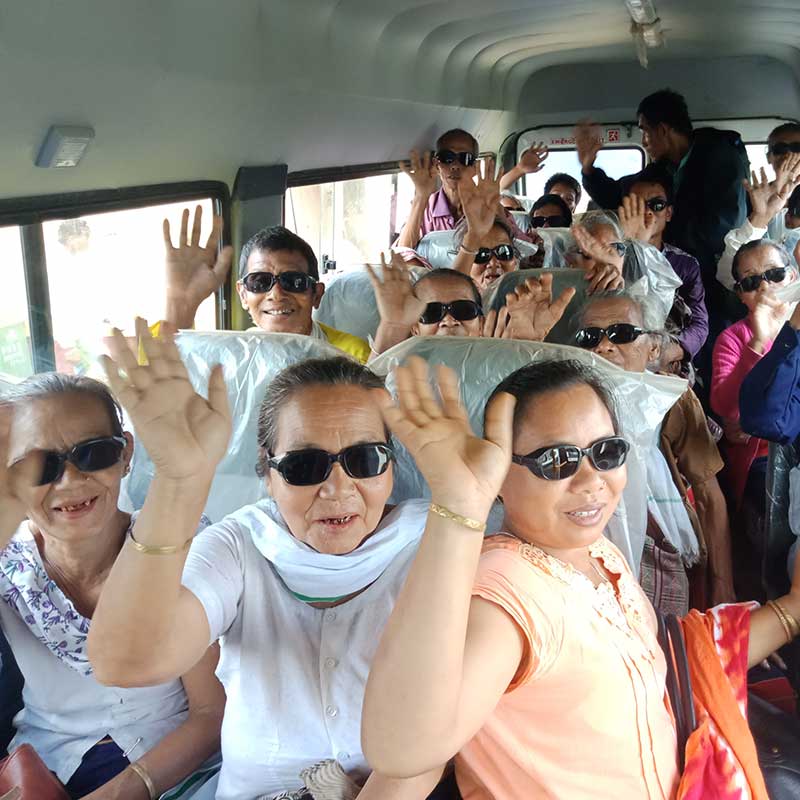
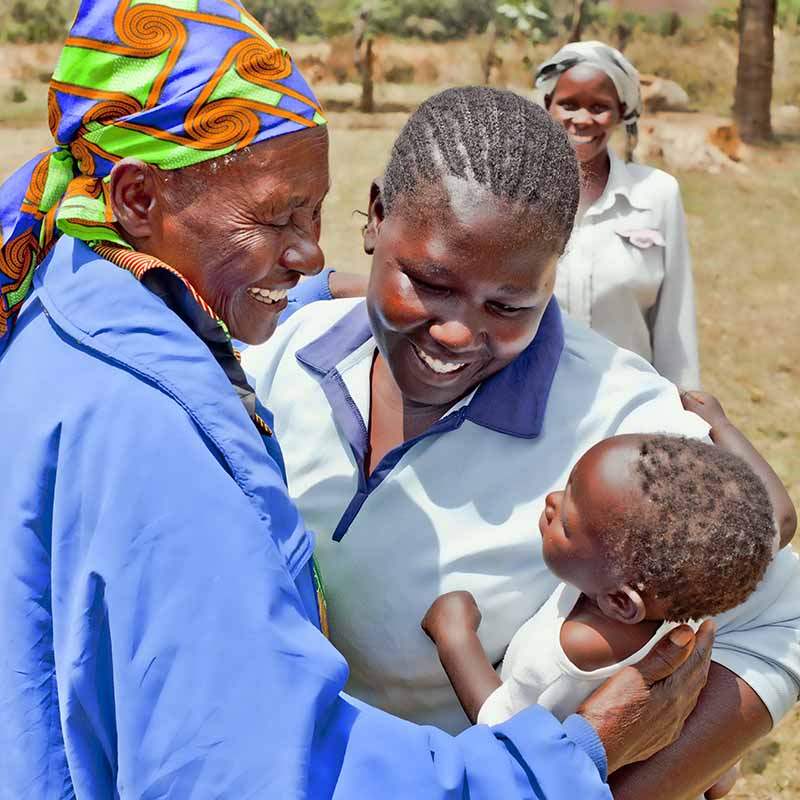
With your support, our local partners can provide comprehensive eye health services — from eye screenings and prevention to treatment and follow-up care.
Planning
Choosing a location and the partner hospital
We select a location with a high prevalence of blindness
We choose locations with lower socio-economic status compared to the national average
We find a local hospital with a compatible vision, mission and value
Assessment and action planning with the partner hospitals
We conduct a quality audit using predefined standards
We develop an action plan with the local partner to bridge the identified gaps
We focus on delivery of quality eye care services to all, regardless of their ability to pay
Planning
Planning
Defining the project area
We collaborate with the local partner hospital
We determine service provision areas based on density of population, the access to health services, the availability of transportation, etc.
We aim to reach 100,000 to 500,000 people per project
Establishing vision centres
Vision centres are established in strategic locations within the project area
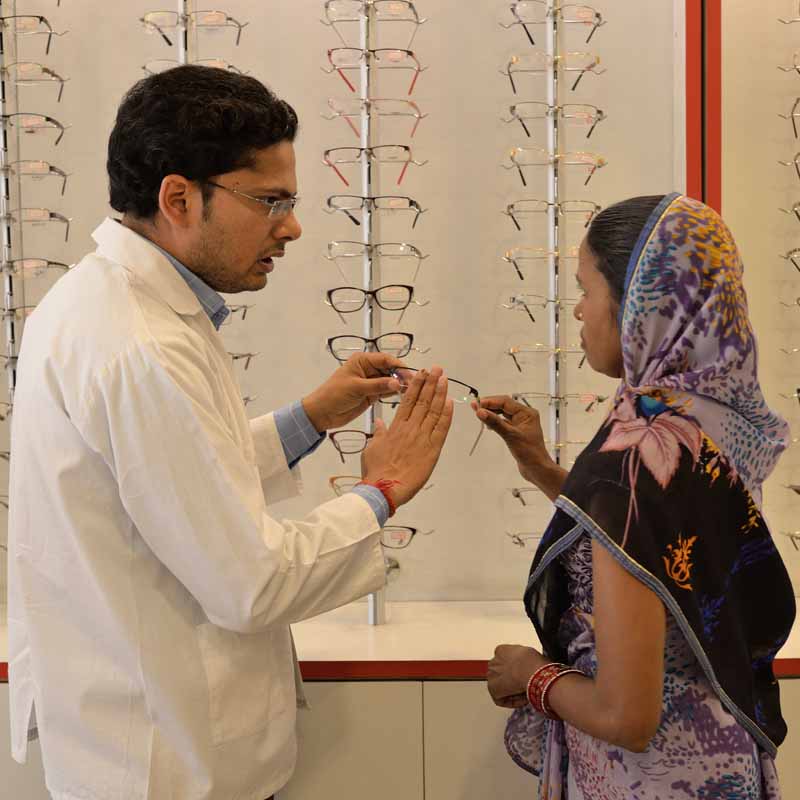
Vision centres bring primary eye care services closer to communities. Services include comprehensive eye examinations, dispensing glasses and referrals, if needed
Vision centres act as a link between communities and hospitals
Implementation
Implementation
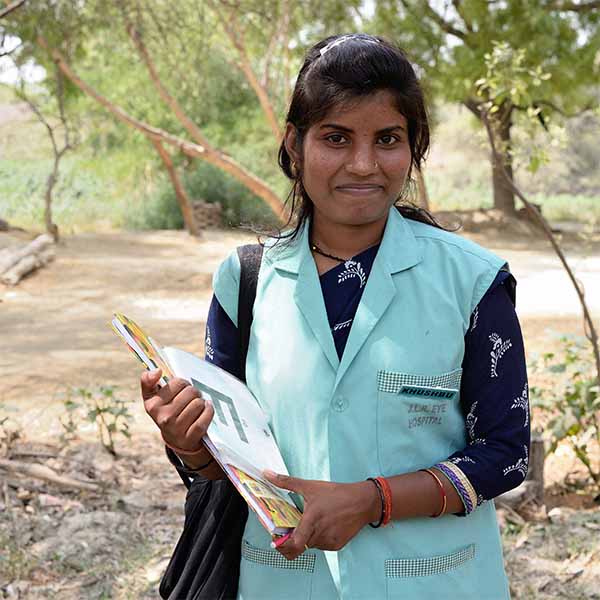
Recruiting community health workers (CHWs)
We recruit CHWs from centrally located villages within the project catchment areas
We target our recruitment strategies towards women
Target communities recognize CHWs as part of their community, which results in high acceptance and trust
Training community health workers (CHWs)
CHWs undergo a rigorous training program based on a curriculum developed by Operation Eyesight
CHWs are trained to identify eye conditions, conduct surveys, and deliver health education activities
As part of their training, CHWs attend both lectures and hands-on training session
Implementation
Implementation
Conducting door-to-door surveys
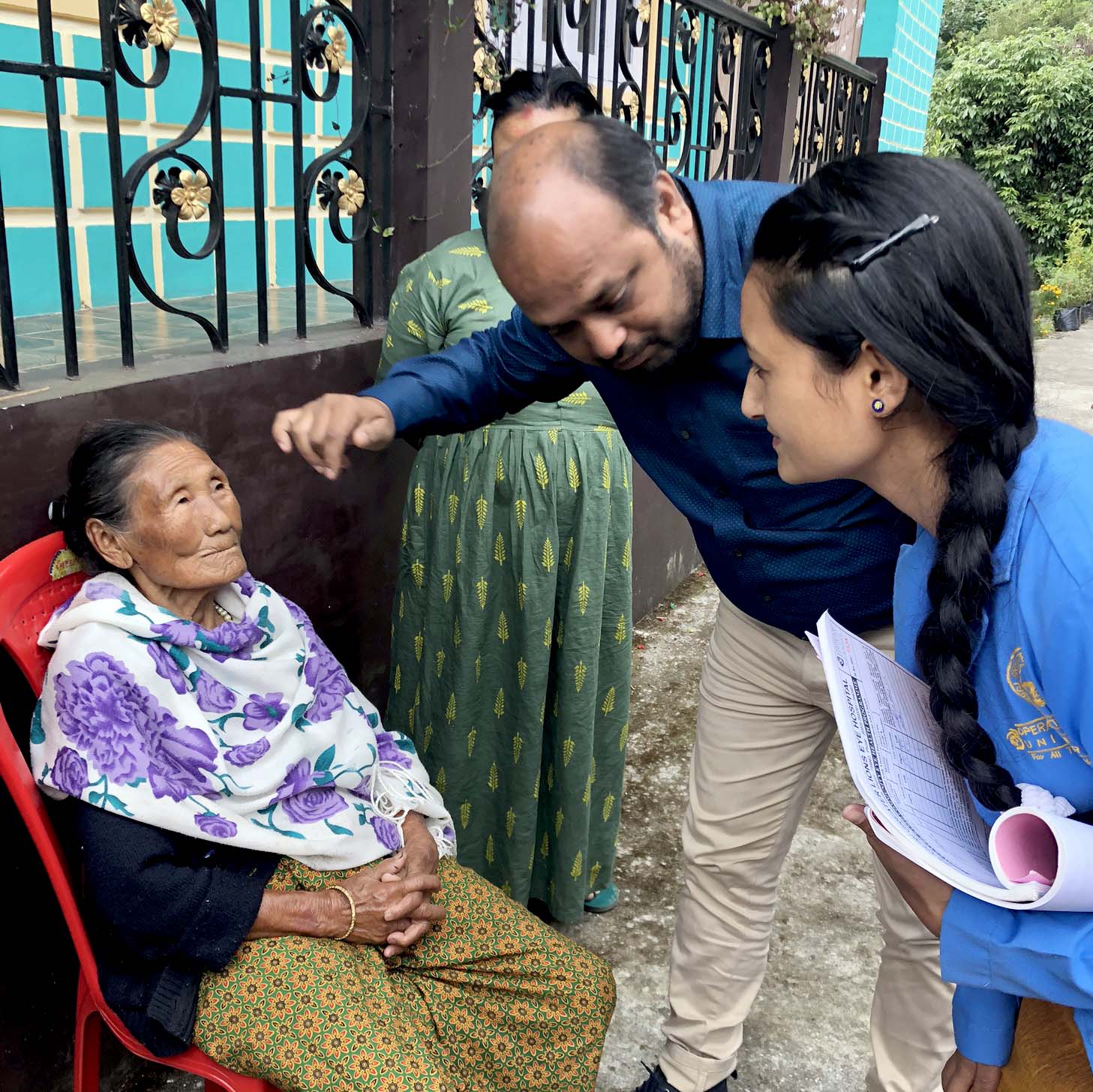
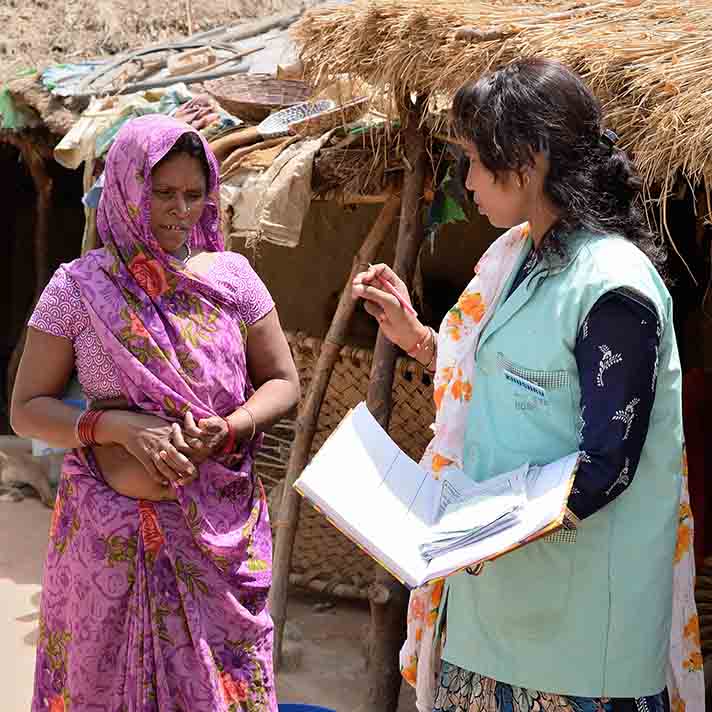
CHWs conduct door-to-door surveys, covering the entire population of the project area
They conduct visual acuity tests and screen all community members for eye conditions
They assess the health status of each member of the community, including pregnant women, post-natal mothers and children below five years
Organizing screening camps
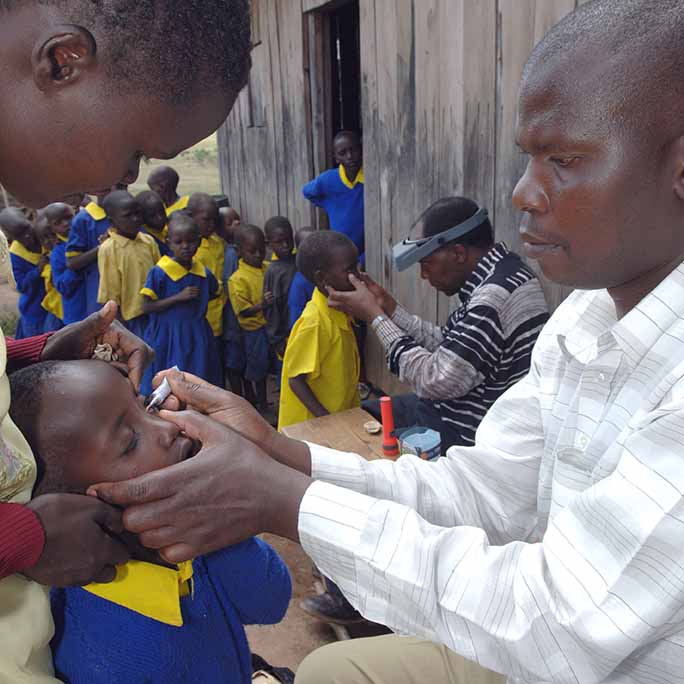
CHWs organize screening camps in centrally located villages. At these outreach camps, staff from our partner hospitals re-examine those who were identified with eye conditions during the door-to-door survey
Those who are diagnosed with minor conditions are treated in the camps, and people with more serious eye conditions are referred for further care
Screening camps are also conducted in schools within the project areas
Implementation
Implementation
Ensuring continuity of care
CHWs ensure that referred patients visit hospitals for further diagnosis and treatment, including surgery if required
They counsel the patients and their families so that nobody is left behind including women and girls
They ensure proper post-surgery/treatment follow-up with the patients as per the medical advice given
Organizing health education activities and empowering communities
CHWs develop action plans based on the door-to-door survey findings
Conduct health education sessions on relevant topics such as eye health, nutrition, personal hygiene, etc.
CHWs coordinate with other primary health care providers and ensure pre- and post-natal care and immunization of children below five years
Implementation
Maintenance
Monitoring and evaluation
The project teams continuously monitor progress based on the monitoring and evaluation framework established for each project
Project evaluations are conducted by external expert agencies and lessons learned are incorporated into new project
Declaring villages avoidable blindness-free
CHWs conduct complete door-to-door surveys again towards the end of project duration to ensure that there are no backlog cases
Project team ensures through relevant studies that the target communities have taken ownership of their eye health
Villages/communities where all the treatable cases have been treated successfully and there is no more risk of anyone losing sight needlessly are declared as avoidable blindness-free in public functions
Maintenance
Maintenance
Ensuring sustainability
We ensure sustainability of our project results by involving local stakeholders from the beginning of the project
Our vision centres are designed to become self-sustainable so that they can continue to deliver quality eye care services beyond the project duration